best-crm-for-startups

20 Best CRM for Startups 2026: Expert Reviews & Comparisons

Your first CRM decision will shape how your startup sells for the next two years, maybe longer. Pick a tool that is too heavy and your team ignores it. Pick one that is too light and you outgrow it before Series A closes. Pick one with murky pricing and you burn runway on a software bill you did not budget for.

I have spent the better part of this year mapping the CRM market specifically through the lens of early-stage teams: founders closing their own deals, two-person SDR pods running outbound, bootstrapped operators tracking 40 leads in a spreadsheet that just started breaking. The question is never “which CRM has the most features.” The question is “which CRM fits the way my startup actually works right now, without locking me into a painful migration later?”

This ranking covers 20 CRM platforms scored against startup-specific criteria. I am ranking by real fit, not brand gravity. If you want a broader look at CRM software across company sizes, see our complete best CRM software review. If you are still wondering whether CRM software is the right category for you, start with what is CRM software.

This article contains affiliate links. If you purchase through them, saascrmreview.com may earn a commission at no extra cost to you. Our rankings and scores are editorially independent.


TL;DR: Quick Verdict by Startup Type

If you just want an answer:

  • Best overall CRM for startups: HubSpot (strong free tier, startup program with up to 90% off, and an ecosystem you can grow into)
  • Best for modern, data-flexible GTM: Attio (built for startup operators who want to shape their own CRM, not fight a rigid one)
  • Best for founder-led pipeline management: Pipedrive (fast setup, visual pipeline, no noise)
  • Best free CRM for startups on a budget: Freshsales or Bigin by Zoho CRM (both offer real free plans with enough depth to start)
  • Best for outbound-heavy sales teams: Close (built-in calling, SMS, and sequences at the core)
  • Best for sales-to-delivery handoff: monday CRM or Insightly (both blend CRM with project/work management)
  • Best if you plan to scale into enterprise: Salesforce Starter (buy-in early to the biggest ecosystem, but expect more complexity)
  • Best for absolute simplicity: Less Annoying CRM ($15/user/month, no tiers, no surprises)

The 20 Best CRM for Startups in 2026

Quick Comparison Table

RankCRMScoreStarting PriceFree PlanBest For
1HubSpot9.4/10$9/seat/mo (annual, Starter)YesAll-in-one startup ecosystem
2Attio9.1/10Free (3 seats)YesModern GTM, flexible data modeling
3Pipedrive8.8/10~$14/user/mo (annual)No (trial)Founder-led sales, fast onboarding
4Freshsales8.6/10Free (3 users)YesBudget-conscious teams, built-in phone
5Zoho CRM8.4/10Free (3 users)YesCustomization at startup pricing
6Salesforce Starter8.2/10$25/user/moYes (2 users)Enterprise-grade growth path
7Close8.1/10$9/user/mo (annual)No (trial)Outbound sales, calling, sequences
8monday CRM7.9/10~$12/seat/mo (annual)No (trial)Sales + execution handoff
9Insightly7.6/10$29/user/mo (annual)No (trial)CRM + project delivery
10Less Annoying CRM7.5/10$15/user/moNo (trial)Tiny teams, zero complexity
11Copper7.3/10~$9/user/moNo (trial)Google Workspace-native teams
12Capsule CRM7.2/10~$18/user/mo (annual)YesCalm, lightweight CRM
13Nimble7.0/10$24.90/user/mo (annual)No (trial)Relationship-driven sales
14Bigin by Zoho CRM6.9/10$7/user/mo (annual)YesMicro-startups, spreadsheet graduates
15Apptivo6.7/10$20/user/moNo (trial)Broad operational coverage
16ActiveCampaign6.5/10$15/moNo (trial)Marketing-led startup funnels
17Streak6.3/10$49/user/mo (annual)Limited freeGmail-native solo founders
18Bitrix246.1/10Free (unlimited users)YesFree breadth, workspace style
19Keap5.5/10$249/moNo (trial)Automation-first service businesses
20Agile CRM5.2/10Free (10 users)YesLegacy free option, small teams

Prices verified from official sources as of April 2026. Actual pricing may vary; always confirm on the vendor’s pricing page before purchasing.


1. HubSpot

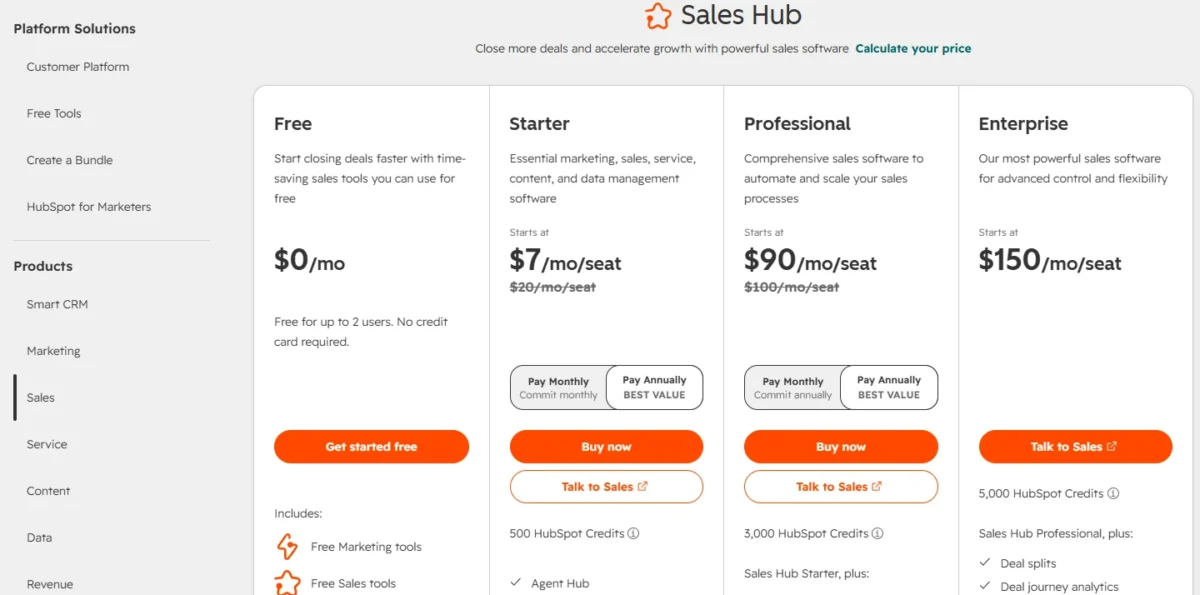
HubSpot earns the top spot because it solves the core startup CRM dilemma better than anyone else right now: it gives you a genuinely useful free tier, a low-cost Starter bundle, and a growth path that covers marketing, sales, service, and operations in one platform. Most startups will not need all of that on day one. But having it available, without needing to rip and replace later, is worth a lot.

The Starter Customer Platform is discounted to $9/seat/month (billed annually) or $15/seat/month on a monthly plan at the time of this review. That Starter bundle includes multiple HubSpot starter products built on their Smart CRM. For eligible funded startups, the HubSpot for Startups program offers up to 90% off in year one. Even some bootstrapped startups qualify for 30% off.

For a deeper breakdown, see our HubSpot CRM review and HubSpot pricing analysis.

Score: 9.4/10

Best for: Founders who want marketing, sales, service, and CRM in one ecosystem with a real startup discount program.

Not for: Teams that know they only want a lightweight sales pipeline and dislike bundle expansion pressure.

Starting price: $9/seat/month (annual) | normally $20/seat/month at list price

Free plan / free trial: Yes, free CRM tools available

What I like:

  • All-in-one Starter bundle covers more ground than most startup teams expect at this price
  • Startup program (up to 90% off year one) is one of the strongest discount offers in the CRM market
  • Onboarding is fast; most founders report productive use within a day or two
  • Strong ecosystem of integrations, content, and community support

What to watch:

  • Costs climb as you hit platform limits on contacts, emails, or automation workflows
  • HubSpot’s own documentation acknowledges that customers may be moved up to Professional to accommodate higher limits, and that jump is not cheap
  • The free tier is real but has clear ceilings that push you toward paid plans faster than you expect
  • If you only need pipeline management, the breadth of HubSpot can feel like overhead

Why it ranks here: No other CRM in this list matches HubSpot’s combination of low entry price, startup discount depth, ecosystem breadth, and scale path. It is not the simplest tool. It is the one that gives the widest range of startups the best shot at not needing to migrate within 18 months. If you want to compare it directly with alternatives, we have written up HubSpot vs Pipedrive and HubSpot vs Zoho CRM.


2. Attio

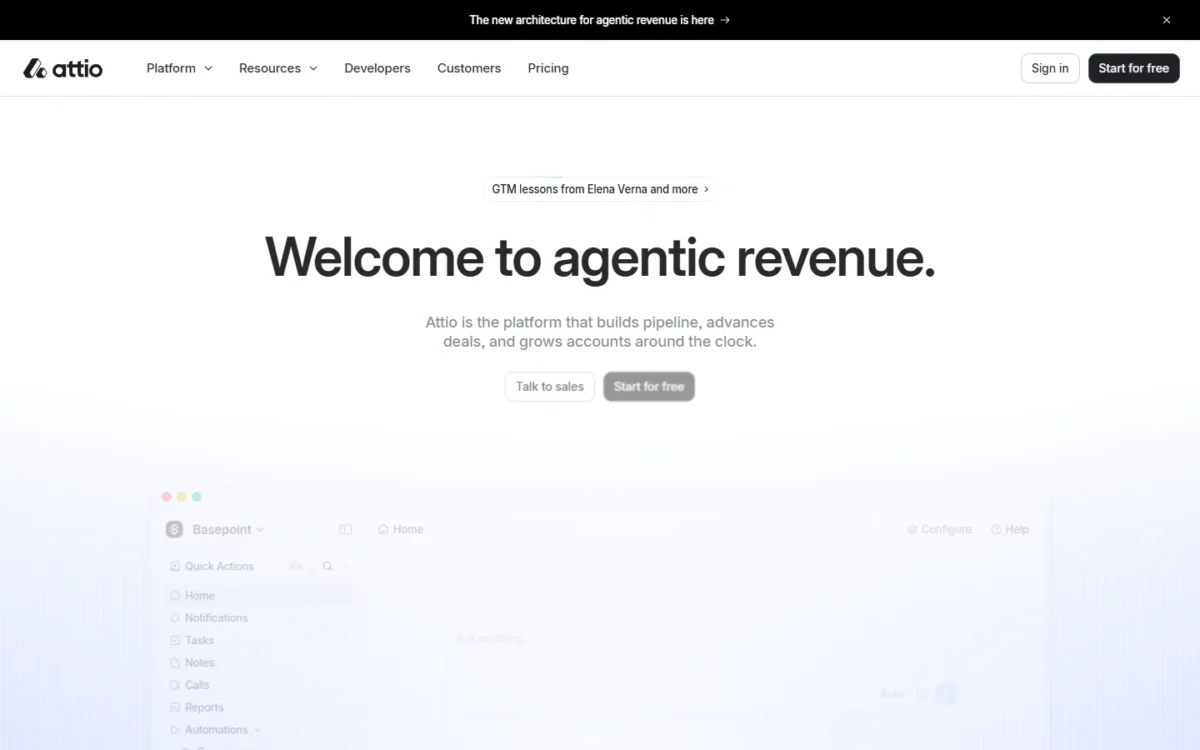
Attio is the CRM I would recommend first to any venture-backed SaaS startup with a founder or ops lead who thinks in systems. It does not try to be a turnkey, fill-in-the-blanks CRM. Instead, it gives you a flexible data model, relationship intelligence, and workflow automation that you shape to fit your exact go-to-market motion.

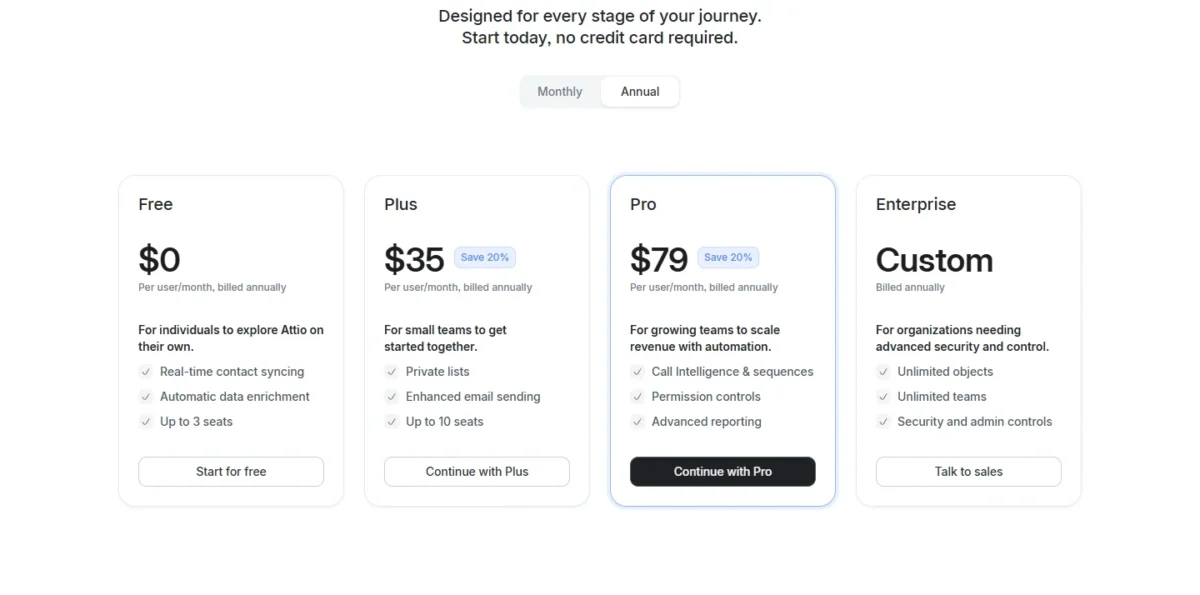
The free plan supports up to 3 seats, which is enough for most pre-seed and seed teams. Paid plans start at $29/user/month (Plus, billed annually) and $69/user/month (Pro). The Attio Startup Program offers 80% off annual Pro in year one and 30% off year two, which makes the real cost remarkably low for early-stage companies.

Score: 9.1/10

Best for: Venture-backed SaaS teams, PLG-assisted sales teams, and ops-minded founders who want a CRM they can mold.

Not for: Buyers who want a traditional, fully prebuilt CRM with heavy out-of-box hand-holding and rigid templates.

Starting price: Free (3 seats) | Plus $29/user/month | Pro $69/user/month (annual)

Free plan / free trial: Yes, free plan for up to 3 users

What I like:

  • Data model flexibility is genuinely category-leading for startups that run non-standard GTM motions
  • The startup program (80% off Pro, year one) makes this accessible even for early teams
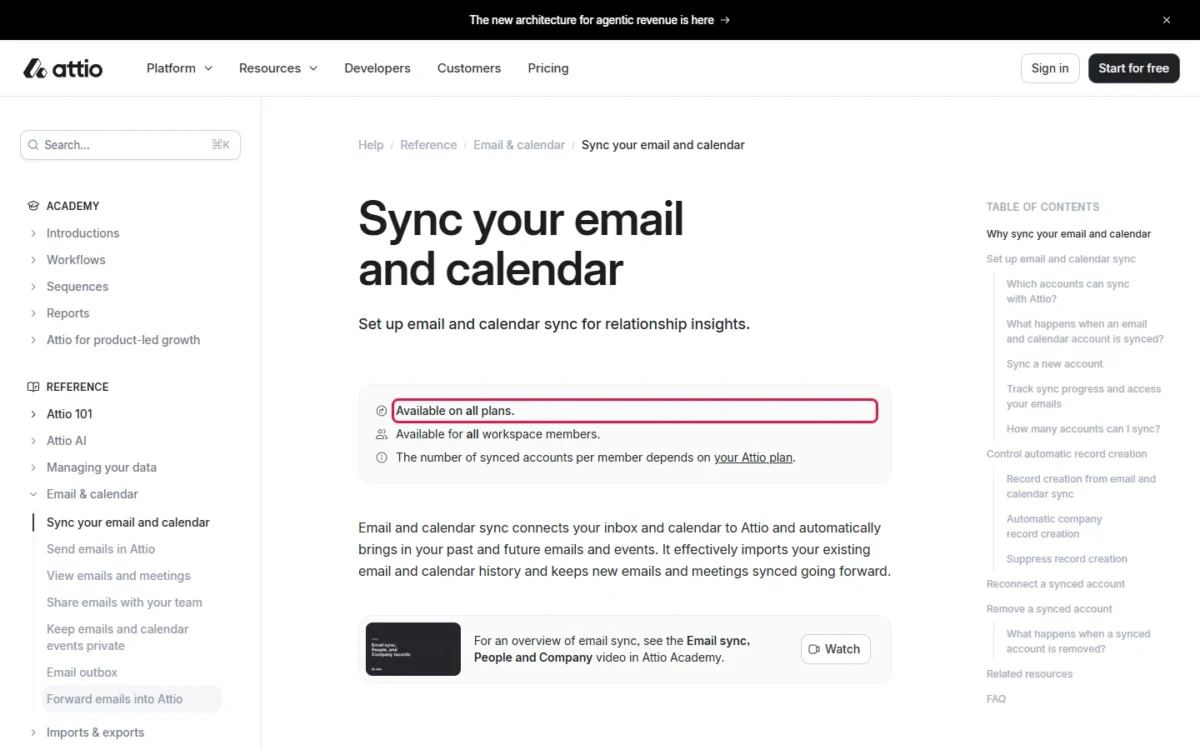
  • Attio’s help content explicitly addresses PLG and startup use cases, which signals real product commitment to this segment
  • Clean, modern interface that feels like it was built in this decade

What to watch:

  • Better fit for structured, process-oriented teams than for completely non-technical generalists
  • Can feel like a platform you shape rather than a rigid turnkey CRM, which means more setup thinking upfront
  • Ecosystem and third-party integration library is growing but smaller than HubSpot or Salesforce
  • If your team just wants to log calls and move deals across a board, Attio may feel like more tool than you need

Why it ranks here: Attio is the strongest “modern startup CRM” on this list. It does not carry the legacy design patterns of older platforms, and its data flexibility is a real advantage for startups whose sales process is still evolving. It ranks second because its ideal buyer is narrower than HubSpot’s: you need to be willing to invest some upfront thinking into how you structure your CRM, rather than just accepting defaults.


3. Pipedrive

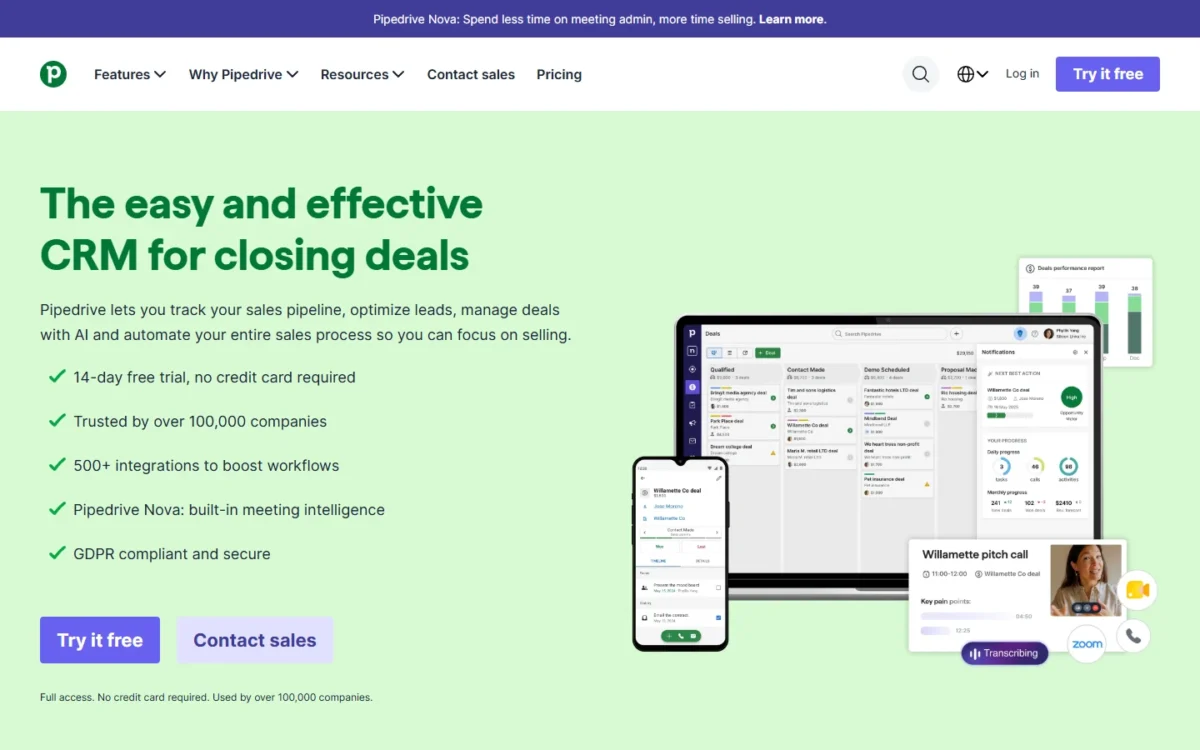
Pipedrive is the CRM you recommend to a founder who says “I just need to see my deals and move them forward.” It is sales-first by design: visual pipeline, drag-and-drop stages, and minimal friction between signup and first productive use. For a detailed breakdown, see our Pipedrive CRM review and Pipedrive pricing guide.

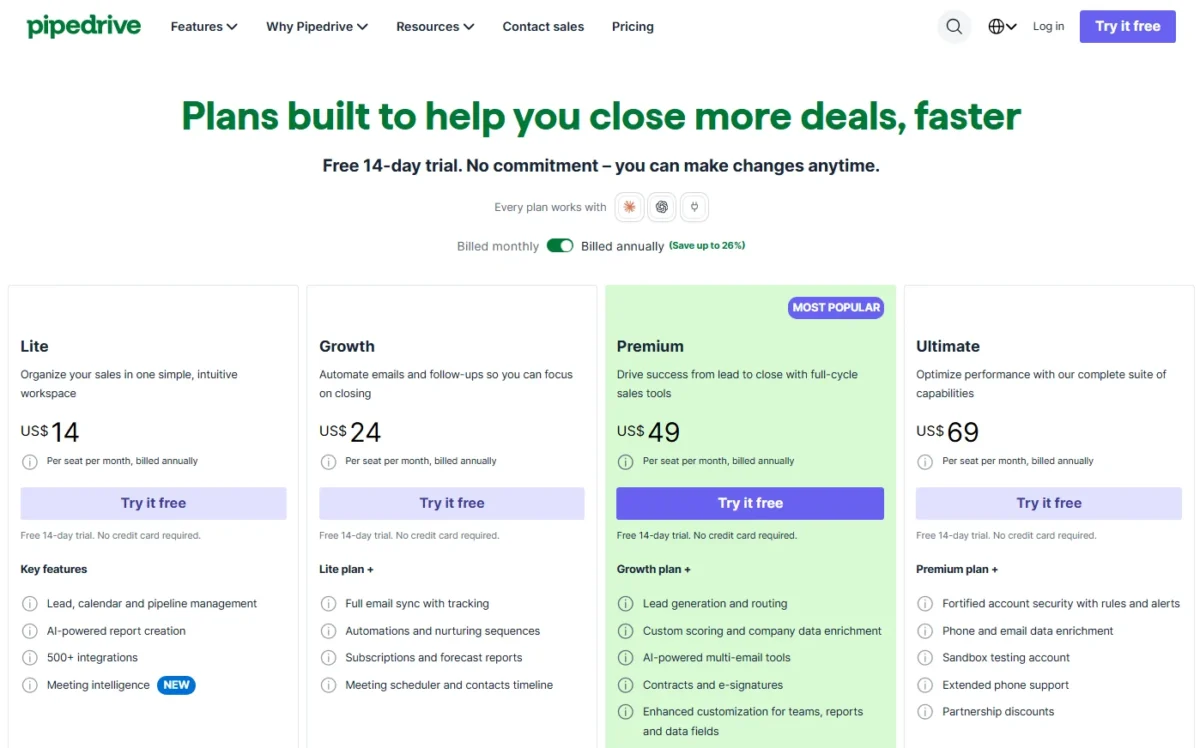
Official pricing starts from around $14/user/month on an annual plan. Recent packaging changes confirmed in 2025 support documentation signal that Pipedrive is actively iterating on its plan structure.

Score: 8.8/10

Best for: Founder-led sales, early outbound teams, and anyone who values fast onboarding over feature depth.

Not for: Teams that need deep marketing automation or project delivery workflows inside the CRM.

Starting price: From around $14/user/month (annual)

Free plan / free trial: Free trial available, no permanent free tier

What I like:

  • Time-to-value is among the fastest in the category; most teams are pipeline-ready within hours
  • Sales-first UX keeps the focus on deals, not on configuring modules you do not use yet
  • Reporting is solid for an early-stage team that needs pipeline visibility without building custom dashboards
  • Good marketplace of integrations for email, calling, and marketing add-ons

What to watch:

  • No strong native marketing suite; you will need separate tools for email campaigns, landing pages, or lifecycle automation
  • Less compelling if you want an all-in-one customer platform that covers support and marketing alongside sales
  • Advanced automation and AI features sit on higher-priced tiers
  • If your startup has a complex, multi-touch sales cycle, Pipedrive’s simplicity can become a constraint

Why it ranks here: Pipedrive is the best pure sales CRM for startups that want speed and clarity without paying for modules they will not touch. It does one thing extremely well. It ranks third because its narrower scope means you may outgrow it or need to bolt on other tools sooner than you would with HubSpot or Attio. For a direct comparison, see Pipedrive vs Zoho CRM.


4. Freshsales

Freshsales — Best for Balanced Automation and Built-in Communication Tools

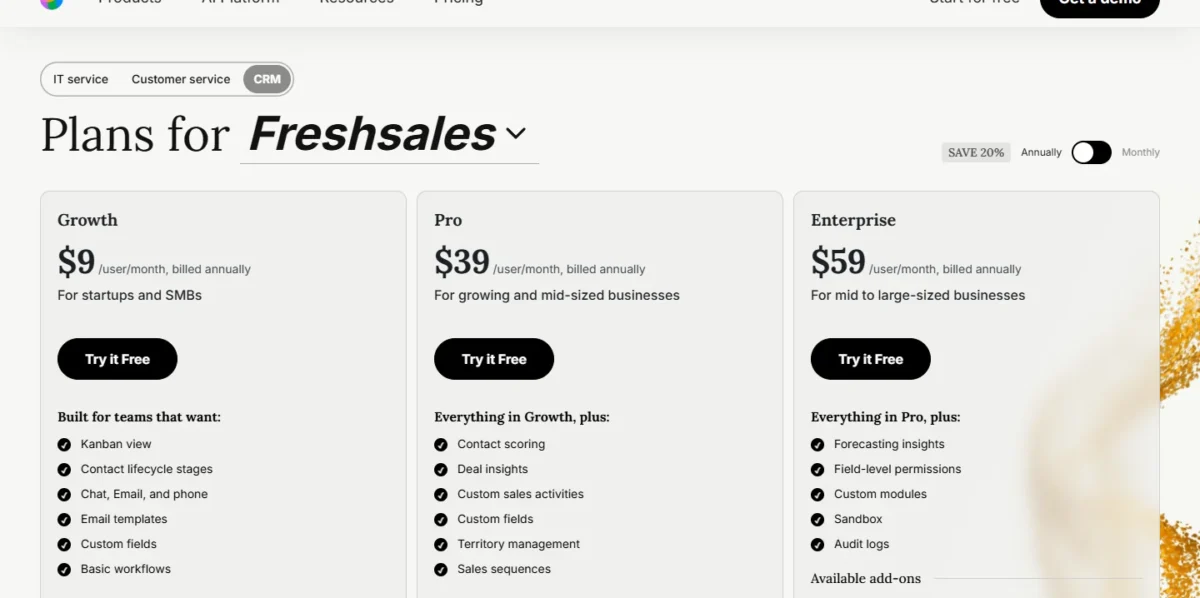
Freshsales is the best value play in the startup CRM space right now. The free plan supports up to 3 users, and the Growth tier starts at just $9/user/month (billed annually). What makes it stand out at that price is the integrated phone, chat, and email orientation that most competitors charge more for. Check our Freshsales review and Freshsales pricing for a full breakdown.

Score: 8.6/10

Best for: Budget-conscious teams that want a free plan with a clear upgrade path, plus built-in calling and chat.

Not for: Teams that want the deepest ecosystem or category-leading flexibility in data modeling.

Starting price: Free (3 users) | Growth $9/user/month | Pro $39 | Enterprise $59 (annual)

Free plan / free trial: Yes, free for up to 3 users

What I like:

  • Integrated phone and chat channels at lower tiers than most competitors offer
  • Strong value relative to many larger-brand CRMs; you get more included functionality per dollar
  • AI-assisted lead scoring and deal insights are available on paid plans
  • Freshworks ecosystem (Freshdesk, Freshmarketer) provides expansion options if needed

What to watch:

  • Not as extensible as HubSpot or Salesforce in terms of third-party marketplace depth
  • The Freshworks brand carries less market gravity than HubSpot or Salesforce, which can matter for enterprise buyer perception later
  • Some advanced features require jumping to Pro ($39/user/month), which is a noticeable step up
  • Customization depth is moderate, not deep

Why it ranks here: Freshsales gives startups more built-in sales tools at a lower price than most ranked competitors. It ranks fourth because its ecosystem and extensibility ceiling are lower than the top three, but for the price, it is hard to beat. If you are exploring alternatives in this space, we have a Freshsales alternatives comparison.


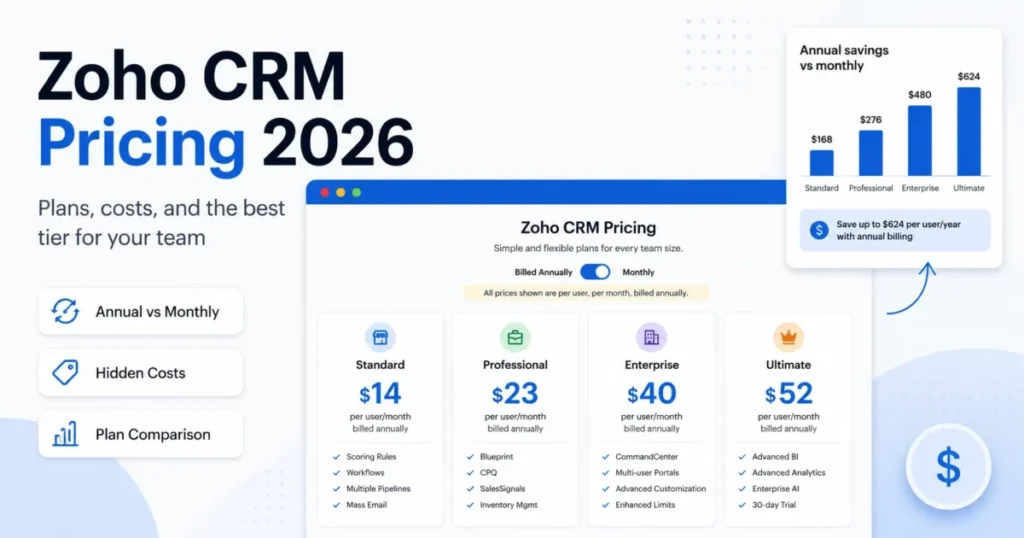
5. Zoho CRM

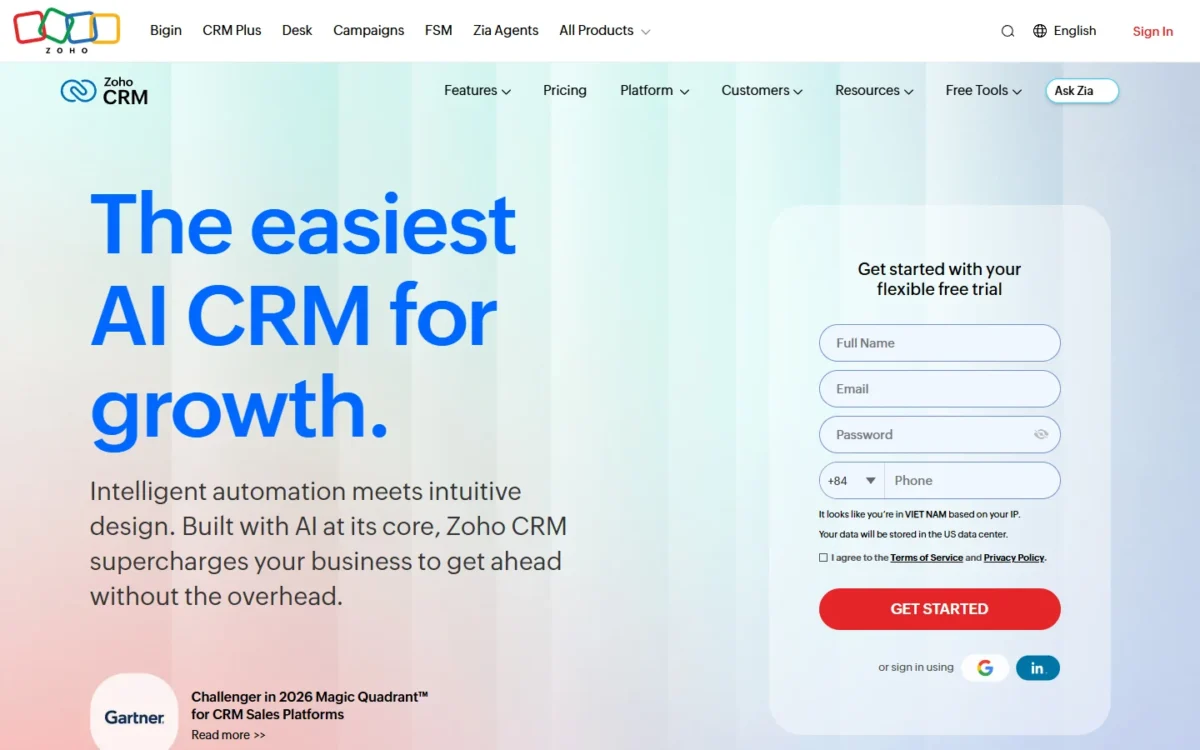
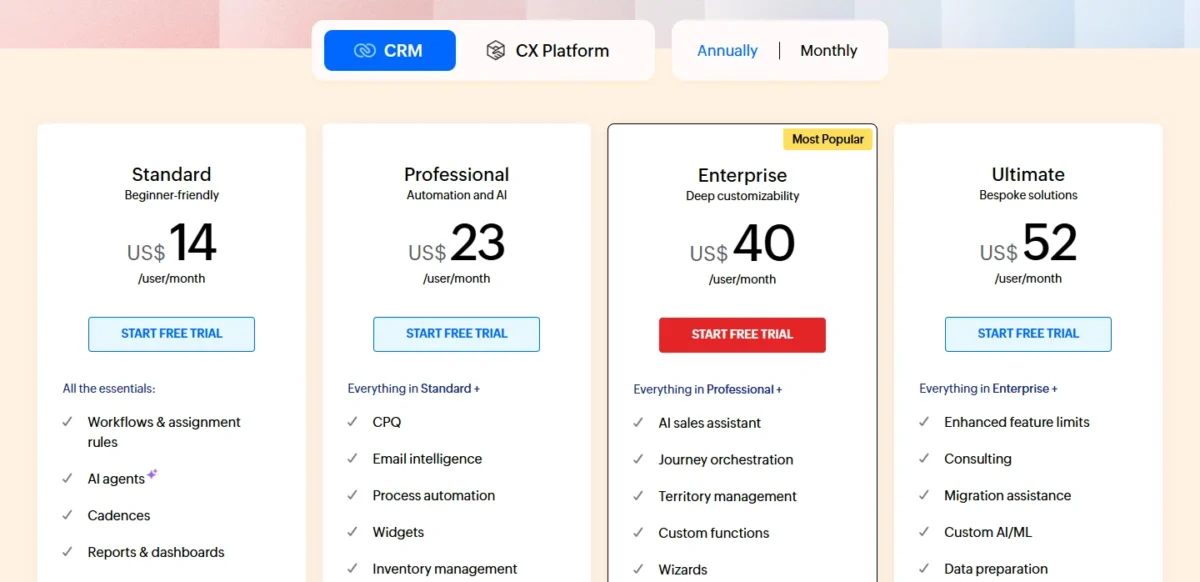
Zoho CRM is where you go when you want more control over your CRM setup than Pipedrive or Freshsales offer, but you are not ready to pay Salesforce prices. The free plan covers 3 users, and paid tiers start around the mid-teens per user/month on an annual plan. For teams already using other Zoho apps (Projects, Books, Desk), the ecosystem integration is a real advantage. See our full Zoho CRM review and Zoho CRM pricing for details.

Score: 8.4/10

Best for: Teams already in the Zoho ecosystem or wanting more customization control without enterprise pricing.

Not for: Teams that want the most polished onboarding or the least-configuration-heavy setup experience.

Starting price: Free (3 users) | Paid from ~mid-teens/user/month (annual)

Free plan / free trial: Yes, free forever for 3 users

What I like:

  • Customization depth rivals platforms costing 3-4x more per seat
  • Good upgrade path from Bigin by Zoho CRM for smaller teams that want a gradual ramp
  • Zoho’s broader app suite (20+ products) means you can build an operational stack without leaving the ecosystem
  • Canvas design feature lets you customize CRM views without code

What to watch:

  • UI and setup can feel less intuitive than Pipedrive or HubSpot, especially for non-technical founders
  • The sheer number of configuration options can slow down initial adoption
  • Some integrations outside the Zoho ecosystem require more setup effort
  • Customer support quality varies depending on your plan tier

Why it ranks here: Zoho CRM offers the best customization-to-price ratio in this ranking. It ranks fifth because the tradeoff is a steeper learning curve and a less polished first-run experience compared with the top four. If your startup has someone who enjoys configuring systems, Zoho rewards that investment.


6. Salesforce Starter / Free Suite

Best CRM for Sales Teams: Salesforce Sales Cloud

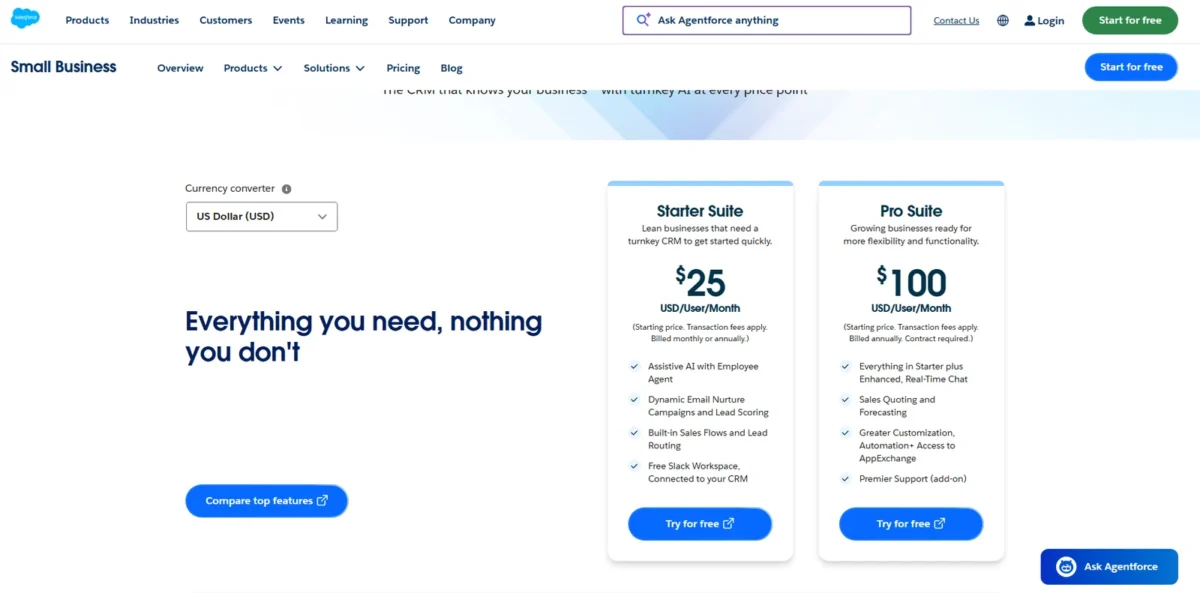
Salesforce ranks here not because it is the easiest CRM for startups (it is not), but because it offers something no other vendor can match: the most established long-term ecosystem in B2B software. If your startup expects to scale hard, hire a RevOps team within 12 months, and stay on the same CRM through Series B and beyond, Salesforce gives you the runway. See our Salesforce CRM review and Salesforce pricing breakdown.

Salesforce now promotes a Free Suite for up to 2 users in its 2026 startup and free CRM content. Starter begins at $25/user/month and includes 2,000 emails/month, with extra email sends at $10/month per additional 1,000.

Score: 8.2/10

Best for: Teams expecting to scale hard and stay on Salesforce long-term.

Not for: Very lean teams that want the lightest possible setup or the lowest cost of ownership.

Starting price: $25/user/month (Starter) | Free Suite for up to 2 users

Free plan / free trial: Yes, Free Suite for 2 users

What I like:

  • Strongest long-term ecosystem in the CRM category: AppExchange, integrations, talent pool, and documentation
  • Free Suite gives early startups a no-cost entry point into the Salesforce world
  • Reporting and forecasting depth exceeds most startup CRMs even at the Starter tier
  • If you hire experienced sales ops people, they almost certainly know Salesforce already

What to watch:

  • More complexity than most early-stage teams need; setup and admin burden is higher than Pipedrive or HubSpot Starter
  • Email send limits and add-on pricing (extra 1,000 sends at $10/month) can create unexpected costs
  • The jump from Starter to Professional is steep, and many features startups eventually want sit above Starter
  • Customization power is a double-edged sword: without discipline, your Salesforce instance becomes messy fast

Why it ranks here: Salesforce is the best CRM for startups that are building for scale from day one and have the patience (and eventually the team) to manage a more complex system. It ranks sixth because most startups at the seed or early stage do not need this much platform, and the setup cost (in time, not just money) is real.


7. Close

Close

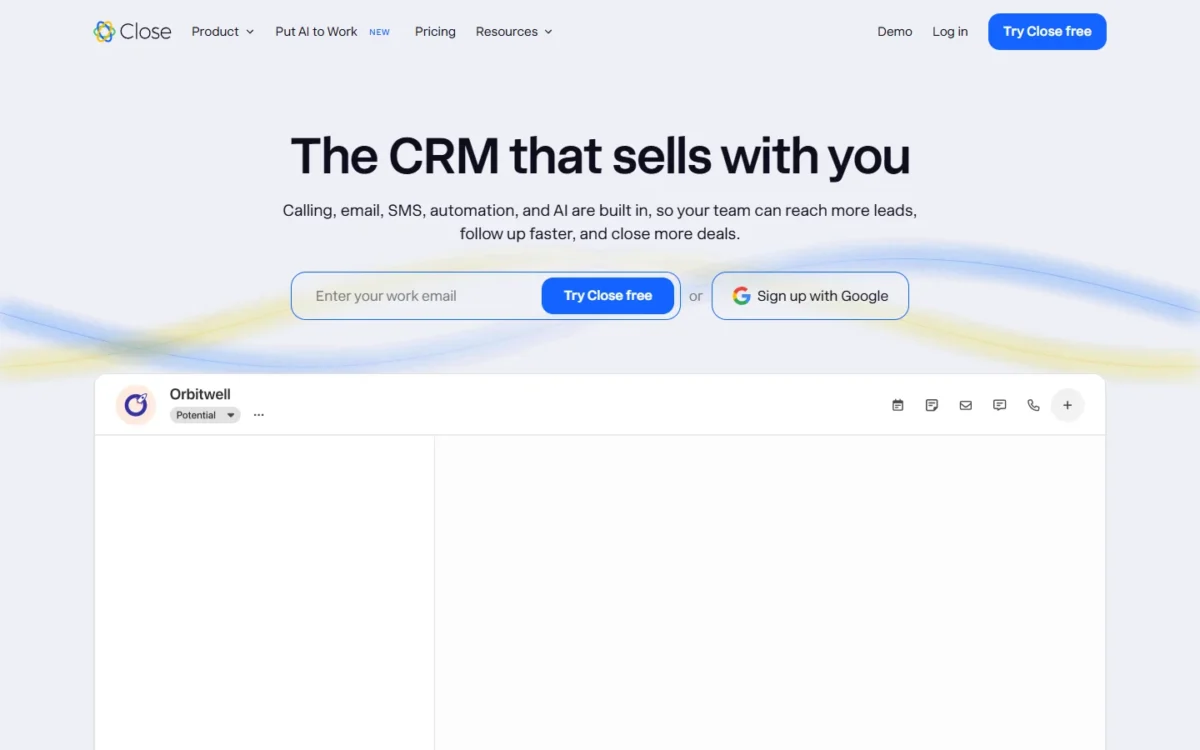
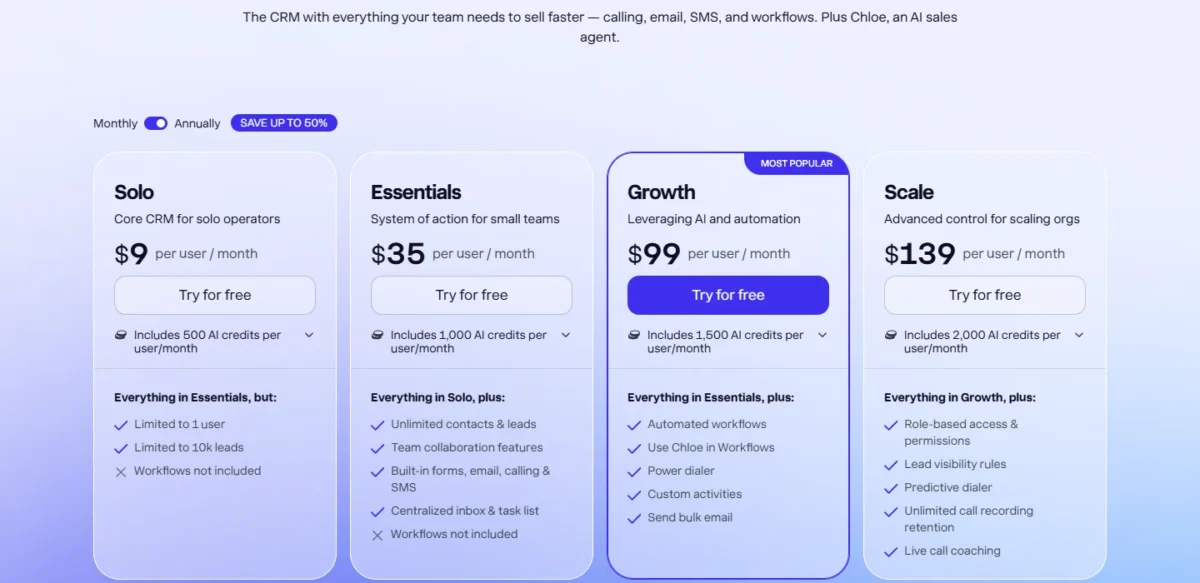
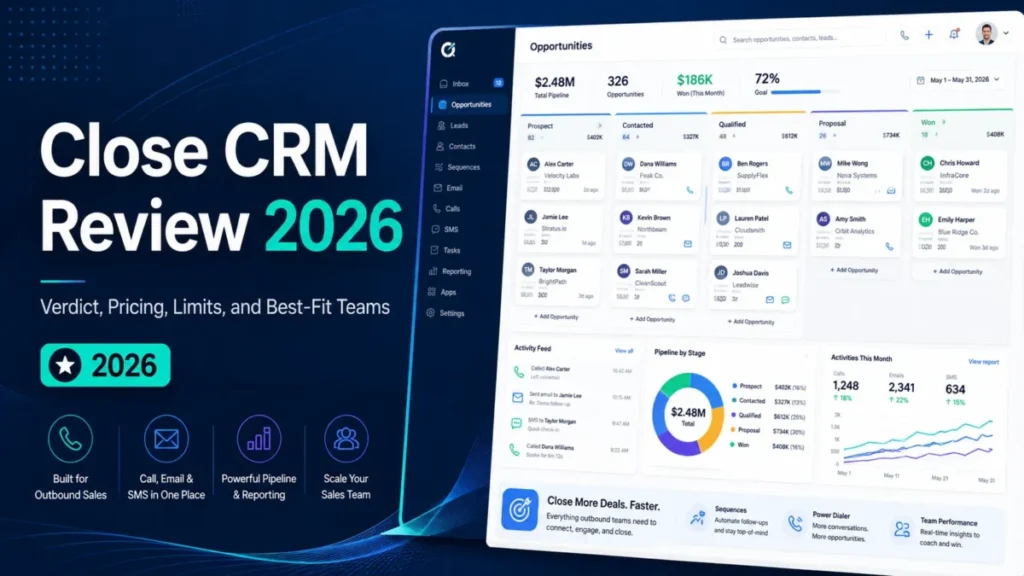
Close is the CRM built for startup sales teams that live on outbound activity: cold calls, email sequences, SMS follow-ups, and pipeline velocity. If your startup’s GTM motion is “reps prospecting every day,” Close fits that workflow better than most general-purpose CRMs. For our full take, see the Close CRM review.

Pricing starts at $9/user/month (Solo, annual). Essentials is $35, Growth is $99, and Scale is $139 per user/month. The Close startup program offers up to 60% off the first year.

Score: 8.1/10

Best for: Sales-led B2B startups with reps prospecting every day via phone, email, and SMS.

Not for: Teams wanting broad marketing, service, or project management functionality inside the CRM.

Starting price: $9/user/month (Solo, annual) | Essentials $35 | Growth $99 | Scale $139

Free plan / free trial: Free trial, no permanent free tier

What I like:

  • Built-in calling, email, and SMS channels at the core, not as add-ons
  • Sales workflow is tightly optimized for outbound motion and speed
  • Startup program (up to 60% off year one) significantly reduces first-year cost
  • Reporting is focused on sales activity metrics that matter for pipeline accountability

What to watch:

  • Telephony and SMS usage costs sit outside headline pricing, which can add up for high-volume calling teams
  • Narrower fit than all-in-one CRMs: no marketing automation, no project management, no service desk
  • Growth and Scale tiers are expensive; the price jump from Essentials to Growth is significant
  • Less useful if your sales motion is inbound-led or product-led rather than outbound-driven

Why it ranks here: Close is the best CRM for outbound startup sales teams, period. It ranks seventh because its narrow focus means most startups will need additional tools for marketing, support, and operations, and the telephony usage costs outside the subscription are easy to overlook.


8. monday CRM

monday CRM is an interesting pick for startups where the handoff between sales and execution is as important as the deal pipeline itself. It inherits the visual, highly configurable DNA of monday.com’s work management platform, which means you can track a deal from first touch through delivery without switching tools. See our monday.com review and monday CRM pricing for more.

Basic starts around $12/seat/month billed annually.

Score: 7.9/10

Best for: Startups with messy handoffs between sales and execution, or teams that want CRM plus work-management DNA.

Not for: Teams that only want classic CRM behavior and no work-management layer.

Starting price: ~$12/seat/month (annual, Basic)

Free plan / free trial: Free trial available

What I like:

  • Very visual, highly configurable boards that adapt to non-standard startup workflows
  • Strong if your startup mixes CRM with internal execution, onboarding, or delivery tracking
  • Automations are easy to build without code
  • Broad integration library covers most startup tool stacks

What to watch:

  • Can get expensive as seats grow, especially if your team spans sales, ops, and delivery
  • Some buyers still see it as more of an adaptable work OS than a pure CRM
  • Reporting for sales-specific metrics (win rates, pipeline velocity) is less mature than dedicated CRM tools
  • The flexibility can lead to messy setups if no one owns the system design

Why it ranks here: monday CRM is the best choice for startups that need CRM and project handoff in one place. It ranks eighth because its CRM functionality, while capable, is not as deep as purpose-built sales CRMs for teams focused purely on pipeline management.


9. Insightly

Insightly

Insightly fills a specific gap: CRM plus project delivery tracking. If your startup sells services, implementations, or anything that requires a structured handoff from “deal closed” to “work delivered,” Insightly handles that transition natively. For more depth, read our Insightly CRM review.

Pricing starts at $29/user/month (Plus), with Professional at $49 and Enterprise at $99, all billed annually.

Score: 7.6/10

Best for: Service-heavy startups and implementation-oriented teams where sales-to-delivery visibility matters.

Not for: Teams wanting the cheapest entry point or a pure sales pipeline tool.

Starting price: $29/user/month (Plus, annual) | Professional $49 | Enterprise $99

Free plan / free trial: Free trial available

What I like:

  • Native project management angle is a genuine differentiator for service-oriented startups
  • Good at bridging the gap between sales and delivery without needing a separate PM tool
  • Relationship linking between contacts, organizations, and projects is well-designed
  • AppConnect integration platform is included

What to watch:

  • Higher starting price ($29/user/month) than several startup-focused rivals
  • Sales-specific features (sequences, calling) are less developed than Close or Pipedrive
  • The UI feels functional but not as modern as Attio or HubSpot
  • Scaling beyond 10-15 users can push you toward Enterprise pricing faster than expected

Why it ranks here: Insightly is the right CRM for a specific startup profile: teams that need visibility across the full customer lifecycle from sale through delivery. It ranks ninth because its higher starting price and more niche positioning make it less universally applicable than the top eight.


10. Less Annoying CRM

Less Annoying CRM

Less Annoying CRM does exactly what its name promises. One plan. One price. $15/user/month. No tiers, no upsells, no contact limits, no pipeline caps. For very small teams (1-5 people) who want a CRM that stays out of the way, it is a breath of fresh air. See our Less Annoying CRM review.

Score: 7.5/10

Best for: Very small teams that hate complicated CRM setups and want total pricing transparency.

Not for: Startups needing deeper automation, richer reporting, or complex multi-team structures.

Starting price: $15/user/month (one plan)

Free plan / free trial: Free trial, no permanent free tier

What I like:

  • Pricing transparency is unmatched: one plan, one price, no surprises
  • Unlimited contacts and pipelines at every seat
  • Setup is genuinely fast; most teams are operational within 30 minutes
  • Customer support is responsive and human

What to watch:

  • Simplicity is the value, but also the ceiling; automation, reporting, and integrations are basic
  • No mobile app with the depth of HubSpot or Pipedrive
  • Limited marketing and campaign management capabilities
  • If your team grows past 5-10 people, you will likely need to migrate to a more capable platform

Why it ranks here: Less Annoying CRM is the best CRM for founders who want simplicity above all else. It ranks tenth because that simplicity becomes a constraint as your team, process, or data complexity grows.


11. Copper

Copper — Best for Google Workspace Teams Needing Gmail-Native Experience

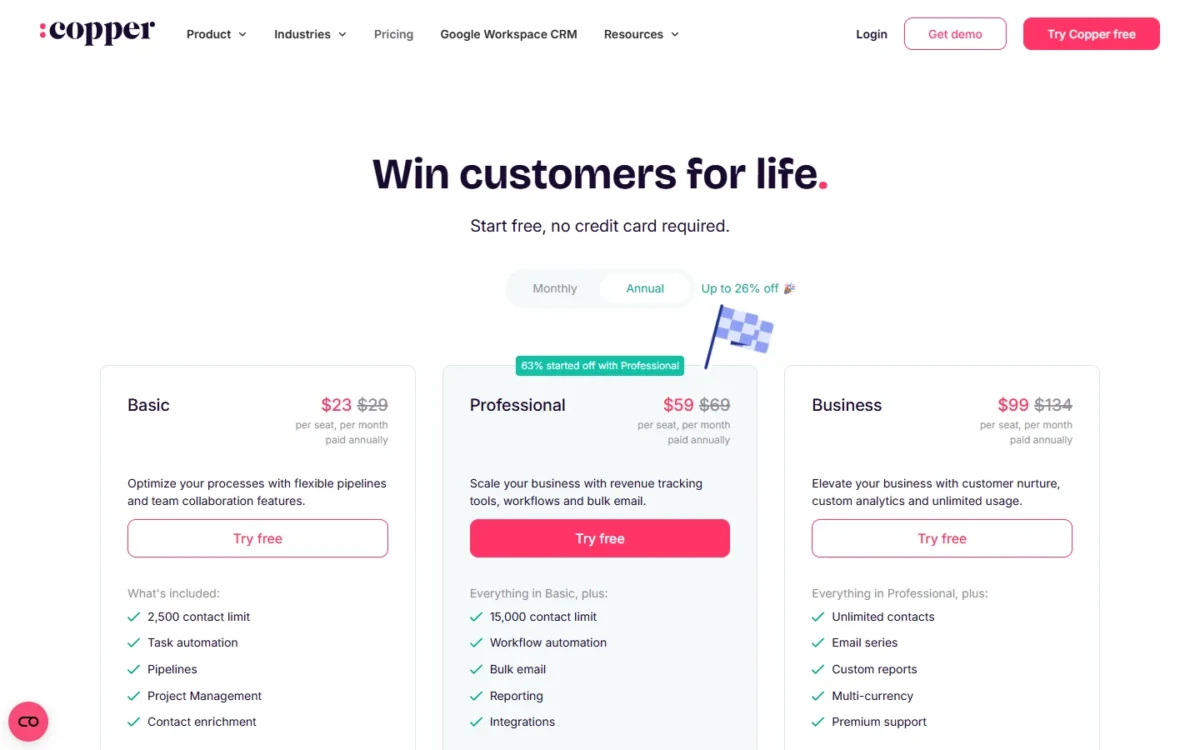
Copper is the CRM for startups that run everything through Google Workspace. It lives inside Gmail and Google Calendar, logging emails and meetings automatically and letting you manage deals without ever leaving your inbox. For the full assessment, see our Copper CRM review.

Market entry pricing starts around $9/user/month, with Professional at $59/user/month and Business at $99/user/month (annual).

Score: 7.3/10

Best for: Gmail/Calendar-centric teams that want CRM functionality without leaving Google Workspace.

Not for: Companies outside the Google stack or wanting the lowest total cost of ownership.

Starting price: ~$9/user/month (entry) | Professional $59/user/month | Business $99/user/month (annual)

Free plan / free trial: Free trial available

What I like:

  • Deep Google Workspace integration is best-in-class; feels like a native extension of Gmail
  • Automatic email and calendar logging reduces manual data entry
  • Pipeline management and contact enrichment work well within the Google environment
  • Relationship tracking across emails and meetings is strong

What to watch:

  • Positioning is narrower than general-purpose CRMs; if you ever leave Google Workspace, Copper loses its primary advantage
  • Published pricing presentation is less clean than some rivals, making total cost harder to estimate upfront
  • Mid-tier and upper-tier pricing ($59-$99/user/month) is steep for startups scaling past 5 seats
  • Limited value outside the Google ecosystem

Why it ranks here: Copper is the right CRM for a specific workflow: Google Workspace-native startups that want zero context switching. It ranks eleventh because that narrow positioning limits its appeal, and the pricing at higher tiers is not competitive for most startup budgets.


12. Capsule CRM

Capsule CRM — Best for Simplicity and Small Teams Under 10 Users

Capsule is the calm CRM. It does not try to be everything. It offers contact management, sales pipelines, task tracking, and basic project features in a clean, uncluttered interface. For small service startups and consulting teams, it often hits the sweet spot between “spreadsheet” and “enterprise CRM.” Our Capsule CRM review covers this in depth.

A free plan is available. Paid plans start around $18/user/month on an annual basis, with a 14-day trial.

Score: 7.2/10

Best for: Small service startups and teams wanting less clutter with enough structure to grow.

Not for: High-complexity, automation-heavy sales motions or teams needing advanced reporting.

Starting price: Free plan | Paid from ~$18/user/month (annual)

Free plan / free trial: Yes (free plan + 14-day trial of paid features)

What I like:

  • Cleaner, less-bloated product approach than many CRM competitors
  • Sales pipeline plus basic project and customer service messaging in one place
  • Good for teams that want structure without the learning curve of larger platforms
  • Integrations with Xero, Mailchimp, and Google Workspace cover common startup needs

What to watch:

  • Pricing page UX is less straightforward than some competitors
  • Automation and workflow capabilities are limited compared to HubSpot or Zoho
  • Reporting is functional but basic; no advanced forecasting or custom dashboard building
  • Scaling past 10-15 users may expose feature limitations

Why it ranks here: Capsule is a solid, no-drama CRM for startups that value simplicity and calm. It ranks twelfth because its simplicity, while refreshing, limits how far it can carry a growing team.


13. Nimble

Nimble

Nimble is built for relationship-driven selling: founders who close deals through personal networks, consultative conversations, and social context. It bundles CRM, email marketing, and sales pipelines into one plan at $24.90/user/month (annual). Read our Nimble CRM review for more.

Score: 7.0/10

Best for: Consultative selling, founder networking, and social/contact intelligence workflows.

Not for: Teams wanting deep multi-stage automation or broad product modules.

Starting price: $24.90/user/month (annual, one plan)

Free plan / free trial: Free trial, no permanent free tier

What I like:

  • One-price simplicity: CRM, email marketing, and pipelines in a single plan
  • Contact enrichment and social intelligence features help relationship-focused sellers
  • Browser extension for prospecting and contact capture is useful for founder-led outreach
  • Clean, focused interface without unnecessary complexity

What to watch:

  • Less flexible tiering means you pay the same whether you are a solo founder or a 15-person team
  • Automation depth is limited compared to HubSpot, Zoho, or ActiveCampaign
  • Pipeline management is functional but not as visual or fluid as Pipedrive
  • Limited project management or post-sale functionality

Why it ranks here: Nimble works well for founders who sell through relationships rather than volume. It ranks thirteenth because its single-tier pricing and limited automation constrain its fit for startups with more complex or high-velocity sales processes.


14. Bigin by Zoho CRM

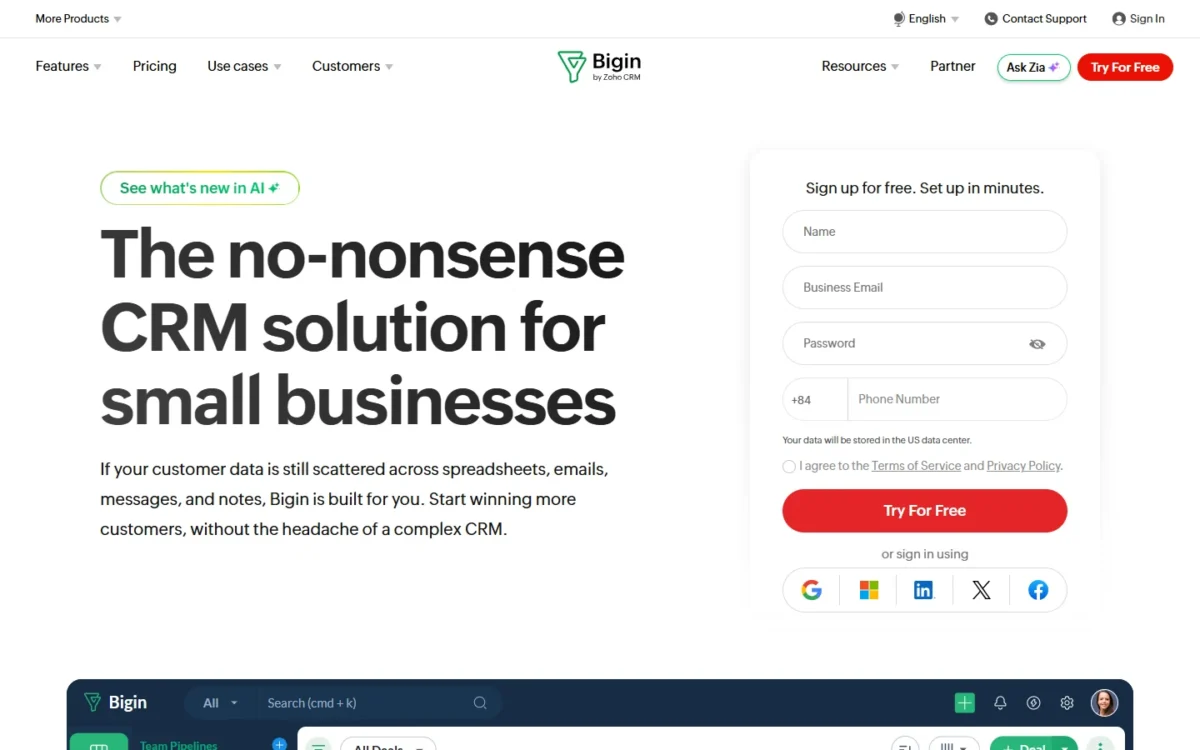
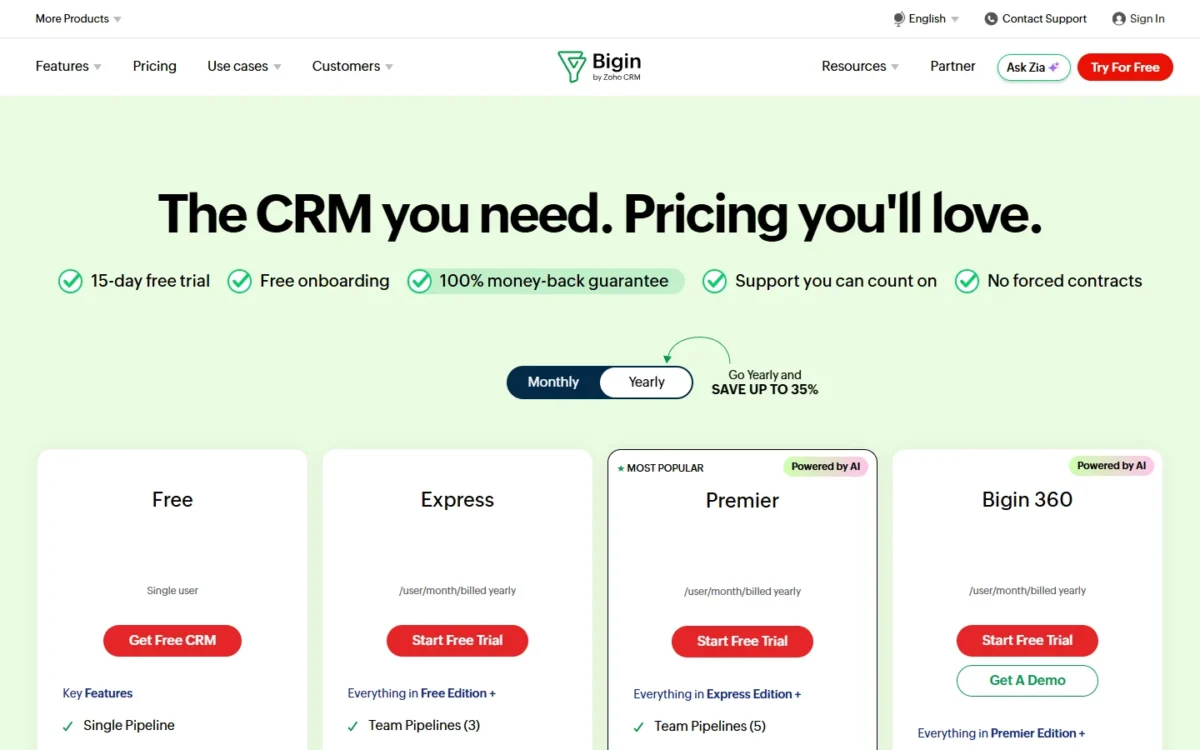
Bigin is the CRM for micro-startups and solo founders who are ready to graduate from spreadsheets but not ready for a full-scale CRM platform. It starts at just $7/user/month (annual), with a functional free plan available. For teams that outgrow it, the upgrade path into the full Zoho CRM ecosystem is clear.

Score: 6.9/10

Best for: Micro-startups, solo founders, and very early teams graduating from spreadsheets.

Not for: Teams already needing full CRM depth, multi-stage automation, or advanced reporting.

Starting price: $7/user/month (annual) | Free plan available

Free plan / free trial: Yes

What I like:

  • Explicitly positioned for small businesses and startups, not a stripped-down version of a bigger product
  • At $7/user/month, it is one of the most affordable paid CRMs available
  • Good bridge into the wider Zoho ecosystem when you are ready to upgrade
  • Simple pipeline and contact management covers the basics well

What to watch:

  • Limited compared with full-scale CRM suites; you will hit ceilings on automation and reporting
  • Customization options are constrained relative to Zoho CRM or HubSpot
  • Integration library is smaller than most higher-ranked tools
  • If you are already past 5 team members with a structured sales process, Bigin may feel too basic

Why it ranks here: Bigin is the best budget-first CRM on this list. It ranks fourteenth because it is intentionally limited in scope, serving as a stepping stone rather than a long-term platform.


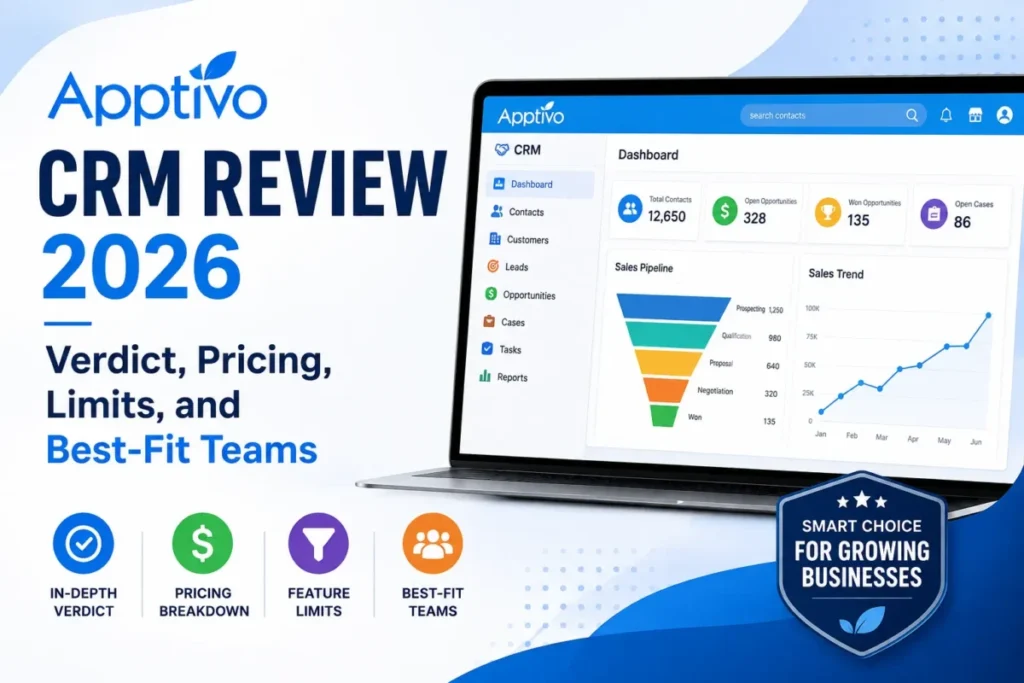
15. Apptivo

Apptivo offers broader operational coverage than most CRMs at its price point: CRM, invoicing, project management, supply chain, and more in a modular suite. Lite starts at $20/user/month, Premium at $30, and Ultimate at $50. See our Apptivo CRM review.

Score: 6.7/10

Best for: Startups that want broader app coverage without enterprise pricing.

Not for: Teams prioritizing best-in-class UX or the most polished onboarding experience.

Starting price: $20/user/month (Lite) | Premium $30 | Ultimate $50

Free plan / free trial: Free trial available

What I like:

  • Modular breadth covers more operational ground than most CRMs at this price
  • 24/7 support messaging on the pricing page suggests strong service commitment
  • Customization is available across most modules
  • Invoicing and project management alongside CRM reduces tool count

What to watch:

  • Product breadth can dilute simplicity; there is a lot to configure if you use multiple modules
  • The UX is functional but not polished compared to Pipedrive, HubSpot, or Attio
  • Brand awareness is lower, which can affect hiring (fewer candidates will know the tool)
  • Some modules feel less developed than their standalone competitors

Why it ranks here: Apptivo is a decent pick for operationally complex startups on a budget. It ranks fifteenth because the breadth-over-depth tradeoff means no single module is best-in-class.


16. ActiveCampaign

ActiveCampaign

ActiveCampaign is a marketing automation platform with a CRM built in, not the other way around. If your startup’s growth engine is email-driven funnels, lifecycle marketing, and drip campaigns, ActiveCampaign gives you CRM functionality tightly wired into those workflows. Our ActiveCampaign review explores this further.

Plans start at $15/month, but pricing depends heavily on contact volume and which modules you select.

Score: 6.5/10

Best for: Lifecycle-heavy startups and email-driven funnel teams where CRM must live tightly with marketing automation.

Not for: Pure sales teams wanting a classic CRM-first UX.

Starting price: From $15/month (contact-dependent pricing)

Free plan / free trial: Free trial, no permanent free tier

What I like:

  • Native CRM inside a broader marketing automation platform, which eliminates sync issues
  • Automation builder is one of the most capable in the SMB market
  • No setup fees or onboarding charges noted on the pricing page
  • Email deliverability and campaign management are strong

What to watch:

  • Pricing complexity is contact-driven, not as clean as per-seat-only tools; your bill grows with your list
  • CRM functionality is secondary to marketing automation; sales teams may find it limiting
  • The interface is dense and takes longer to learn than simpler CRM tools
  • If you do not need marketing automation, you are paying for capability you will not use

Why it ranks here: ActiveCampaign is the best CRM for marketing-led startups. It ranks sixteenth because most startups at the early stage need a sales-first CRM, not a marketing automation platform with CRM attached.


17. Streak

Streak

Streak is the most Gmail-native CRM available. It runs entirely inside your Gmail inbox as a browser extension, turning email threads into pipeline deals without ever opening a separate app. Our Streak CRM review covers the full experience.

Pro is $49/user/month (annual), Pro+ is $69, and Enterprise is $129.

Score: 6.3/10

Best for: Solo founders and small teams operating primarily inside Gmail who never want to leave the inbox.

Not for: Companies needing a fuller standalone CRM environment or teams outside Gmail.

Starting price: $49/user/month (Pro, annual) | Pro+ $69 | Enterprise $129

Free plan / free trial: Limited free plan available

What I like:

  • Deepest Gmail-native workflow available; CRM lives where you already work
  • Mail merge, email tracking, and pipeline management inside Gmail are well-executed
  • Setup is fast since there is no separate application to learn
  • Good for solo founders who want lightweight deal tracking without leaving email

What to watch:

  • Premium pricing relative to simpler startup CRM competitors; $49/user/month is expensive for what is essentially a Gmail add-on
  • Entirely dependent on Gmail; if you switch email providers, Streak is useless
  • Limited reporting, automation, and customization compared to standalone CRMs
  • Collaboration features are constrained by the Gmail interface

Why it ranks here: Streak solves a real problem for Gmail-centric founders. It ranks seventeenth because the price-to-capability ratio is hard to justify when standalone CRMs offer more functionality at a lower cost.


18. Bitrix24

Bitrix24

Bitrix24 is the CRM for startups obsessed with getting a lot of tools without paying anything upfront. The free plan includes unlimited users, CRM, tasks, projects, chat, video calls, and more. That is a genuinely generous footprint. Our Bitrix24 CRM review breaks this down further.

Score: 6.1/10

Best for: Teams that want a lot of tools without paying early.

Not for: Teams that value polish, simplicity, and low-noise UX.

Starting price: Free (unlimited users) | Paid plans for advanced features

Free plan / free trial: Yes, free plan with unlimited users

What I like:

  • Very generous free footprint; unlimited users on the free plan is unique in this ranking
  • Broad all-in-one workspace positioning covers CRM, projects, communication, and HR
  • Self-hosted option available for teams with data sovereignty requirements
  • If budget is your primary constraint, Bitrix24 gives you the most surface area for $0

What to watch:

  • Can feel bloated; the number of features creates noise that slows down startup teams
  • Not the cleanest startup onboarding experience; expect a steeper learning curve
  • UX design lags behind modern competitors like Attio, HubSpot, or Pipedrive
  • Some features feel half-built compared to dedicated tools in each category

Why it ranks here: Bitrix24 ranks eighteenth because, while the free tier is impressive on paper, the practical experience of using it as a startup CRM is weighed down by clutter and complexity. Affordability is high; usability is lower.


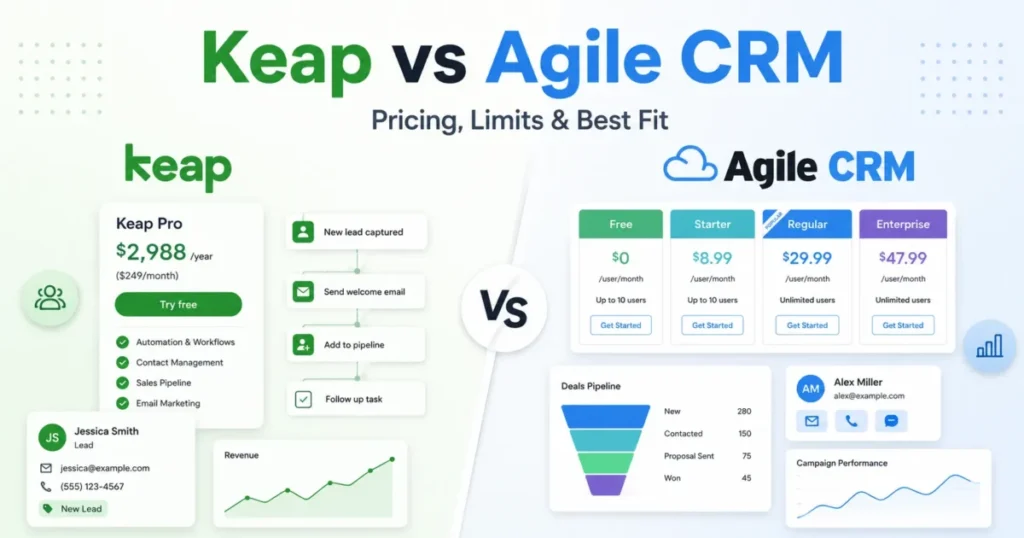
19. Keap

Keap is a CRM and marketing automation platform aimed at small business operators who need structured follow-up sequences, appointment scheduling, and payment processing in one tool. Plans start at $249/month.

Score: 5.5/10

Best for: Founder operators who want CRM plus marketing automation in one paid package, especially in service businesses.

Not for: Budget-sensitive early-stage teams.

Starting price: $249/month

Free plan / free trial: Free trial available

What I like:

  • Strong automation orientation for follow-up sequences and client lifecycle management
  • Combines CRM, marketing automation, invoicing, and appointment scheduling
  • Good for service-based startups that need structured client communication workflows
  • Established platform with a mature feature set

What to watch:

  • $249/month starting price is prohibitive for most early-stage startups
  • Migration and pro services can add meaningful one-time cost on top of the subscription
  • The product is designed more for established small businesses than for true startups
  • Feature richness creates complexity that early teams may not need

Why it ranks here: Keap ranks nineteenth primarily because of price. At $249/month before any add-ons, it is several multiples more expensive than the first-year cost of most tools above it. The automation is strong, but the price barrier eliminates it for most startup buyers.


20. Agile CRM

Agile CRM

Agile CRM offers a free plan for up to 10 users and a Starter tier at $8.99/user/month, which makes it one of the cheapest entries on this list. It bundles sales, marketing, and service modules. Our Agile CRM review covers this in detail.

Score: 5.2/10

Best for: Teams that want sales, marketing, and service in one cheap package.

Not for: Buyers who care about modern product freshness and regularly updated UX.

Starting price: Free (10 users) | Starter $8.99/user/month

Free plan / free trial: Yes, free for up to 10 users

What I like:

  • Extremely low-cost entry: free for 10 users is generous
  • Bundles sales, marketing, and service at a fraction of HubSpot’s cost
  • Email campaigns, landing pages, and helpdesk are included
  • Social media monitoring and engagement tools are built in

What to watch:

  • Product freshness and market momentum feel weaker than newer startup CRM leaders
  • UX design feels dated compared to tools like Attio, Pipedrive, or HubSpot
  • Integration library is smaller and less actively maintained
  • Support responsiveness has drawn mixed feedback from users

Why it ranks here: Agile CRM ranks twentieth because, while the pricing is attractive, the product’s age shows. Newer competitors offer better UX, more active development, and stronger support at similar or only slightly higher price points.


Macedona’s Quick Take

Here is what I would tell a founder over coffee:

If you are pre-revenue or pre-product-market-fit, start with a free plan (HubSpot, Freshsales, Bigin, or Attio’s free tier) and do not spend money on CRM until you have a repeatable sales motion. Spending on CRM before you understand your sales process is like buying running shoes before you decide which sport you are playing.

If you have 2-5 people selling and you just closed a seed round, HubSpot Starter with the startup discount or Attio Pro with their startup program will give you the most room to grow without migrating. If you are bootstrapped and selling through outbound, Pipedrive or Close will get you running in hours.

The single biggest mistake I see startups make is buying a CRM they plan to “grow into.” You do not grow into software. You either use it or you waste money on it. Buy what fits now, and migrate when you genuinely need more. Migration is cheaper than 12 months of underused licenses. Our editorial policy and review methodology explain how we evaluate tools with this philosophy in mind.


Startup Fit Matrix: Which CRM Fits Your Motion?

Not every startup sells the same way. Here is how the top CRMs map to different startup types and go-to-market motions.

Startup MotionTop PickRunner-UpWhy
Bootstrapped, tiny budgetBigin by Zoho CRMFreshsales (free)Lowest cost of ownership with real functionality
Founder-led sales (1-3 people closing)PipedriveHubSpot StarterFast setup, visual pipeline, minimal noise
Outbound-heavy (SDR/AE team)CloseHubSpotBuilt-in calling, SMS, sequences; Close is purpose-built for this
PLG-assisted / modern GTMAttioHubSpotFlexible data modeling, startup-native feel, relationship intelligence
Service-heavy / delivery handoffInsightlymonday CRMCRM + project management bridging the sales-delivery gap
Rapid-scaling funded startupHubSpotSalesforce StarterEcosystem depth, startup discount, and scale path
Gmail-native workflowCopperStreakCRM inside Google Workspace without context switching
Marketing-led funnelActiveCampaignHubSpotCRM tightly wired into email automation and lifecycle campaigns

Hidden Costs and Upgrade Traps

Most CRM pricing pages show you the headline number. The real cost is usually higher. Here are the hidden costs I see startups stumble into most often.

HubSpot: The free tier and Starter plan have contact, email, and automation limits. When you hit those limits, HubSpot’s own documentation acknowledges that customers may need to upgrade to Professional to get higher limits. The Professional tier is a meaningful price jump, and many startups do not budget for it until it is already necessary.

Salesforce: Starter includes 2,000 emails/month. If your team sends more, extra email bundles cost $10/month per additional 1,000 sends. This is documented in the Starter product page. It is not a lot of money, but it is the kind of incremental cost that adds up without anyone noticing until the invoice arrives.

Close: Headline pricing covers the CRM subscription, but calling and SMS usage are billed separately based on volume. For a startup running an outbound calling program, telephony costs can add 20-40% to the monthly CRM bill.

Keap: The $249/month starting price is just the subscription. Migration and professional services can add meaningful one-time costs for onboarding, data migration, and automation setup. Many teams do not factor this into their first-year budget.

General traps to watch:

  • Contact limits that force tier upgrades before you are ready
  • Per-seat pricing that punishes you for adding non-sales users (ops, support, leadership) to the CRM
  • Annual billing commitments that lock you in before you have validated the tool fits your workflow
  • Integration costs for connecting CRM to your email provider, calling platform, or marketing tool
  • Data export limitations that make migration expensive if you need to leave

Startup Credits and Discount Programs

Several CRM vendors run formal startup programs that can cut your first-year cost by 60-90%. Here are the ones worth knowing about.

ProgramDiscountEligibilityLink
HubSpot for StartupsUp to 90% off year one; 30% for some bootstrapped startupsFunded startups (varies by funding stage)hubspot.com/startups
Attio Startup Program80% off annual Pro year one; 30% off year twoEarly-stage startups (apply directly)attio.com/startups
Close StartupsUp to 60% off first yearEarly-stage startups (apply directly)close.com/startups

If you are a funded startup and you are not applying for at least one of these programs before buying a CRM, you are leaving money on the table. The application process for each is straightforward and usually takes less than a week.


How to Choose the Right CRM for Your Startup

There is no single best CRM for every startup. The right pick depends on four things:

1. Your GTM motion. Are you selling through founder-led outbound? Product-led growth? Inbound marketing? Service-based referrals? The fit matrix above maps CRM picks to each motion. Close is wrong for a PLG startup, and Attio is overkill for a consultative solo founder.

2. Your team size and growth plan. A 2-person team closing 10 deals a month needs a different CRM than a 15-person sales org running outbound sequences. Tools like Less Annoying CRM or Bigin are perfect at 2 people and limiting at 15. HubSpot and Salesforce are overkill at 2 but built for 15+.

3. Your budget reality. If you are bootstrapped, start with a free plan and upgrade only when the free tier actively blocks your workflow. If you have funding, apply to startup programs first and treat the discount as part of your procurement process.

4. Your integration needs. If your startup already depends on Google Workspace, a Gmail-native CRM (Copper, Streak) has a lower adoption barrier. If you are running a broader stack (Slack, Notion, marketing tools), check the CRM’s integration library before committing. Understanding what SaaS software is and how these tools interconnect will help you avoid compatibility issues.


Do You Need a CRM Yet, or Are You Still Fine With Spreadsheets?

Not every startup needs a CRM right now. Here is a framework for deciding.

You probably do NOT need a CRM yet if:

  • You have fewer than 30 active leads or contacts
  • You are the only person touching sales conversations
  • Your sales process changes every week because you have not found product-market fit
  • You do not have a repeatable sales motion yet

You probably DO need a CRM when:

  • More than one person needs access to deal and contact information
  • You are losing track of follow-ups or letting leads go cold
  • Your spreadsheet has more than 100 rows and you are scrolling to find context before calls
  • You need to report pipeline status to investors, co-founders, or a board
  • You have a repeatable process that you want to enforce, even if it is simple

The transition point is usually when your spreadsheet starts failing you: missed follow-ups, duplicated effort, lost context. That is when a CRM pays for itself.


How We Ranked These Startup CRMs

Every product in this ranking was scored against a startup-specific weighted rubric. You can learn more about our full process in our review methodology.

CriterionWeightWhat It Measures
Startup fit and time-to-value25%How quickly a small team can go from signup to productive use
Pricing transparency and affordability20%Real cost clarity, free tiers, startup discounts, and hidden fees
Workflow automation / AI usefulness15%Practical automation that saves time, not feature-list padding
Scalability without painful migration15%Can you grow on this tool, or will you need to rip and replace?
Ease of use and onboarding10%Learning curve for non-technical founders and early sales hires
Integrations / ecosystem10%How well it connects with the tools startups already use
Reporting and operational visibility5%Pipeline metrics, forecasting, and activity tracking depth

Products were not ranked by brand size. Tools that are genuinely easy for startups to adopt scored higher. Tools that are overbuilt, expensive too early, or vague on total cost were penalized. There is a difference between “a great startup CRM” and “a great CRM that a startup can technically buy.” This ranking rewards the former. For details on about Macedona and our independence, see our author page.


Products We Evaluated But Did Not Rank

These products were considered during research but did not make the final 20:

  • Microsoft Dynamics 365 Sales: Too enterprise-heavy and expensive for most startups. Strong product, wrong buyer.
  • Zendesk Sell: Respectable sales CRM, but less compelling than top startup-specialist options at current pricing.
  • SugarCRM: Better fit for larger or more specialized teams than early-stage startups.
  • OnePageCRM: Good simplicity story, but weaker brand gravity and ecosystem than ranked rivals.
  • Salesflare: Startup-friendly in some cases, but not enough supporting coverage in this article’s evaluation scope.
  • Nutshell: Useful SMB tool, but less differentiated than ranked options.
  • Podium: Good for specific vertical and customer interaction cases, weaker general startup CRM fit.
  • Workbooks: More mid-market than startup-first.

Common Mistakes Startups Make When Buying a CRM

1. Buying for the company you want to be, not the one you are. Salesforce is an incredible platform. It is also a terrible choice for a 3-person startup with no dedicated ops person. Buy for today, migrate when you genuinely need more.

2. Ignoring total cost of ownership. The headline price is never the full cost. Factor in per-seat charges for non-sales users, contact tier overages, integration fees, and the time cost of setup and ongoing administration.

3. Treating CRM as a storage tool instead of a workflow tool. A CRM that your team only uses to log calls after the fact is a database, not a workflow. Pick a tool that fits into the way your team already works, not one that requires behavior change.

4. Skipping startup discount programs. HubSpot, Attio, and Close all offer startup-specific discounts that can save thousands in year one. Always check before buying at list price.

5. Locking into annual contracts before validating fit. Start monthly or on a free plan. Switch to annual billing only after you have confirmed the tool works for your team. Annual savings are meaningless if you end up switching tools at month four.

6. Over-customizing before the process is stable. Heavy customization on a sales process that is still changing weekly creates technical debt inside your CRM. Keep it simple until your process stabilizes, then invest in customization.

If you want to look at alternatives to the most popular option, our HubSpot CRM alternatives guide covers the competitive landscape in detail. For teams considering a CRM that blends with project management, that crossover guide is worth reading too.


FAQ

What is the best CRM for startups?
HubSpot is the best overall CRM for startups in 2026. It combines a strong free tier, a Starter plan from $9/seat/month, and a startup discount program offering up to 90% off year one. Attio is the best alternative for modern, data-flexible GTM teams.

Do startups need a CRM?
Not always. If you have fewer than 30 active leads and only one person selling, a spreadsheet works. You need a CRM when more than one person touches sales, follow-ups get missed, or you need pipeline reporting for investors.

Which CRM is best for a small startup with a limited budget?
Bigin by Zoho CRM ($7/user/month with a free plan), Freshsales (free for 3 users), and HubSpot (free tier) are the best options for budget-constrained startups. All three offer real functionality without upfront cost.

Is there a free CRM available for startups?
Yes. HubSpot, Freshsales, Zoho CRM, Attio, Bigin, Bitrix24, and Agile CRM all offer free plans. HubSpot and Freshsales provide the most balanced free-tier functionality for early-stage teams.

What features should startups look for in a CRM?
Contact management, deal pipeline tracking, email integration, basic automation, and reporting. Avoid paying for advanced marketing automation, AI features, or enterprise compliance tools until you genuinely need them.

What CRM do SaaS startups use?
Venture-backed SaaS startups commonly use HubSpot, Attio, Pipedrive, or Close. Attio is increasingly popular among PLG-assisted and ops-minded SaaS teams. HubSpot remains the most widely adopted across all SaaS startup stages.

Is HubSpot good for startups?
Yes. HubSpot is built specifically for startups and small businesses, with a strong free tier and Starter plans from $9/seat/month. The HubSpot for Startups program offers up to 90% off for eligible funded startups.

What is the easiest CRM for startups to implement?
Less Annoying CRM (one plan, $15/user/month, operational in 30 minutes) and Pipedrive (visual pipeline, productive within hours) are the easiest CRMs for startups to set up and start using immediately.

How much does CRM software cost for startups?
Startup CRM costs range from free to $249/month. Most startups spend $9-$35/user/month on a paid plan. Free plans (HubSpot, Freshsales, Bigin) can serve teams of 2-3 with no cost. Startup discount programs can reduce first-year costs by 60-90%.

When should a startup move from spreadsheets to a CRM?
Move to a CRM when your spreadsheet passes 100 rows, more than one person needs access to sales data, follow-ups are being missed, or you need to report pipeline status to investors. The tipping point is usually when the spreadsheet actively costs you deals.


Final Thoughts

The best CRM for startups in 2026 is the one your team will actually use. That sounds obvious, but it is the principle most startup CRM guides ignore when they rank by feature count or brand recognition.

HubSpot leads this ranking because it threads the needle between “enough to start right now” and “enough to keep you covered through Series A and beyond.” Attio is the strongest modern alternative for startups that want flexibility over convention. Pipedrive is still the fastest path from “zero CRM” to “working pipeline.” And free plans from Freshsales, Bigin, and Zoho CRM mean you genuinely do not need to spend money on CRM until you are ready.

Whatever you choose, start simple. Use the free tier or the cheapest plan. Validate that the tool fits your actual workflow before committing to an annual contract. Apply for startup discounts before paying list price. And remember: a CRM you ignore is more expensive than a CRM you outgrow.


About the author

I’m Macedona, an independent reviewer covering SaaS platforms, CRM systems, and AI tools. My work focuses on hands-on testing, structured feature analysis, pricing evaluation, and real-world business use cases.

All reviews are created using transparent comparison criteria and are updated regularly to reflect changes in features, pricing, and performance.

Follow the author: LinkedInX
Leave a Comment

Your email address will not be published. Required fields are marked *