
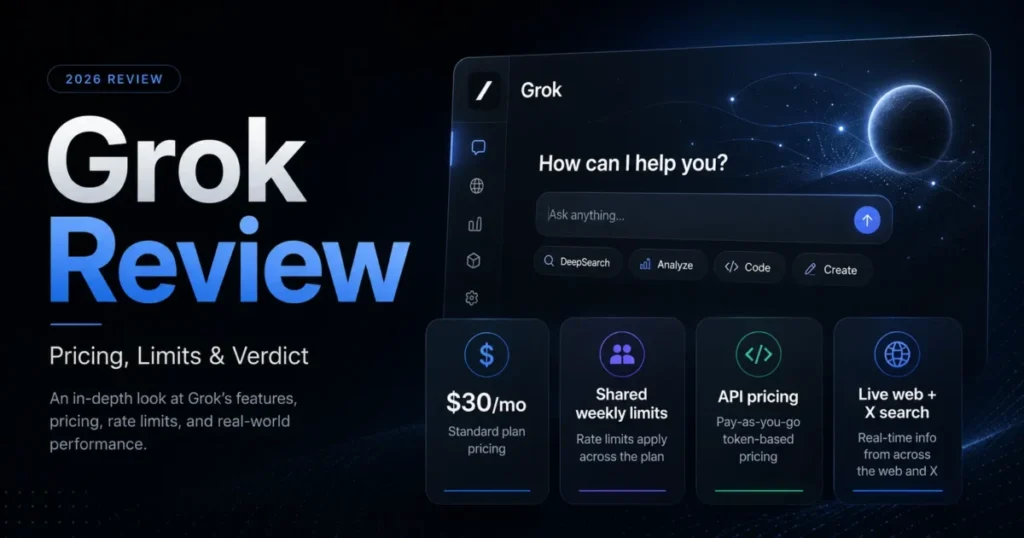
Grok is worth paying for when the decision is driven by live web and X context, mixed media creation, or agentic building. The catch is an allowance measured in compute rather than in a published number of messages. It is the wrong purchase for anyone who needs a fixed, auditable number of generations per dollar.
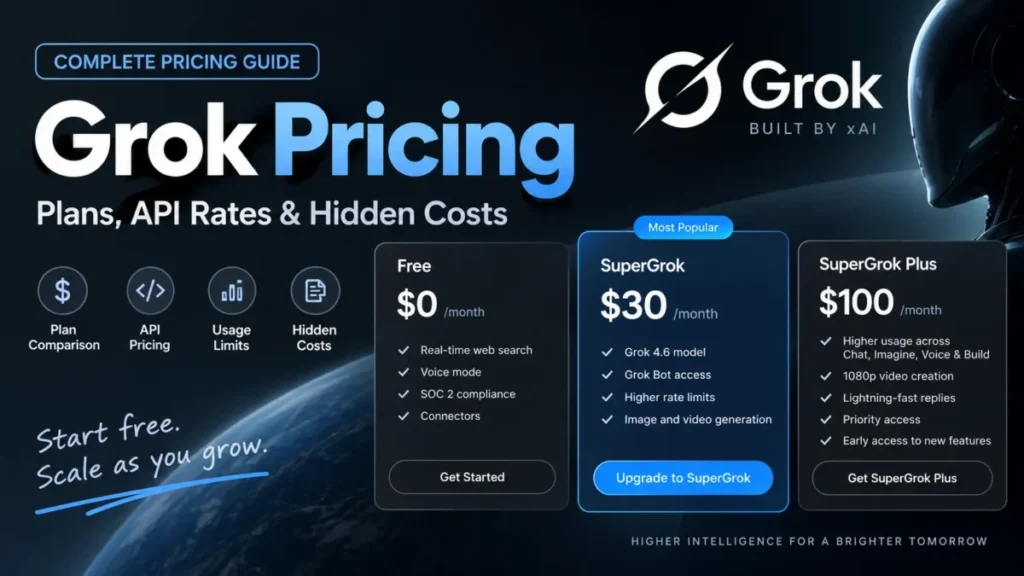
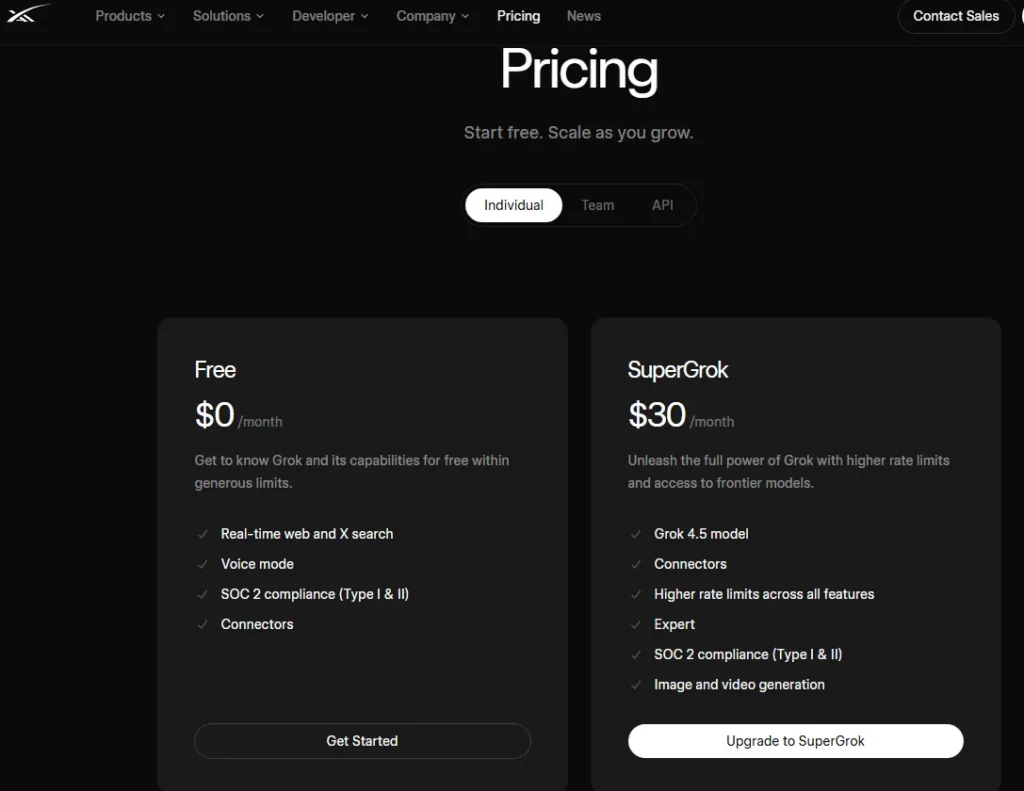
The standalone paid tier, SuperGrok, is listed at $30 per month on the US pricing page, and a Free tier is listed at $0 per month.
That $30 is the easy part of the math. Since June 2026 every paid Grok product draws from one shared weekly pool, so a heavy afternoon in Imagine can quietly reduce what is left for Chat, Voice, and Build.
This Grok review covers the three purchase paths, the allowance mechanics, connector permissions, API cost thresholds, and who should route elsewhere. For the wider field, see the best AI chatbots roundup.
In This Article (18 sections)
Quick Verdict
| Category | Verdict |
|---|---|
| Best for | Social-intelligence, current-events research, and creator teams that want live X context in the same tool as media generation |
| Not ideal for | White-label media agencies and any team that needs a published generation count per paid dollar |
| Starting price | $0 on Free; $30 per month for SuperGrok |
| Best practical plan | Free first, then SuperGrok once Free limits interrupt paid work at least weekly |
| Free plan/ | Yes, a Free tier at $0 per month |
| Setup difficulty | Low for chat and media, medium for connectors, high for organization-wide governance |
| Main strength | Real-time web and X retrieval combined with media, voice, and agentic Build in one product |
| Main limitation | One shared weekly compute pool with no published per-plan unit quota |
| Best alternative | ChatGPT or Claude for long-form knowledge work, Perplexity for source-first research |
Source: official Grok pricing page and official Grok FAQ, docs.x.ai/grok/faq. Checked: July 29, 2026.
Grok Pros and Cons
| Pros | Cons |
|---|---|
| Live web and X retrieval is built into the default answer path rather than sold as an add-on | One shared weekly pool covers Chat, Imagine, Voice, and Build, so media work can stall unrelated research |
| A permanent free tier keeps evaluation cost at zero before any card is entered | No public per-plan allowance number, which makes cost per output impossible to forecast |
| Chat, image, video, voice, file analysis, and agentic Build sit in one subscription instead of four | The Grok Imagine watermark cannot be removed, which rules out white-label delivery |
| Published API token rates, tool fees, and spend tiers make agentic cost modeling possible before launch | Crossing 200,000 input tokens doubles the API token rates for the entire request |
| Connector documentation states that connected data is not used for training and is not stored by Grok | Consumer support responsibility fragments across web, Google, Apple, and X billing channels |
Source: official Grok FAQ, official Grok connector documentation, and official API pricing, docs.x.ai/developers/pricing. Checked: July 29, 2026.
What Is Grok?
Grok is the general-purpose assistant built by X.AI LLC and marketed by SpaceXAI through grok.com and x.ai. The public product page positions it around live web and X citations, voice, image and video creation, coding, and multi-agent work.
The current flagship model is Grok 4.5, announced on July 16, 2026 and positioned for coding, agentic tasks, and knowledge work. Benchmark superiority statements on that page remain vendor claims until independently replicated.
One misconception is worth clearing early. An X account is not required, because the sign-in screen also supports Google, Apple, and email.
Another stale detail still circulating in older reviews: Grok Studio has been discontinued, and the official replacement is Grok Build. The FAQ also recommends grok.com over grok.x.ai, because the older host can lack features such as Projects.
For readers new to the category, generative AI explained covers the underlying model behavior this review assumes.
Methodology: How Grok Was Evaluated
This analysis is based on official Grok pricing, the official FAQ, developer pricing and rate-limit documentation, connector pages, business and legal terms, app-store listings, one independent benchmark, two academic studies, and labeled review-platform sentiment. Pricing, plan limits, and API rates were checked on July 29, 2026.
Grok was assessed against the same buyer-focused criteria applied to every assistant on this site: usable entry pricing, plan gates, usage limits, workflow fit, connector permissions, admin and retention controls, support routing, and documented limitations.
Greater weight was given to factors that change a purchase decision rather than a feature count. Allowance mechanics, top-up economics, API threshold pricing, and contract defaults outranked benchmark positioning.
Claims that could not be verified from official sources were excluded rather than softened, and vendor benchmark statements are labeled as vendor claims. Review-platform sentiment is treated as a directional signal, never as a measured failure rate.
Grok Pricing and Plans: Three Separate Buying Paths
Most Grok pricing coverage blends three products into one ladder. They are separate purchases with different billing units, and buying one does not include the others.
Path 1: standalone Grok subscriptions
| Plan | Price | Best for | Key limits | Worth it? |
|---|---|---|---|---|
| Free | $0 per month | Evaluating retrieval quality and media output before paying | Lower chat, media, and voice limits than paid tiers | Yes, and it is the correct starting point |
| SuperGrok | $30 per month | Individuals hitting Free limits during paid work | One shared weekly pool across Chat, Imagine, Voice, and Build | Yes, once Free limits interrupt work weekly |
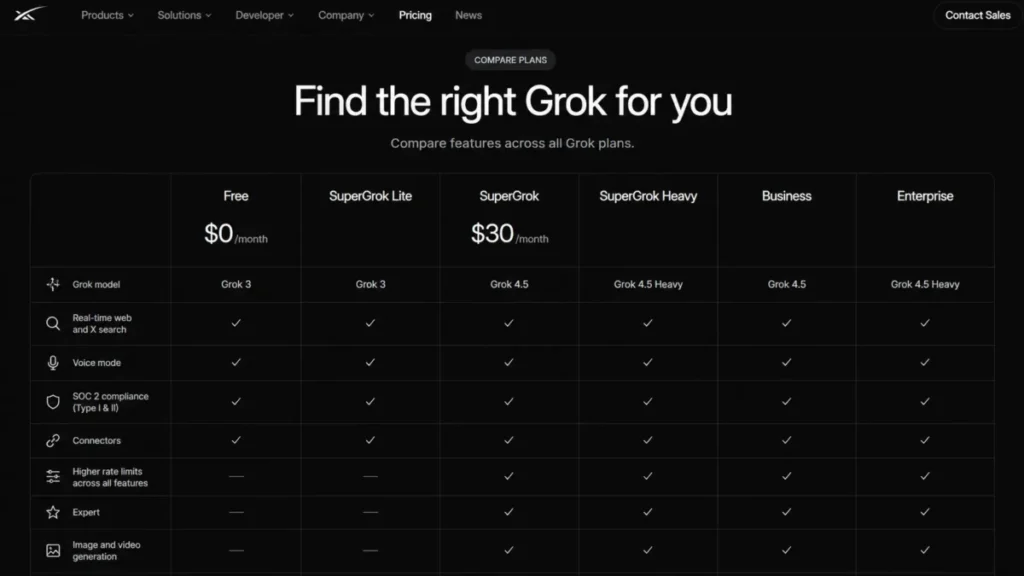
| SuperGrok Lite | Not published on the accessible pricing page | Named in the comparison, price not public | Not published | Request the price before assuming a gap |
| SuperGrok Heavy | Not published on the accessible pricing page | Named in the comparison, price not public | Not published | Request the price before assuming a gap |
| Business / Enterprise | Custom | Teams needing managed connectors, SSO, SCIM, and retention control | Contract-dependent | Only after the order form is reviewed |
Source: official Grok pricing page, Grok plan comparison. Prices are US list prices in USD and can change; verify before purchase. Checked: July 29, 2026.
The pricing page names Free, SuperGrok Lite, SuperGrok, SuperGrok Heavy, Business, and Enterprise, but the accessible page text does not publish a price for every named tier. Any review quoting a firm number for Lite or Heavy is quoting something the public page does not show.
Annualized, the verified $30 monthly rate is $360 per year, which is editorial arithmetic rather than an official annual plan.
Path 2: X Premium bundles
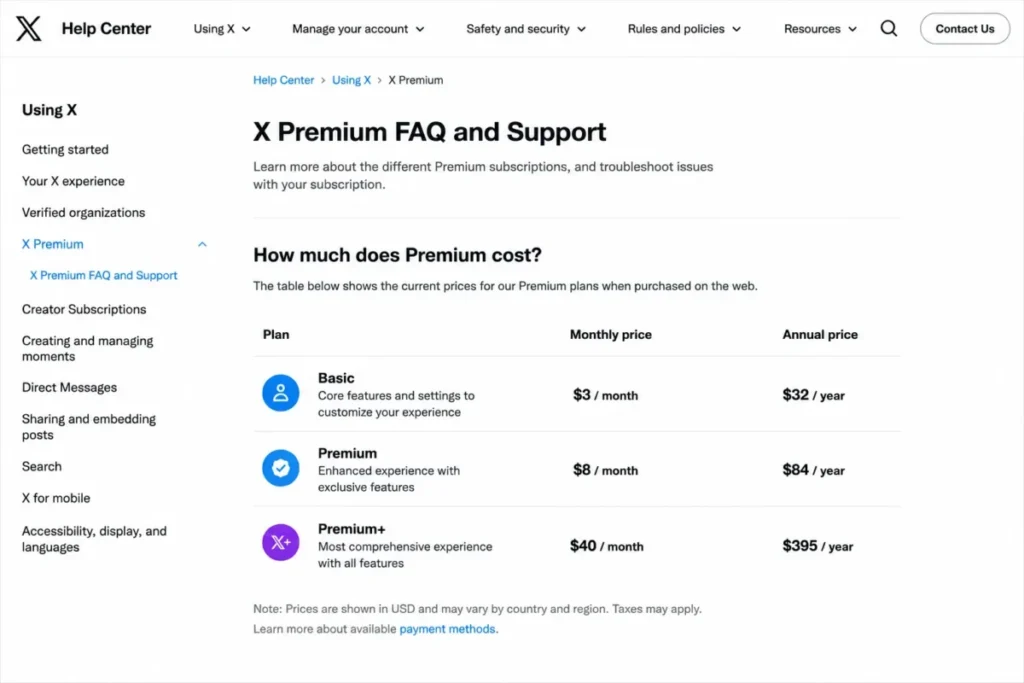
| X tier | Monthly (web) | Annual (web) | Grok position |
|---|---|---|---|
| X Basic | $3 | $32 | Entry tier, lowest of the paid Grok limits inside X |
| X Premium | $8 | $84 | Middle tier for Grok limits inside X |
| X Premium+ | $40 | $395 | Highest Grok limits available through an X subscription |
Source: official X Premium FAQ, help.x.com. Prices are US web list prices and exclude tax. Checked: July 29, 2026.
Paying annually for X Premium+ costs $85 less than twelve monthly payments at the published rate. The exact consumer-unit difference between these tiers is not quantified in the official FAQ, so treat “higher limits” as a direction rather than a measurable entitlement.
Path 3: the API
| Item | Below 200,000 input tokens | At 200,000 input tokens or more |
|---|---|---|
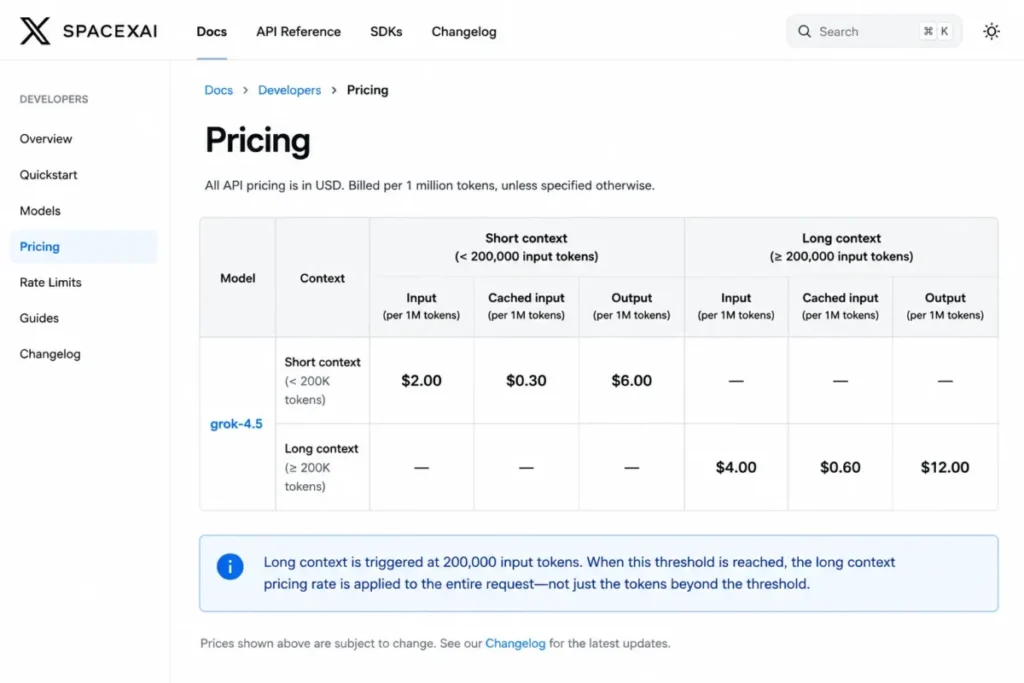
| grok-4.5 input | $2 per million tokens | $4 per million tokens |
| grok-4.5 cached input | $0.30 per million tokens | $0.60 per million tokens |
| grok-4.5 output | $6 per million tokens | $12 per million tokens |
Source: official API pricing documentation, grok-4.5 rate card. US list prices in USD. Checked: July 29, 2026.
The threshold applies to the whole request, not to the tokens above the line. A prompt at 199,000 input tokens and the same prompt at 200,000 input tokens are billed at different rates end to end, which is the single sharpest cost cliff in Grok’s developer pricing.
Tool calls are billed separately from tokens. Web search, X search, and code execution are $5 per 1,000 calls, attachments are $10 per 1,000, and collections are $2.50 per 1,000.
Media and voice are metered again on top of that. Image generation runs from $0.02 to $0.07 per image depending on model and resolution, Grok Video 1.5 runs from $0.08 to $0.25 per second by resolution, and real-time voice is $0.05 per minute.
For teams unfamiliar with metered model billing, what an API is covers the request-and-response model these rates apply to.
The practical plan
Start on Free. The reason is not feature access, because Free reaches the same real-time retrieval and media surfaces at lower limits.
The reason is that the paid risk is an undisclosed compute-weighted allowance, and a week on Free is the cheapest way to learn a personal consumption rate. Move to SuperGrok when Free limits interrupt revenue-relevant work at least once a week, and set a hard monthly cap on top-ups before enabling them.
The Shared Weekly Limit That Decides Whether $30 Is Worth It
Since June 2026, paid Grok users receive one shared weekly usage pool spanning Chat, Imagine, Voice, and Build. The pool resets weekly, is displayed as a percentage used, and different products consume different amounts of compute.
This is the mechanic that turns a fixed subscription into a variable one. A predictable $30 does not buy a predictable number of outputs, because a video request and a chat turn are not weighted the same.
| Limit | Value | Reset | What happens at the boundary |
|---|---|---|---|
| Paid weekly allowance | Compute-weighted, no published unit count | Weekly | Paid features pause; Free Chat and Voice limits remain |
| Extra Usage Credits | $5 minimum purchase, web only | Expire one year after purchase | Consumed after included usage, at a higher rate than included usage |
| 720p video | Plan-specific cap, value not published | Within the weekly allowance | Output falls back to 480p automatically |
| Files on web | About 100 files, most up to 150 MB each | Per upload context | Upload is constrained beyond the limit |
| Files on Android | Up to 20 files | Per upload context | Split the batch or move to web |
Source: official Grok FAQ usage and file documentation, Grok usage limits. Checked: July 29, 2026.
Settings then Usage shows a progress bar, a category breakdown, the reset timing, and the credit balance. Capturing that screen before a large media job is the cheapest way to avoid a mid-week stall.
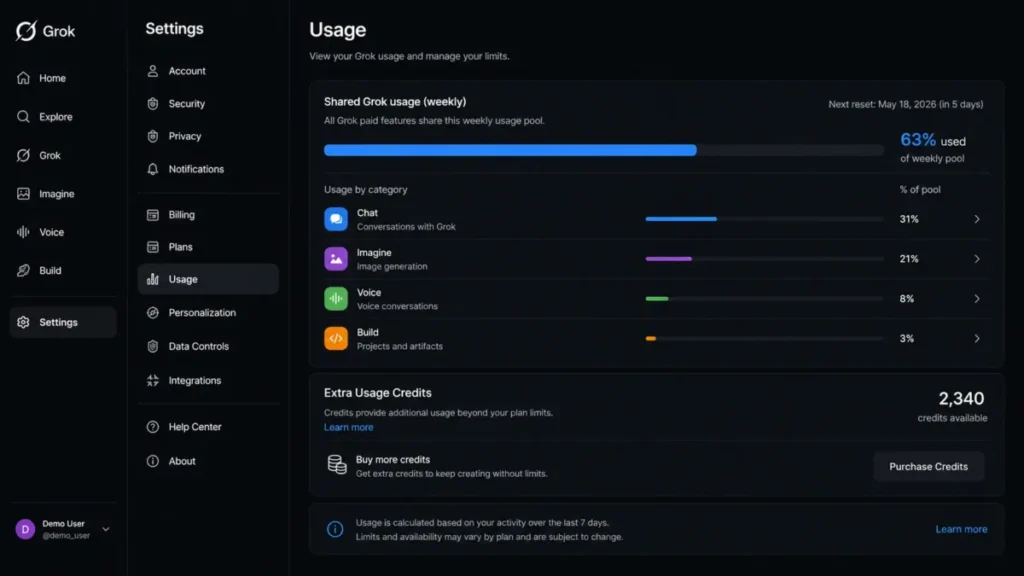
The credit mechanics deserve their own line in the budget. Extra Usage Credits are web-only, start at a $5 minimum, are consumed only after included usage, expire after one year, and are priced at a higher standard rate than included usage.
The exact per-unit credit price was not exposed in the accessible FAQ text, so budget the top-up as an open variable rather than a known rate. Reddit threads show recurring frustration with forecasting media consumption against this pool, and that sentiment is anecdotal rather than a verified quota.
Source: user discussion on Reddit r/grok weekly limits, labeled sentiment, not verified quota data. Checked: July 29, 2026.
Feature Gates: What You Get on Each Access Path
| Capability | Free | SuperGrok | X Premium+ | Business / Enterprise | API |
|---|---|---|---|---|---|
| Real-time web and X search | Yes, lower limits | Yes, higher limits | Yes, highest X-bundled limits | Yes | Billed per tool call |
| Image and video generation | Yes, lower limits | Yes, shared weekly pool | Yes, X-bundled limits | Yes | Metered per image or second |
| Voice | Yes, lower limits | Yes, shared weekly pool | Yes | Yes | Metered per minute |
| Connectors | Available to all Grok users | Available | Available | Centralized provisioning and admin controls | Not applicable |
| SSO, SCIM, custom retention | No | No | No | Yes, contract-dependent | Not applicable |
| Companions | iOS app only | iOS app only | iOS app only | iOS app only | Not applicable |
Source: official Grok pricing page, official connector documentation, docs.x.ai/grok/connectors, and the official Grok Business page. Checked: July 29, 2026.
The upgrade trigger that matters is not raw limits. Governance is the line: connectors are available to every Grok user, but centralized provisioning and organization controls require the Business or Enterprise plan.
Key Features
Five capabilities carry the purchase decision, and each one has a documented limit that changes who it suits.
Real-time web and X search
Grok’s defensible difference is live X discourse retrieved alongside general web results, which no mainstream competitor matches on the same corpus. For a communications team tracking a developing story, that removes a copy-and-paste step between a social listening tool and an assistant.
The limitation is epistemic rather than technical. An academic evaluation of same-day news answers that included Grok 4 found retrieval-driven failures and false-premise vulnerability across commercial chatbots, so live retrieval improves freshness without making an answer verified.
A large observational study of Grok invocations on X reached a similar operating conclusion, describing the behavior as a complementary verification layer rather than a replacement for formal fact-checking. Treat Grok as a discovery layer and keep a primary-source check before anything goes into a report.
Grok 4.5 reasoning and Grok Build
Grok Build is the current agentic surface, and Grok 4.5 is positioned for coding, agentic tasks, and knowledge work. Independent evidence is more useful here than the vendor page.
In Snorkel AI’s roughly 2,000-task workplace evaluation, Grok 4.5 running the Grok Build agent averaged a 29% pass rate against 22% for GPT-5.5 and 21% for Claude Opus 4.8. Differing agent harnesses and vendor-requested setup constrain direct comparability.
Read both halves of that number. A relative lead is real, and an absolute pass rate below one third means more than 70% of those workplace tasks still failed, so agentic output needs review before it reaches a customer.
Grok Imagine for image and video
Imagine covers image and short-form video from a prompt, which is why solo creators find the bundle attractive. Two documented limits decide whether it survives a production standard.
The Grok watermark cannot be removed, and there is no setting for it. After a plan-specific 720p cap is reached, output automatically falls back to 480p, and the cap value is not published.
For an agency delivering unbranded assets to a client, that is a disqualifier rather than an inconvenience. A dedicated tool from the best AI video generators shortlist gives clearer export control.
File upload and document analysis
The web client accepts roughly 100 files, Android accepts up to 20, iOS accepts multiple, and most files can be up to 150 MB. Processing behavior varies by file type and size.
Large files can be sectioned or summarized rather than read whole, embedded images inside non-PDF documents may not receive full visual processing, and audio or video transcription quality varies. Convert image-heavy source documents to PDF before uploading, and split large mixed-media files when fidelity matters.
Voice and Companions
Voice is available on Free and paid tiers, with higher paid limits drawn from the same weekly pool. The platform split matters more than the feature list.
Companions are available on the iOS app only, and the FAQ states there are no plans to bring them to the web or Android. Anyone subscribing specifically for Companions on an Android device is buying the wrong product.
Ease of Use and Setup
Setup difficulty splits cleanly by what the buyer is trying to do. Chat, search, voice, and media are low-effort, because sign-in through Google, Apple, email, or X is the only prerequisite.
Connectors are medium effort. Each user completes an OAuth grant, some sources need administrator approval first, and access follows the permissions already held in the source system.
Organization-wide rollout is high effort and belongs with an admin rather than an end user. Centralized provisioning, identity, and retention controls are Business and Enterprise capabilities, and the FAQ steers web users to grok.com because the older grok.x.ai host can lack features such as Projects.
The Android app carries chat, image and video, voice, and uploads, so mobile is a real surface rather than a viewer. The gap is Companions and the live-camera voice experience, which the iOS listing carries and the Play listing does not.
Integrations and Ecosystem
Connector logos hide the question that a security reviewer will ask first, which is what Grok can change rather than what it can read.
| Connector | Read scope | Write scope | Admin dependency |
|---|---|---|---|
| Google Drive | Metadata and file content | Optional write | User OAuth |
| Gmail | Search and read mail | None documented | User OAuth |
| Google Calendar | Search and read events | Create, update, delete, RSVP when authorized | User OAuth |
| Salesforce | Follows Salesforce permissions | Read and write per permissions | Organization admin setup plus member OAuth |
| Microsoft Teams | Search and read messages | Send messages under delegated access | Delegated access |
| Outlook | Mail and calendar read | Calendar write | May require administrator consent |
Source: official Grok connector documentation for Google Drive and Gmail and Calendar.
Source: official Grok connector documentation for Salesforce, Microsoft Teams, and Outlook. Checked: July 29, 2026.
The Drive and Teams pages state that connected data is not used for training and is not stored by Grok. That is a documented handling statement for those connectors, not a substitute for reading the broader privacy policy that governs consumer prompts.
Two integration limits decide fit for specific buyers. One Salesforce organization or instance connects per team. That blocks agencies and multi-entity groups from consolidating several orgs into one Grok workspace.
A custom Model Context Protocol server must be exposed through a public URL, and Cloudflare Quick Tunnels do not support the required streaming behavior. Implementation fails there even when the MCP server itself works, so budget for a persistent tunnel and a security review.
The safer rollout rule for connectors is read-only first. Enable write scopes only after the same request has been rehearsed against synthetic records, because a delegated write into Salesforce or Teams is an operational change, not a search result.
Automation, AI, and Reporting
Agentic automation is where Grok’s API economics become a reporting problem rather than a feature question. Token cost is only one of three meters.
An agent that searches the web, executes code, and reads attachments is billing tokens, tool calls, and any media work as separate lines. A workflow running 1,000 web searches and 1,000 attachment reads adds $15 in tool fees before a single token is counted.
Throughput is governed by spend history rather than technical need. API rate tiers are based on cumulative API spend since January 1, 2026, with published thresholds at $0, $50, $250, $1,000, and $5,000 before Enterprise.
Requests over a rate limit return HTTP 429, and higher limits require more spend, an increase request, or a sales conversation. A team launching on a new account must plan backoff and retry logic, and load-test before the traffic arrives rather than after.
The reporting gap on the consumer side is different. The usage screen reports a percentage of a pool, not a cost per output, so finance cannot reconcile spend against work produced without building that tracking outside Grok.
Security, Support, and Admin Controls
Grok Business is marketed with SOC 2 Type II, HIPAA, GDPR and CCPA alignment, SSO and SCIM, enterprise search, and productivity-document creation. Compliance applicability still depends on the buyer’s contract and configuration rather than the marketing page.
Enterprise workspaces can use custom retention and tighter workspace controls, and the business documentation separates organization privacy from consumer use. Applying enterprise retention language to a consumer subscription is the most common evaluation error here.
Contract mechanics deserve a line in the procurement file. Enterprise terms default to a one-year term that renews automatically, with fees paid in advance and generally non-refundable unless the purchase terms say otherwise.
Consumer support is the weakest part of the buying experience, and the structural reason is channel fragmentation. Web purchases route through Grok billing settings and xAI support, Google purchases follow the documented xAI request flow, Apple refunds are handled by Apple, and approved refunds on the documented xAI route typically settle in 5 to 10 business days.
| Purchase channel | Who cancels | Who refunds |
|---|---|---|
| grok.com web | Grok billing settings | xAI support |
| Google Play | Grok account settings | Documented xAI request flow |
| Apple App Store | Apple subscription settings | Apple |
| X Premium | X subscription settings | X |
Source: official Grok FAQ billing and refund documentation, Grok billing FAQ. Checked: July 29, 2026.
Review-platform sentiment aligns with that structure without measuring it. The Trustpilot sample for grok.com is heavily negative and dominated by complaints about limits, support, billing, and subscription recognition, and Trustpilot itself warns that the company has not invited reviews and the sample may be unrepresentative.
No published consumer support response-time commitment was found in the official documentation. Record the purchase channel at signup, because that single fact determines who can act on a billing problem later.
Grok Limitations
Five limits change purchase decisions rather than merely annoying users.
The allowance is compute-weighted and undisclosed. No per-plan unit quota is published for Chat, Imagine, Voice, or Build, so a paid buyer cannot calculate cost per output before purchase or after it.
Top-ups are an open-ended second bill. Credits are web-only with a $5 floor, sit behind included usage, expire after a year, and carry a higher rate that the accessible FAQ does not itemize.
Media output is branded and quality-capped. The watermark cannot be removed and 720p silently becomes 480p past an unpublished cap, which breaks brand and client delivery standards rather than just resolution preferences.
Platform parity is incomplete. Companions are iOS-only with no announced plan for web or Android, and file handling differs sharply between web, Android, and iOS.
Two public tier prices are missing. SuperGrok Lite and SuperGrok Heavy appear in the comparison without a price in the accessible page text, and Business and Enterprise are custom, so a buyer cannot model the ladder from public information alone.
Who Should Use Grok?
Social-intelligence and communications teams. Live X context alongside web retrieval is the one capability competitors cannot replicate on the same corpus, and it removes a tool-switching step from daily monitoring.
Current-events researchers who keep a verification step. Freshness is a real advantage as long as citations are inspected and material facts are confirmed against primary sources.
Multimodal solo creators, conditionally. One subscription covering chat, image, video, and voice beats four, provided the watermark and the 480p fallback are acceptable for the intended distribution.
Developers building agentic products with cost controls. $2 per million input tokens is competitive, and the model is viable once the 200,000-token threshold, tool fees, and spend-based rate tiers are in the forecast.
Business teams that need managed connectors and governance. Centralized provisioning, SSO, SCIM, and retention controls exist, and they are the reason to buy an organization plan rather than raw limits.
Who Should Avoid Grok?
White-label media agencies. A non-removable watermark plus an unpublished 720p cap conflicts directly with unbranded client delivery.
Buyers who need a fixed generation count per dollar. The shared weekly pool publishes a percentage, not a quota, so procurement cannot defend a cost-per-asset number.
Support-sensitive consumer buyers. Cancellation and refund responsibility splits across four channels, and no published consumer response-time commitment was found.
Agencies and multi-entity companies on Salesforce. One connected Salesforce organization per team forces workspace duplication or blocks consolidation entirely.
Android and web users buying for Companions. The feature is documented as iOS-only with no announced plan to expand it.
Grok Alternatives
| Alternative | Better for | Why choose it instead |
|---|---|---|
| ChatGPT | Broad ecosystem and long-form knowledge work | A larger mainstream tool and plugin ecosystem, with a different quota and support experience |
| Claude | Extended reasoning and document-heavy writing | Suits teams whose main workload is long-form analysis rather than social monitoring |
| Perplexity | Source-first research workflows | A more specialized citation-led interface for research that must be traceable |
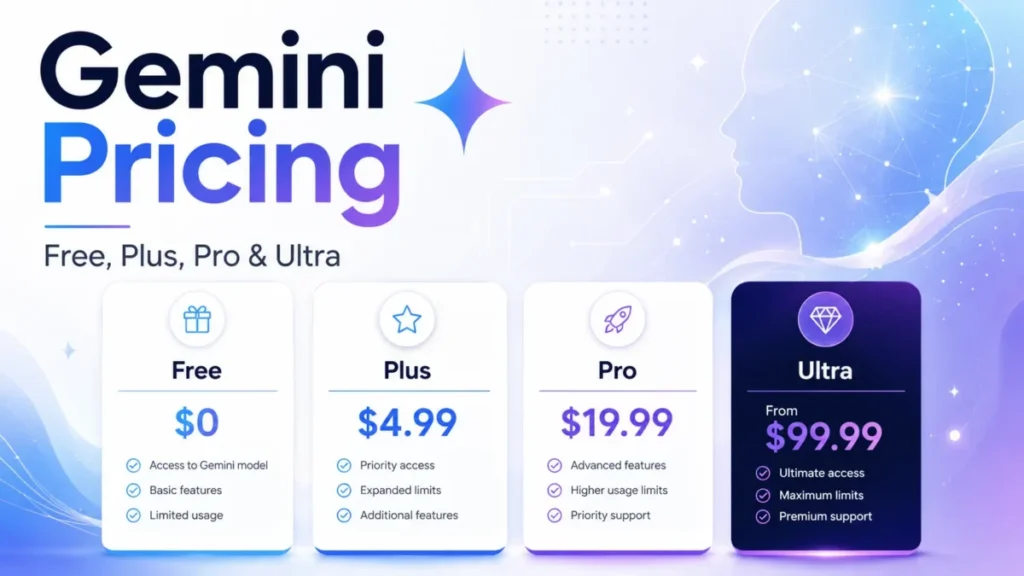
| Gemini | Google Workspace-centric teams | Closer alignment with Drive, Gmail, and Calendar as the primary work surface |
| Dedicated media tools | High-volume, unbranded asset production | Clearer export control, watermark handling, and per-asset quota accounting |
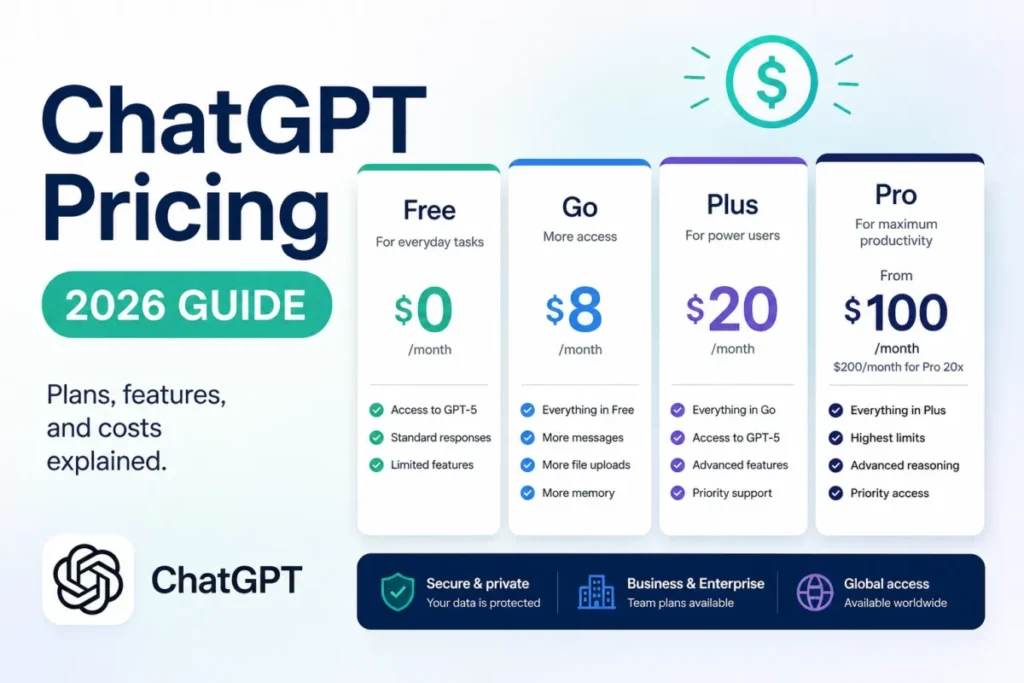
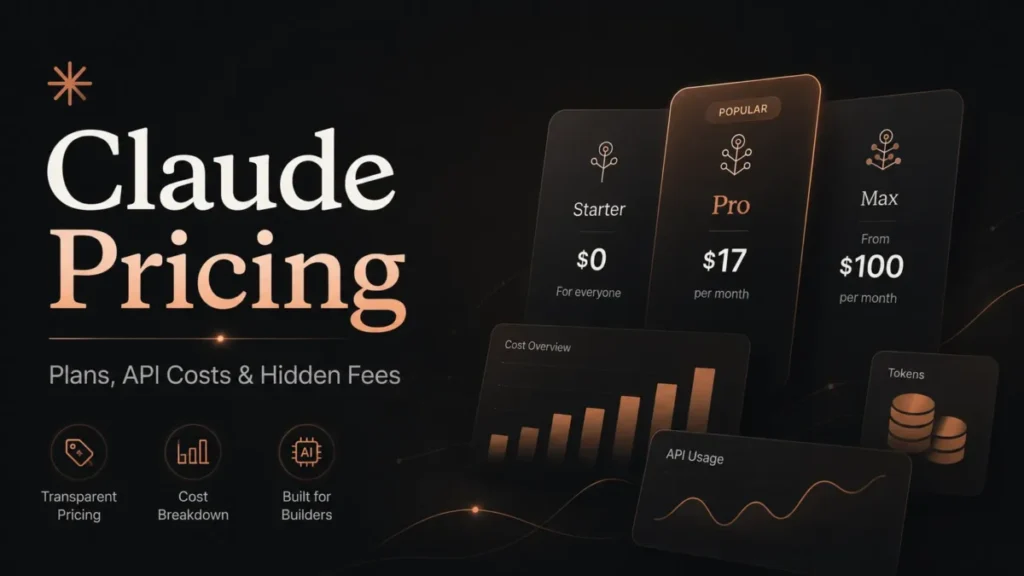
Verify each competitor’s current plan facts before switching, because assistant pricing moves quickly. Detailed breakdowns sit in the ChatGPT review, the Claude review, the Perplexity review, and the Gemini review. Plan-level cost detail sits in the ChatGPT pricing guide and the Claude pricing guide.
Grok keeps the advantage in one specific place. If the job depends on live X discourse and how it connects to the open web, no alternative on this list retrieves the same material.
Final Verdict: Is Grok Worth It?
Grok is worth $30 per month for buyers whose work is anchored in real-time discovery, mixed media output, or agentic building, and who can accept a usage model expressed in compute rather than units. It is not worth it for anyone who has to defend a cost-per-output number to finance.
Choose Free if consumption is unknown, and stay there for at least one full week before upgrading. Choose SuperGrok when Free limits interrupt paid work weekly, and enable top-ups only behind a fixed monthly ceiling.
Choose X Premium+ only when the X platform benefits are worth the price on their own, because the higher Grok limits inside X are not quantified publicly. Choose the API when the product is programmable, and model the 200,000-token threshold, the per-1,000 tool fees, and the spend-based rate tier before launch.
Choose Business or Enterprise when governance rather than volume is the deciding need, and read the renewal and refund defaults before signing. The operating consequence documented across these plan gates is simple: a team that needs SSO, retention control, or managed connectors cannot get there from a consumer subscription, so the trade-off is a contract rather than a higher usage cap. Choose a dedicated media tool or a competing assistant when watermark-free output, published quotas, or a documented consumer support commitment is non-negotiable.
The question to answer before the next renewal is simple. After 90 days, can the usage screen and the work produced be reconciled well enough to justify the subscription, or has the top-up line quietly become the real budget?
FAQ – Grok Review
The questions below cover pricing, limits, platform gaps, and the comparisons buyers raise most often.
So is Grok worth paying for?
Yes, if the work depends on live X and web context, multimodal creation, or agentic building, and the buyer accepts a compute-weighted weekly allowance. No, unless that allowance model is acceptable, because Grok publishes a percentage meter rather than a fixed number of messages, images, or videos per plan.
How much does Grok cost in the US?
Free is listed at $0 per month and SuperGrok at $30 per month on the official US pricing page, checked July 29, 2026. SuperGrok Lite, SuperGrok Heavy, Business, and Enterprise are named without a public price in the accessible page text, so those tiers require a direct quote before budgeting.
Is there a free plan?
Yes. The official pricing page lists a Free tier at $0 per month, and it reaches real-time search, media generation, and voice at lower limits than paid plans.
Free is also the correct first purchase decision, because a week of normal use is the cheapest way to estimate a personal consumption rate before paying.
What happens when the Grok weekly limit runs out?
Paid features pause, while Free-tier Chat and Voice limits remain available. From there the options are waiting for the weekly reset, upgrading, buying Extra Usage Credits from the web at a $5 minimum, or enabling auto top-up.
Credits are consumed only after included usage, expire one year after purchase, and cost more per action than included usage.
Do I need an X account to use Grok?
No. The Grok sign-in screen supports Google, Apple, and email alongside X, so standalone access does not require joining the platform.
An X subscription is a separate purchase that changes Grok limits inside X, and it does not include a standalone SuperGrok subscription.
Does Grok use my connected files for training?
The connector documentation for Google Drive and Microsoft Teams states that connected data is not used for training and is not stored by Grok. That statement covers those connectors specifically.
It does not describe how consumer chat prompts are handled, which is governed by the separate privacy terms and account settings rather than the connector pages.
Is Grok good for small business use?
Yes, if the team is small enough that individual connector grants and consumer billing are acceptable. No, unless governance can wait, because SSO, SCIM, centralized connector provisioning, and custom retention sit on the Business and Enterprise plans.
One Salesforce organization per team is also a hard ceiling for agencies serving multiple client orgs.
Is Grok better than ChatGPT?
For live X discourse combined with web retrieval, Grok holds an advantage no mainstream competitor matches on the same corpus. For broader ecosystem depth and long-form knowledge work, ChatGPT remains the stronger default.
Independent benchmark evidence shows a relative lead for Grok 4.5 on workplace tasks, not a universal quality win, so route by workflow rather than by leaderboard.
How much does the Grok API cost?
For grok-4.5 below 200,000 input tokens, list prices are $2 per million input tokens, $0.30 per million cached input tokens, and $6 per million output tokens. At 200,000 input tokens or more, the whole request bills at $4, $0.60, and $12 respectively.
Tool calls are extra: $5 per 1,000 web, X, or code-execution calls, $10 per 1,000 attachment calls, and $2.50 per 1,000 collection calls.
What are the main Grok limitations?
The five that change decisions are the undisclosed compute-weighted weekly pool, the open-ended top-up rate, the non-removable Imagine watermark with an automatic 480p fallback, iOS-only Companions with uneven file limits across platforms, and missing public prices for two named consumer tiers.
Support routing is a sixth practical limit, because refunds and cancellations fragment across four separate billing channels.