


Sales prospecting is the sales-led work of finding companies and people that fit what you sell, checking that they could buy, and making the first contact to open a conversation. Unlike lead generation, the seller picks who to talk to, so precision matters: a Gartner survey found 73% of B2B buyers actively avoid suppliers who send irrelevant outreach.
The routine has four measurable stages: research and the ideal customer profile (ICP), qualification, first contact, and follow-up. Around them sit the channels, the US rules a cold email must meet, the tools, and the metrics, with one worked plan from reply rate back to revenue.
In This Article (8 sections)
What Is Sales Prospecting, and How Is It Different From Lead Generation?
Prospecting is sales-led and outbound: the seller chooses the account and reaches out first. Lead generation is marketing-led and inbound: webinars, articles and ads bring in people who raise a hand. A team needs both, but only prospecting gives it control over who it talks to.
| Criterion | Sales prospecting | Lead generation |
|---|---|---|
| Who leads it | SDRs, BDRs and account executives | Marketing |
| Direction | Company to buyer (outbound) | Buyer to company (inbound) |
| Where it starts | A researched list of accounts | A form, webinar sign-up or ad response |
| Outcome | A qualified contact and a booked meeting | A flow of inquiries of mixed quality |
| Key metric | Replies and meetings | Cost and number of inquiries |
The key-metric row is the practical difference. A prospecting team is judged on the conversations it starts, a lead generation team on the inquiries it attracts, so each needs its own report in the CRM.
Prospecting itself comes in two types. Outbound prospecting starts cold, from an account list, while inbound prospecting is a seller researching and qualifying the leads marketing brought in, before the first call.
This guide stays with business-to-business sales, where several people share one purchase.
Prospect vs. lead: what’s the difference?
A lead is a contact who showed interest, such as a webinar sign-up, before anyone checked whether the company fits. A prospect is a company or person that matches your ICP and that a seller has researched. After qualification, a prospect also has a need, a budget and a reason to act.
A good prospect matches the ICP and shows a trigger, such as a new funding round or SDR hiring. Inbound leads take a different route, through capture, routing and nurturing: the lead management process that decides which of them reach a seller.
Where prospecting sits in the sales process
Prospecting happens first, before discovery: it fills the first stage of the pipeline with accounts worth a conversation. In larger teams, SDRs or BDRs prospect and hand booked meetings to an account executive (AE). In a small team, the founder or the AE does both jobs.
The handoff is where prospecting work gets lost. Whatever the SDR learned and agreed (the trigger, the pain, the next step) belongs in the CRM record before the meeting, not in a chat thread.
Why Prospecting Matters When Buyers Avoid Reps
Prospecting still pays, on one condition: the outreach has to be relevant. Gartner’s survey of 632 B2B buyers ran August through September 2024 and was published June 25, 2025. Gartner found 61% prefer an overall rep-free buying experience, and 73% actively avoid suppliers who send irrelevant outreach.
Gartner’s release also shows where sellers still help. Buyers prefer self-service for general information, but for tasks such as judging whether a product fits their company’s needs, they prefer seller input.
That decides what a first message should carry: a fit insight, such as a figure about the prospect’s business, an idea or a quick audit. Product information can wait, because Gartner’s survey found buyers favor self-service for general information.
The figures describe the buyers in one survey, not your market. Check them against the replies in your own CRM before you rebuild outreach around them. Relevance comes from research, which is where the process starts.
The Sales Prospecting Process: Four Stages
Sales prospecting runs in four stages, and each has a number that shows whether it works: research the market and define the ICP, qualify, make first contact, and follow up on a planned cadence.
| Stage | Output | Metric that shows it works |
|---|---|---|
| 1. Research and ICP | An account and contact list that matches the ICP | List accuracy: the share of contacts that fit |
| 2. Qualification | Accounts sorted into “reach out now” and “hold” | Share of accounts qualified |
| 3. First contact | A short message written for one account | Reply rate |
| 4. Follow-up | A planned sequence across channels | Meetings booked |
When results slip, read the table from the bottom up. A healthy reply rate with few meetings points to follow-up or qualification, not to the list. Every later number depends on who is on the list, though, so the ICP comes first.
Stage One: Research the market and define your ICP
The ICP describes the companies that gain the most from your product, written as fields a list can be filtered by:
- sector and company size;
- region and language of communication;
- tech stack, meaning the tools the company already runs;
- triggers: a new funding round, SDR hiring, expansion into a new market.
Then describe the buyer persona: job title, daily work, pain points, and the KPIs the person answers for. With business buyers, I would also map the buying group: who pays, who will use the product, and who can block the deal.
Here is an illustrative ICP for a team that sells sales-onboarding software. It targets software companies with 50 to 300 employees, selling in English, that already use a common CRM or payment tool and posted SDR job ads this quarter. The persona is the head of sales, measured on new pipeline and on how fast new reps ramp.
Stage Two: Qualify prospects before you reach out
Qualification removes the accounts that will not buy soon, before anyone writes to them. A simple filter is three questions:
- Does the company have a problem your product solves?
- Is there a budget, and someone with the authority to spend it?
- Is there a reason to act this quarter?
My rule: two or more “no” answers put the account on hold, with a CRM reminder for next quarter, when funding, hiring or priorities may have changed.
Teams that want a graded score instead of a yes-or-no filter can turn the same questions into points with lead scoring.
Stage Three: Make the first contact
A first message works when it is short and specific to the prospect: one observation, one idea, one question. My guideline is five to seven sentences, which leaves no room for a product tour.
Here is an illustrative opener for the ICP above: “I see you’re recruiting three SDRs. How are you going to get them up to speed?” It names a trigger the research found and asks about the problem the product solves, without a pitch.
The trigger does the persuading: it proves the message was written for this account and nobody else.
Stage Four: Follow up on a planned cadence
Plan the whole sequence before the first send, so follow-ups land on purpose rather than when someone remembers.
Here is an illustrative two-week cadence for one prospect:
- Day 1: a personalized email.
- Day 3: a LinkedIn connection request, with no pitch.
- Day 5: a phone call.
- Day 8: a second email with a case study or a figure.
- Day 14: a short email asking whether to follow up later.
After four to six unanswered touches, I would pause the contact rather than keep sending.
The pause protects your sending domain. Gmail’s sender guidelines say frequent spam reports can lower a domain’s reputation, and ask senders to keep the spam rate below 0.10% and never reach 0.30%. They also ask senders to raise volume slowly, at a consistent rate.
Prospecting Channels: Email, Phone, and LinkedIn
Each channel has its own job: email scales the first touch, the phone shortens the cycle and follows an email, and LinkedIn reaches senior people and builds familiarity. In my judgment, one touch in each of the three channels stands out more than five messages in one.
| Channel | When it works best | Practical tip |
|---|---|---|
| Scale and the first touch | Authenticate the domain, verify addresses, and ramp volume slowly | |
| Phone | Short sales cycles and follow-up | Call after the email, so the conversation is no longer fully cold |
| Senior buyers and building trust | Comment on a few of their posts before the connection request |
The cadence above mixes all three, and of the three, email is the one with written rules.
Cold email rules that apply in the US
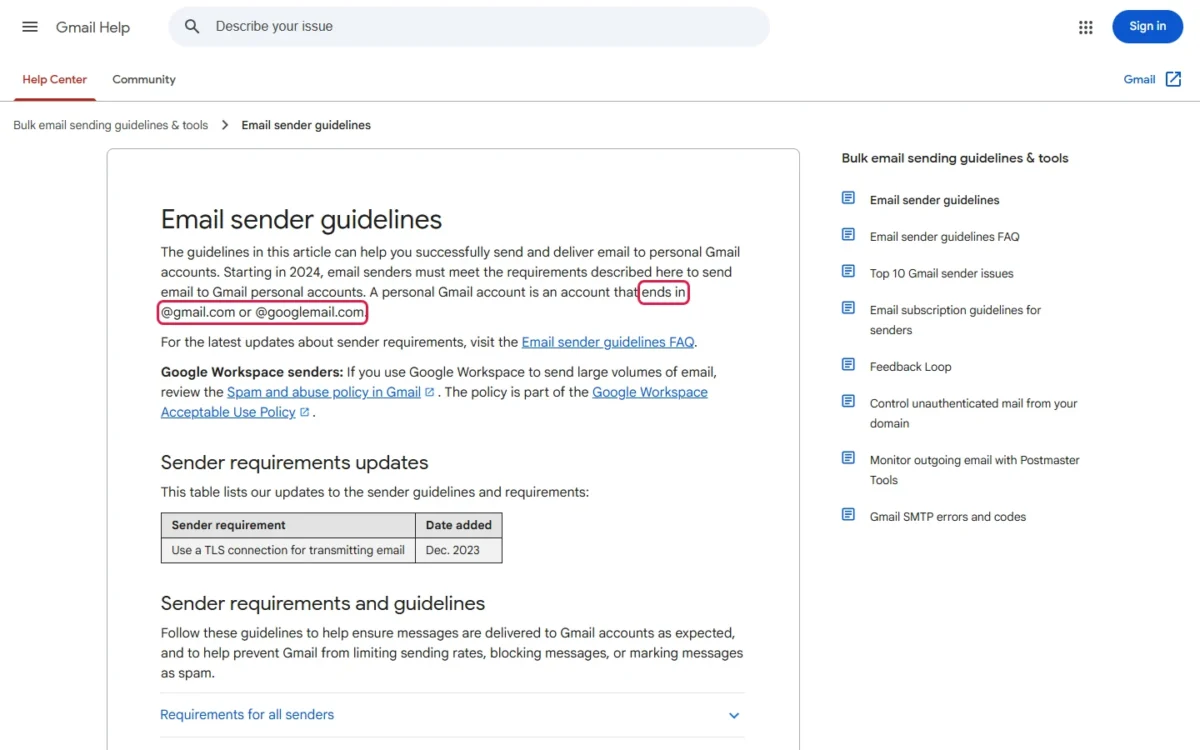
Two sets of rules apply to a US cold email: the FTC’s CAN-SPAM Act, which covers commercial email, and Gmail’s sender requirements, which decide whether the email reaches personal Gmail inboxes.
The FTC’s CAN-SPAM compliance guide says the law makes no exception for business-to-business email. The FTC says each separate email that violates it can draw penalties of up to $53,088.

Gmail’s requirements cover mail sent to personal Gmail accounts, the ones ending in @gmail.com or @googlemail.com, and have applied since February 1, 2024. Senders of more than 5,000 messages a day to Gmail accounts face stricter ones.
| Rule | Who sets it | What it means for a prospecting email |
|---|---|---|
| Accurate header information | FTC (CAN-SPAM) | From, To, Reply-To and routing data identify the real sender |
| Honest subject line | FTC (CAN-SPAM) | The subject reflects what the message says |
| Ad identification | FTC (CAN-SPAM) | The message discloses clearly that it is an advertisement |
| Postal address | FTC (CAN-SPAM) | Every message carries a valid physical postal address |
| Opt-out | FTC (CAN-SPAM) | A clear opt-out, honored within 10 business days and working for at least 30 days after sending |
| Authentication | Gmail, all senders | SPF or DKIM on the sending domain |
| DNS and TLS | Gmail, all senders | Valid forward and reverse DNS (PTR) records and a TLS connection |
| Spam rate | Gmail, all senders | Keep it below 0.10% in Postmaster Tools and never reach 0.30% |
| Volume above 5,000 a day | Gmail | SPF and DKIM, DMARC (its policy can be none), a From: domain aligned with SPF or DKIM, and one-click unsubscribe plus a visible unsubscribe link for marketing messages |
Sources: FTC CAN-SPAM Act compliance guide and Gmail email sender guidelines, checked October 2026.
A prospecting email that promotes your product is a commercial message under the FTC’s definition, so I would build the postal address and the opt-out line into every template. For a team that grows past 5,000 a day, I would treat cold outreach as marketing mail under Gmail’s one-click rule.
The FTC guide is the reference here, and your own counsel decides the edge cases. Rules decide how you send; tools decide how many good contacts you can reach.
Tools and Data for Prospect Research
A prospecting team needs 4 kinds of tools, because research and admin eat the hours meant for selling.
Salesforce’s State of Sales report for 2026 surveyed 4,050 sales professionals from August through September 2025. Salesforce’s survey found the average seller spends 40% of their time selling. In Salesforce’s survey, despite nearly one full day a week on prospecting, 48% lack bandwidth for adequate cold outreach.
Salesforce’s survey answers are self-reported, from respondents in countries including the US, so read them as a direction: automate the admin and keep seller hours for conversations.
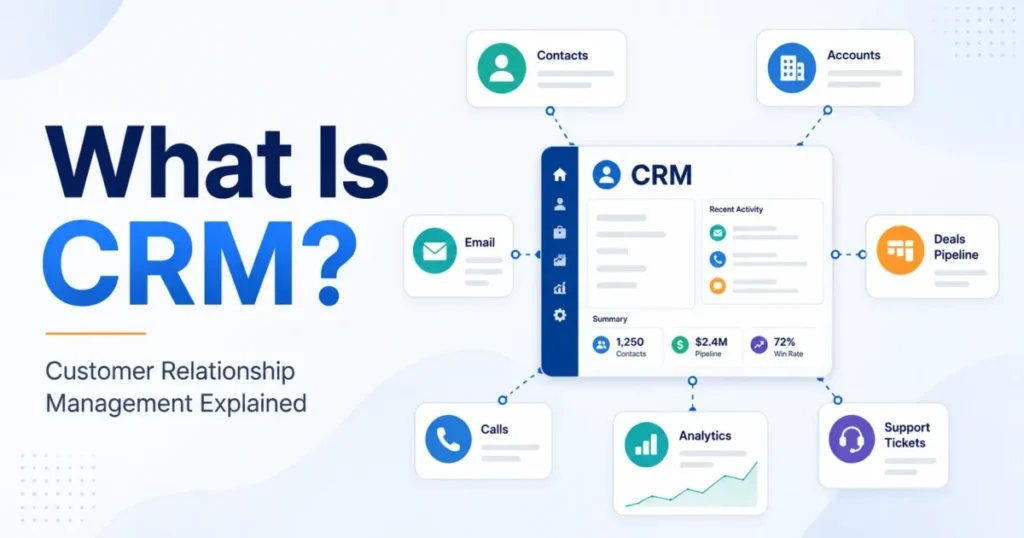
CRM. One place for contacts, deal stages and tasks. Before you prospect from it, check that it runs sequences and integrates with your email; my comparison of the best CRMs for sales teams shows which plans include them.
Enrichment services. They fill in missing fields on the records you already hold. I would pick one by the fields your ICP filters on and try it on a sample of your own records before you buy. Run enrichment on a schedule, because contact data goes stale as people change jobs and companies restructure.
Public data collection. Some signals you can collect yourself: company websites, job ads, news, and technology references in page source code. A script can refresh the prospect list every week.
A script that fetches many pages can route its requests through proxies for sale from a provider such as Geonix, so the requests come from different IP addresses and regions. Geonix lists residential, ISP, mobile and IPv4/IPv6 datacenter proxies with HTTP(S) and SOCKS5 support, plus IP rotation by time interval or per request for residential and mobile proxies.
Geonix also lists proxy locations in 200+ countries and regions, which matters when the pages you check differ by region. Whatever the setup, collect only public pages and respect each site’s terms of use.
Automation and AI. Sequences, AI assistants and automated CRM tasks take over the routine steps. Salesforce’s survey found 55% of sales professionals use AI for prospecting and another 38% plan to.
Once the tools run the routine work, the open question is whether that work books meetings.
How to Measure Sales Prospecting
Six metrics show whether prospecting works, each with a simple formula: reply rate, positive reply rate, booking rate, meeting rate, deal conversion and pipeline contribution. I would judge them as trends over four to six weeks, because one week of sends is too small a sample.
| Metric | What it shows | How to calculate | Where I would look first if it drops |
|---|---|---|---|
| Reply rate | Relevance of the list and the copy | Replies / emails delivered | The list’s fit with the ICP, then the copy |
| Positive reply rate | Real interest | Positive replies / all replies | The trigger or the problem the message names |
| Booking rate | How well interest turns into a call | Meetings / positive replies | The follow-up speed and the meeting ask |
| Meeting rate | Quality of qualification | Meetings / contacts worked | The three qualification questions |
| Deal conversion | Effect on revenue | Deals / meetings | The SDR-to-AE handoff notes |
| Pipeline contribution | Value of open deals | Total value of open outbound-sourced deals | Account size in the ICP |
The last column is the diagnostic: a metric that drops points to the stage that broke, so fix that stage before adding volume.
Take an illustrative week: an SDR’s 200 emails are delivered and 3 people reply. The reply rate is 3 / 200 = 1.5%. If that rate holds across four to six weeks, the review goes to the list and the copy before anyone looks at meetings.
Build a prospecting plan backward from revenue
A prospecting plan works backward from the revenue goal. Divide the deals you need by your deal conversion to get meetings.
Divide meetings by the table’s booking rate (meetings / positive replies, not the meeting rate per contact worked) to get positive replies. Then divide by the positive reply rate and the reply rate to reach the number of contacts to start with.
Here is an illustrative plan for a team that needs 3 new customers a month, with these assumed rates:
- 20% of meetings close: 3 / 0.20 = 15 meetings.
- A booking rate of 50%, so half of positive replies book a meeting: 15 / 0.50 = 30 positive replies.
- 40% of replies are positive: 30 / 0.40 = 75 replies.
- At a 5% reply rate: 75 / 0.05 = 1,500 contacts a month.
- At the 1.5% reply rate of the week above: 75 / 0.015 = 5,000 contacts a month.
The last two lines make the case for list quality: the same goal needs 5,000 – 1,500 = 3,500 more contacts a month when the reply rate falls from 5% to 1.5%.
The meetings this plan books become the first stage of your sales pipeline, where stage conversion and coverage take over.
To run the same math with your own rates, a sales funnel template keeps every stage in one spreadsheet. These are the mistakes to check first.
Common Prospecting Mistakes and Their Fixes
Prospecting usually stalls on six mistakes, each with a fix:
- A wide list with no ICP. More contacts do not bring more meetings when they do not fit; filter by the ICP fields first.
- Templated emails. Gartner found 73% of B2B buyers actively avoid suppliers who send irrelevant outreach. In my judgment, an email where only the first name changes reads as irrelevant, so write from the trigger instead.
- Dirty CRM data. Salesforce’s report found 79% of high performers, sellers who substantially increased year-over-year revenue, prioritize data hygiene, against 54% of underperformers. That is a correlation, not proof, but I would still clear duplicates and stale titles before a campaign.
- Quitting after one message, or sending ten follow-ups without a pause. Plan the cadence, and pause the contact when it ends.
- Losing context at the handoff. The SDR booked the meeting, but the AE does not know what was agreed; log the trigger, the pain and the next step in the CRM. Gartner found 69% of B2B buyers report inconsistencies between a sales organization’s website and what its sellers say.
- Counting messages instead of replies. Volume without replies says nothing about quality; report reply and meeting rates instead.
Put together, the fixes make a routine you can repeat.
Summary: Prospecting as a Monthly Cycle
A working prospecting routine repeats the same checklist every week and every month:
- Define the ICP and the buyer persona, including the buying group.
- Qualify each account with the three questions before anyone writes.
- Keep first messages short: one observation, one idea, one question.
- Plan follow-ups before the first send, and pause when the sequence ends.
- Mix email, phone and LinkedIn instead of repeating one channel.
- Meet the FTC and Gmail rules in every template.
- Keep the CRM clean and refresh the prospect list on a schedule.
- Review replies, meetings and conversion weekly; judge the trend monthly.
- Refine the ICP, the copy and the channels once a month.
Run as a monthly cycle, each round adds data on what works in your niche. That is how a team moves from scattershot outreach to a predictable stream of meetings. If your CRM cannot run sequences or keep the handoff notes, fix that before you add volume.



Pingback: 12 Best AI Sales Tools in 2026, Picked by Sales Stage