
Gorgias Review 2026: If you’re a Shopify or Shopify Plus brand shopping for a helpdesk, Gorgias is one of the most ecommerce-native options on the market. This review breaks down what actually matters—core features, automation and AI Agent capabilities, 2026 pricing (including ticket-based overages), real pros/cons, and the best alternatives (Zendesk, Intercom, Freshdesk, Help Scout, Kustomer) so you can choose the right platform for your volume and support workflows.
Gorgias Review 2026 – Quick Verdict
Gorgias is the best-in-class eCommerce helpdesk if you’re on Shopify or Shopify Plus and need deep order-level integrations, fast automation, and an agent-friendly unified inbox. It excels at streamlining post-purchase support (WISMO, returns, subscription changes) with powerful macros, rules, and a capable AI Agent that learns from your Shopify data.
Best for: Small-to-mid-market Shopify/BigCommerce brands (10–1,000 orders/day), DTC stores prioritizing speed and simplicity, teams wanting native order management in tickets.
Not ideal for: Multi-brand enterprises needing advanced reporting/customization, SaaS/B2B companies requiring complex ticket workflows, or businesses already above 10,000 tickets/month where per-ticket pricing becomes expensive.
Pricing reality: Starts at $10/month (50 tickets) but most active stores land in the $300–$750/month range (Pro/Advanced tiers). AI automation costs extra. Total cost can hit $1,000–$2,000/month for mid-market stores when adding voice, SMS, and AI resolutions.
Quick take: If your primary pain is agents juggling Shopify admin + helpdesk + email, Gorgias solves it elegantly. If you need Zendesk-level customization or serve B2B/SaaS, look elsewhere.
Read more: Best Help Desk Solutions of 2026: Reviewed & Compared
What Is Gorgias?
Gorgias is an AI-powered helpdesk platform built exclusively for eCommerce brands, with deep native integrations for Shopify, Shopify Plus, BigCommerce, and Magento. Unlike generalist helpdesks (Zendesk, Freshdesk), Gorgias is purpose-built to turn customer support into a scalable, revenue-positive channel for online stores.
Core value proposition:
- Unified inbox for email, live chat, Facebook/Instagram DMs, TikTok, WhatsApp, SMS, and voice
- Deep eCommerce context: view full order history, shipping status, subscription details, and customer LTV directly in tickets
- Agent empowerment: refund, cancel, edit orders, or create discount codes without leaving Gorgias
- AI Agent: autonomous AI that resolves common inquiries (WISMO, returns policy, product questions) using your Shopify data and help center
Founded: 2015
Headquarters: San Francisco, CA
Target market: Shopify/BigCommerce stores (solo founders to 500-agent enterprises)
G2 rating: 4.6/5 (500+ reviews)
Shopify App Store: 4.7/5
Read more: Best Sales And Marketing Software Reviewed in 2026

Who Is Gorgias For?
✅ Best Fit If…
- You’re on Shopify or Shopify Plus. The platform is architected around Shopify’s data model; integration is instant and powerful.
- You run a DTC brand with 10–1,000 orders/day. Ideal for scaling post-purchase support without hiring proportionally more agents.
- Your tickets are mostly WISMO, returns, exchanges, subscription changes. Gorgias automations shine for repetitive, order-centric tasks.
- You need agents to act fast on orders. Refunding, re-routing shipments, or issuing gift cards directly from tickets saves 2–5 minutes per interaction.
- You value ease of use over flexibility. Gorgias is opinionated and quick to set up; less customizable than Zendesk but far simpler.
- You want AI that learns from your store data. The AI Agent pulls from Shopify tags, order notes, help articles, and product descriptions—no manual training.
⚠️ Not Ideal For…
- B2B or SaaS companies. Gorgias lacks advanced SLA routing, multi-tier escalation, or deep API access for complex internal tools. (Try Zendesk, Intercom, or Front.)
- Multi-brand enterprises with complex governance. If you run 10+ brands with separate teams, reporting hierarchies, and compliance requirements, Zendesk or Kustomer offer better role-based controls.
- Stores above 10,000 tickets/month. Ticket-based pricing becomes expensive fast; at high volumes, per-agent models (Zendesk, Freshdesk) may cost less.
- Teams needing granular analytics. Reporting is improving but still trails Zendesk and Kustomer for custom dashboards, cohort analysis, or CSAT breakdowns by product/channel.
- Non-eCommerce use cases. If you’re not selling physical/digital products, Gorgias features (order editing, shipping tracking, subscription management) won’t apply.

Gorgias Pricing Breakdown
Gorgias uses ticket-based pricing, meaning you pay based on the number of billable tickets handled per month (not per agent). This can be cost-effective for small teams but expensive at scale.
Plan Tiers & Ticket Limits
(Pricing verified January 2026 from gorgias.com/pricing)
| Plan | Starting Price/Month | Included Tickets | Price Per Extra Ticket | Best For |
|---|---|---|---|---|
| Starter | $10 | 50 | ~$0.20 | Solo founders, <100 orders/month |
| Basic | $50 | 300 | ~$0.17 | 1–2 agents, 100–500 orders/month |
| Pro | $300 | 2,000 | ~$0.15 | 3–10 agents, 500–2,000 orders/month |
| Advanced | $750 | 5,000 | ~$0.15 | 10+ agents, 2,000–5,000 orders/month |
| Enterprise | Custom | Custom | Custom | 50+ agents, multi-store, SSO, SLA |
What counts as a billable ticket?
Any conversation with at least one agent reply. Automated responses (macros, AI Agent resolutions) may count depending on the plan. Verify your specific scenario.
Add-On Costs (Voice & SMS)
Voice and SMS are not included in base plans; they’re priced per ticket:
| Channel | Ticket Volume | Price Per Ticket |
|---|---|---|
| Voice | 0–24 tickets | $1.20 |
| 25–74 tickets | $1.20 | |
| 75–149 tickets | $0.90 | |
| 150–249 tickets | $0.70 | |
| 250–499 tickets | $0.50 | |
| 500–999 tickets | $0.40 | |
| SMS | 0–24 tickets | $0.80 |
| 25–74 tickets | $0.80 | |
| 75–149 tickets | $0.60 | |
| 150–249 tickets | $0.56 | |
| 250–499 tickets | $0.43 | |
| 500–999 tickets | $0.41 |
AI Agent Pricing
Gorgias offers AI automation via two products:
- Automated Interactions (rules-based macros, auto-tags): Included in plan tiers (30–1,000 interactions/month depending on plan).
- AI Agent (autonomous resolutions): Priced per resolution, with included resolutions varying by plan.
| Plan | AI Resolutions Included/Month | Typical Add-On Cost |
|---|---|---|
| Starter | 30 | +$0.20–$0.50/resolution over limit |
| Basic | 30–150 (scales with automation rate) | +$0.20–$0.50/resolution |
| Pro | 200–1,000 | +$0.20–$0.40/resolution |
| Advanced | 500–2,500 | +$0.20–$0.40/resolution |
Note: AI Agent is sold separately from the Helpdesk in some packaging. Confirm current bundling at gorgias.com/pricing.
Pricing Examples by Ticket Volume
| Scenario | Monthly Tickets | Plan | Base Cost | Voice/SMS | AI Resolutions | Est. Total |
|---|---|---|---|---|---|---|
| Solo founder, 80 tickets/month | 80 | Starter | $10 | $0 | $0 (manual) | $10–$16 |
| Small store, 500 tickets/month | 500 | Basic | $50 | $0 | ~$20 (50 AI) | $70–$85 |
| Growing brand, 3,000 tickets/month | 3,000 | Pro | $300 | ~$100 (200 voice) | ~$80 (400 AI) | $480–$550 |
| Mid-market, 8,000 tickets/month | 8,000 | Advanced | $750 | ~$300 (600 voice/SMS) | ~$200 (1,000 AI) | $1,250–$1,500 |
Hidden Costs & Gotchas
- Overage charges: If you exceed your plan’s ticket limit, per-ticket fees stack up quickly. Monitor usage weekly.
- AI Agent is an upsell: Not all plans include meaningful AI resolutions. Budget separately.
- Voice/SMS can double costs: If 20% of tickets come via phone/SMS, expect +30–50% on your bill.
- Multi-store pricing: Each additional store may require a separate Gorgias account (or Enterprise plan). Confirm multi-store policies.
- Implementation/onboarding: Free for Basic+ plans; Starter users rely on self-service docs.
💡 How to Estimate Your Monthly Cost
- Count average monthly tickets (last 3 months from current helpdesk or email).
- Estimate automation rate: Gorgias claims 30–50% automation for typical stores. Assume 60–70% of tickets could be billable.
- Add voice/SMS: Estimate % of tickets by channel.
- Add AI resolutions: Target 20–40% of tickets for AI (if enabling AI Agent).
- Pick plan tier: Match to ticket volume, add overages.
Rule of thumb: Budget $0.30–$0.50 per billable ticket all-in (helpdesk + AI + voice/SMS).

Core Features Deep Dive
Unified Inbox & Channel Coverage
Gorgias consolidates all customer conversations into a single, priority-ranked feed. Agents see:
- Email (unlimited addresses, shared inboxes)
- Live chat (customizable widget for your store)
- Facebook Messenger, Instagram DMs, TikTok DMs
- WhatsApp Business
- SMS (Twilio integration)
- Voice (cloud-based VoIP)
Agent experience:
- Conversations auto-merge by customer (all channels → one timeline)
- Smart views (filters) for “Unanswered,” “VIP customers,” “High-value orders,” “Subscription issues”
- Collision detection (agents see if a teammate is viewing the same ticket)
- Internal notes for team collaboration
Downside: No native video call support (unlike Intercom); limited webhook flexibility compared to Zendesk.
Deep eCommerce Integrations (Shopify, BigCommerce, Magento)
This is Gorgias’s killer feature. When a ticket opens:
- Right sidebar displays: customer LTV, order count, last order date, shipping status, subscription details, cart contents, tags
- Agent actions available:
- Refund (full or partial)
- Cancel order (if not yet fulfilled)
- Edit shipping address
- Add/remove line items
- Generate discount code
- Tag customer in Shopify
- Update subscription (Recharge, Bold)
Impact: Saves 2–5 minutes per ticket by eliminating tab-switching between helpdesk and Shopify admin.
Supported platforms:
- Shopify & Shopify Plus (native, 1-click install)
- BigCommerce (native)
- Magento (via integration)
- WooCommerce (limited; consider Zendesk or Help Scout for WordPress stores)
Automation: Macros, Rules & Workflows
Macros = pre-written response templates with variables (customer name, order #, tracking link). Agents deploy with 1 click.
Rules = if/then logic that auto-tags, auto-assigns, auto-responds, or auto-closes tickets based on:
- Keywords in message (“where is my order”)
- Customer tags (VIP, influencer, subscriber)
- Order status (fulfilled, pending, returned)
- Channel (chat vs email)
- Time of day (route after-hours to chatbot)
Example workflow:
- Customer emails “cancel my order #12345”
- Rule detects “cancel” + order status = “unfulfilled”
- Auto-tags ticket “cancellation”
- Assigns to “Order Management” team
- Sends macro: “We’ve canceled your order. Refund in 3–5 days.”
- Executes Shopify cancellation API call
- Closes ticket
Limitations:
- Rules are linear (no complex branching like Zendesk triggers)
- Can’t schedule rules (e.g., “if no response in 24 hours, escalate”)
- Limited conditional logic (basic AND/OR; no nested conditions)
AI Agent: Capabilities & Limits
Gorgias’s AI Agent is a supervised autonomous chatbot that:
- Answers questions using your help center, FAQs, Shopify product descriptions, and order data
- Resolves tickets end-to-end (e.g., “Where is my order?” → fetches tracking, replies, closes ticket)
- Executes actions: cancel orders, apply discounts, update subscriptions (if trained)
- Learns continuously from agent corrections and Shopify tags
Training sources:
- Help center articles
- Public website pages
- Uploaded documents (PDFs, policies)
- Shopify product catalog
- Order notes, customer tags
What it handles well:
- WISMO (tracking lookups)
- Return/exchange policy questions
- Product recommendations (basic)
- Order status updates
- Discount code requests
What it struggles with:
- Complex edge cases (damaged goods requiring photo review)
- Emotional/escalated customers (lacks empathy detection)
- Multi-step workflows (e.g., “cancel item A, add item B, ship to new address”)
- Nuanced compliance questions (GDPR, refund exceptions)
Control mechanisms:
- Set confidence threshold (low → AI resolves more but risks errors; high → AI escalates more to humans)
- Require human approval for refunds >$X
- Block AI from certain tags (VIP, legal, PR escalation)
Real-world performance (user reports):
- 20–40% of tickets fully resolved by AI (typical for mature setups)
- 50–60% automation rate (AI + macros + rules combined)
- AI accuracy degrades if help center is outdated or products change frequently without re-training
Reporting & Analytics
Gorgias analytics are functional but not best-in-class. Available metrics:
Agent performance:
- First response time (FRT)
- Resolution time
- Tickets closed per agent
- CSAT scores (if survey enabled)
Channel breakdown:
- Tickets by source (email, chat, social, SMS, voice)
- Busiest hours/days
Revenue attribution:
- Gross revenue from conversations (tracks orders placed within 5 days of a support interaction)
- Upsell/cross-sell tracking (if agent sends product links)
Automation:
- % tickets handled by AI
- % tickets auto-closed by rules
- Time saved vs. manual handling
Weaknesses:
- No cohort analysis (can’t filter CSAT by product category or customer segment)
- Limited custom dashboards (Enterprise plan only)
- No forecasting or staffing models (use external tools like Assembled or Playvox)
- Export options are basic (CSV only; no Power BI/Tableau connectors)
Roadmap (2026): Gorgias is adding AI-powered “voice of customer” reports and role-based dashboard access.
Multi-Store & Multi-Brand Support
Current state (early 2026):
- Multi-store is possible but requires separate Gorgias accounts per store (Basic–Advanced plans) or Enterprise plan for unified multi-store management
- Enterprise adds: separate business hours per store, per-store analytics, per-store ticket views, shared agent pools
Workaround for mid-market:
- Use tags to differentiate stores within one account
- Create smart views per brand
- Manually route tickets via rules
Limitations:
- No native brand-specific SLAs (e.g., “Store A = 2hr SLA, Store B = 8hr SLA”)
- Reporting doesn’t auto-segment by store unless you tag meticulously
Mobile App & Agent Experience
Mobile app: Available (iOS/Android). Supports:
- View/reply to tickets
- Access customer order history
- Execute basic actions (refund, close ticket)
Limitations:
- Complex workflows (multi-step order edits) are desktop-only
- No macro editing or rule creation on mobile
- Push notifications can be noisy (configure carefully)
Agent feedback (from reviews):
- “Intuitive for new hires; training takes <1 day”
- “Collision detection prevents duplicate replies”
- “Macro search is fast; saves tons of time”
- “Wish we could customize sidebar fields”
Security, Compliance & SSO
Security features:
- SOC 2 Type II certified
- GDPR-compliant (EU data residency available for Enterprise)
- Data encryption in transit (TLS 1.2+) and at rest (AES-256)
- Role-based permissions (Admin, Agent, Light Agent)
- IP whitelisting (Enterprise)
- Audit logs (Enterprise)
SSO:
- Available via Okta, Google Workspace, OneLogin (Enterprise plan only)
- SAML 2.0
PCI DSS: Not certified. Do not store full credit card numbers in tickets. Gorgias integrates with Shopify Payments for secure refund processing.
Data retention: Customize ticket/customer data retention policies (14 days to indefinite). GDPR “right to be forgotten” requests supported.
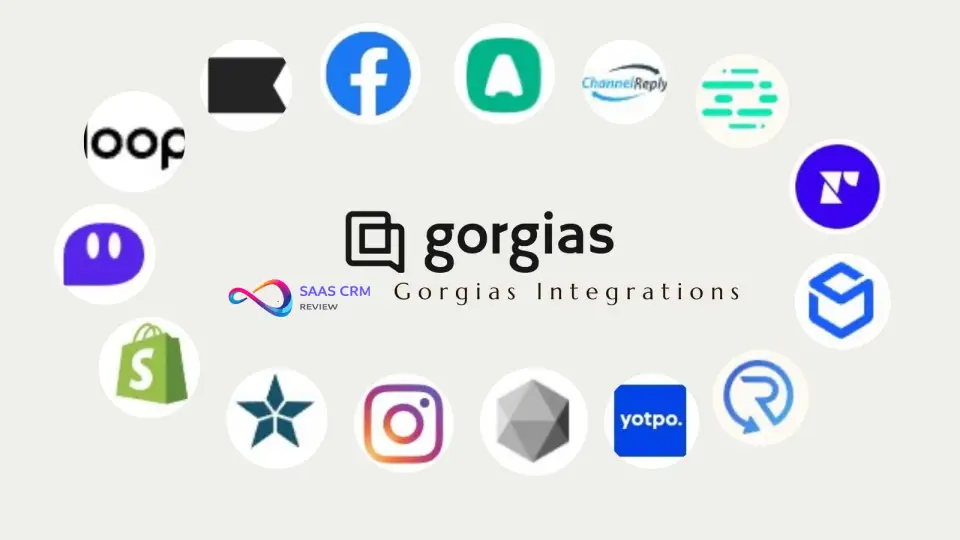
Integration Ecosystem
Native eCommerce Integrations
- Shopify & Shopify Plus: 1-click, bidirectional sync (orders, customers, products, tags, inventory)
- BigCommerce: Native
- Magento: Via integration
- WooCommerce: Limited (basic order data; not as deep as Shopify)
Marketing & CRM (Klaviyo, ActiveCampaign)
- Klaviyo: View customer segments, email engagement, flows directly in Gorgias sidebar; trigger Klaviyo flows from tickets
- ActiveCampaign: Similar to Klaviyo
- HubSpot, Salesforce: Available but less commonly used in Gorgias’s eCommerce-first userbase
Subscriptions (Recharge, Bold)
- Recharge: View subscription status, next charge date, skip/pause/cancel directly from ticket
- Bold Subscriptions, PayWhirl, Awtomatic: Supported via API integrations
Team Collaboration (Slack, Microsoft Teams)
- Slack: Post tickets to channels, reply to tickets from Slack, get alerts for VIP customers or SLA breaches
- Microsoft Teams: Limited compared to Slack
SSO & Enterprise (Okta)
- Okta, OneLogin, Google Workspace: SAML-based SSO (Enterprise only)
Integration gaps (vs. Zendesk):
- No Salesforce Service Cloud native integration
- No Jira native ticketing bridge (workaround via Zapier)
- No deep ITSM integrations (ServiceNow, etc.)
Implementation & Onboarding
Implementation Timeline
| Phase | Timeline | Key Activities |
|---|---|---|
| Account setup | Day 1 | Create account, verify email, connect Shopify/BigCommerce |
| Channel integration | Days 1–3 | Add email, chat widget, Facebook/Instagram, SMS, voice |
| Team onboarding | Days 2–5 | Invite agents, assign roles, configure permissions |
| Macros & rules | Week 1–2 | Build top 10 macros, set up 5–10 automation rules |
| AI Agent training | Week 2–4 | Upload help articles, train on FAQs, set confidence thresholds |
| Testing & validation | Week 3–4 | Pilot with 1–2 agents, test order actions, monitor AI accuracy |
| Full launch | Week 4–6 | Onboard all agents, migrate historical tickets (if applicable), sunset old helpdesk |
Typical go-live: 2–6 weeks (self-service) to 8–10 weeks (with dedicated Implementation Manager for Enterprise).
Premium “50-in-50” package: Gorgias offers a service to achieve 50% automation within 50 days for an additional fee.
Onboarding Process
Self-service (Starter/Basic):
- Guided setup wizard in app
- Gorgias Academy video courses
- Help center docs
- Weekly webinars
High-touch (Pro/Advanced/Enterprise):
- Dedicated Implementation Manager (2–5 meetings)
- Custom workflow design
- Macro/rule templates pre-built
- AI Agent training assistance
- Data migration from Zendesk/Freshdesk (1-click Zendesk import available)
- Post-launch audits (30/60/90 days)
Common Implementation Mistakes
- Skipping macro creation upfront. Build at least 10 macros before launch; agents will flounder without them.
- Over-automating too soon. Start with 2–3 simple rules (auto-tag, auto-assign). Add complexity after observing behavior.
- Neglecting AI training. AI Agent needs 20+ help articles and 2 weeks of supervised learning to be effective. Don’t enable fully autonomous mode on Day 1.
- Not setting ticket assignment rules. Without routing logic, tickets pile up in “Unassigned” and SLAs slip.
- Ignoring mobile agent experience. If agents work remotely, test mobile app thoroughly pre-launch.
What to Test in Your Free Trial
Gorgias offers a 7-day free trial (no credit card required for sign-up; card needed to activate after trial).
Checklist:
- Connect your Shopify/BigCommerce store; verify order data appears in sidebar
- Test 1 live refund (on a test order) to confirm API permissions
- Send 5 test tickets via email, chat, and 1 social channel (Facebook/Instagram)
- Create 3 macros; use them to reply
- Build 1 automation rule (e.g., auto-tag “WISMO” when message contains “tracking”)
- Invite 2 teammates; check permissions (Admin vs. Agent)
- Enable AI Agent; upload 3 help articles; ask it 5 common questions (monitor accuracy)
- Check reporting: view FRT, resolution time, tickets by channel
- Test mobile app (iOS/Android) if your team works remotely
- Simulate a multi-step workflow: customer wants to change shipping address + add a product (can you do it without leaving Gorgias?)
- Test Klaviyo or Recharge integration (if you use them)
Gorgias in Practice: Use Cases
WISMO Automation (Where Is My Order)
Problem: 30–50% of eCommerce tickets are “Where is my order?”—repetitive, low-value, but urgent for customers.
Gorgias solution:
- Rule detects keywords (“tracking,” “shipment,” “where is my order”)
- Macro pulls tracking # from Shopify/BigCommerce, fetches carrier status (USPS, UPS, FedEx)
- AI Agent or macro auto-replies: “Hi [Name], your order #[12345] shipped [date]. Track here: [link]. Estimated delivery: [date].”
- Ticket auto-closes
Result: <30 seconds to resolve, 0 agent time, 90%+ customer satisfaction.
Returns & Exchanges
Problem: Return requests require checking eligibility (within 30 days? product condition?), generating return labels, updating inventory.
Gorgias solution:
- AI Agent checks order date, product tags (eligible for return?)
- If eligible: generates return label (via ShipStation, EasyShip integration), sends macro with instructions
- If ineligible: escalates to agent with context (“purchased 45 days ago, outside return window”)
Result: 50% of return requests handled autonomously; agents focus on edge cases (damaged goods, warranty claims).
Subscription Management
Problem: Subscribers want to pause, skip, or cancel—these are high-churn moments requiring fast, empathetic handling.
Gorgias solution:
- Recharge/Bold integration surfaces subscription status in sidebar
- Agent (or AI) offers: “Skip next delivery,” “Pause for 1 month,” or escalation-prevention offer (“20% off next 3 months”)
- Action executes directly in Recharge from Gorgias—no separate login
Result: 60–80% of subscription tickets resolved in <2 minutes; churn reduction by offering pre-cancellation discounts.
Post-Purchase Upsells
Problem: Support is traditionally a cost center; how do you drive revenue?
Gorgias solution:
- Macro includes product recommendations: “By the way, customers who bought [product A] love [product B]. Here’s 10% off: [link].”
- Revenue attribution tracks orders placed within 5 days of support interaction
- Reporting shows gross revenue per agent, best-performing upsell macros
Result: Top Gorgias users report $10–$50K/month in support-attributed revenue.
Gorgias Pros & Cons
Pros
✅ For Shopify-first teams that want order actions inside the helpdesk (refunds, edits, cancellations), Gorgias is among the most streamlined experiences—especially compared to generalist desks that rely more on apps or context panes.
✅ Fast setup. Most teams are live in 1–2 weeks vs. 6–12 weeks for Zendesk implementations.
✅ Unified inbox works. Email, chat, social, SMS in one feed with intelligent merging by customer.
✅ Strong automation for eCommerce. Macros + rules + AI Agent can handle 30–50% of tickets with minimal training.
✅ Agent-friendly UI. New hires productive within a day; low training overhead.
✅ Revenue attribution. Track support-driven sales; justify CX investment to CFO.
✅ Responsive support. Gorgias support team is highly rated (email, chat, knowledge base).
Cons
⚠️ Ticket-based pricing is unpredictable. Viral social post or shipping delay = 3X ticket spike = 3X bill. Per-agent pricing (Zendesk, Freshdesk) offers more budget stability.
⚠️ Limited reporting/customization. Can’t build custom dashboards (unless Enterprise); analytics lag Zendesk and Kustomer.
⚠️ AI Agent has inconsistencies. User reviews cite periodic accuracy drops after updates; requires ongoing monitoring and re-training.
⚠️ Not built for B2B/SaaS. No advanced SLA routing, no webhook-heavy workflows, no deep API for custom integrations.
⚠️ Multi-store support is clunky. Requires multiple accounts or Enterprise plan; reporting doesn’t auto-segment by brand.
⚠️ Voice/SMS costs add up fast. If 20% of tickets are phone/SMS, budget +30–50%.
⚠️ Weak for complex ticket workflows. No parent/child tickets, no advanced escalation paths, no Jira-style issue tracking.
Real User Sentiment
(Based on G2, Capterra, Shopify App Store reviews analyzed January 2026)
What Users Love
“Shopify integration saves hours per day.”
“Before Gorgias, agents toggled between Gmail, Shopify admin, and Recharge. Now everything’s in one screen. Refunds take 10 seconds.” — Mid-market DTC brand, G2
“AI Agent handles our WISMO flood.”
“40% of tickets are tracking questions. AI Agent resolves them instantly. Our team focuses on VIP customers and complex issues.” — Shopify Plus store, Shopify App Store
“Macros are a gamechanger.”
“We built 50+ macros for every scenario. New agents just pick the right template. First response time dropped from 6 hours to 45 minutes.” — Small eCommerce team, G2
“Easy to onboard new agents.”
“Our seasonal hires are productive in half a day. UI is intuitive; training is minimal.” — Apparel brand, Capterra
Common Complaints
“Pricing spirals out of control.”
“We went from $300/month to $1,200 during Black Friday. Ticket spikes = budget chaos. Switching to Zendesk for predictable per-agent costs.” — Growing DTC brand, G2
“Reporting is too basic.”
“Can’t filter CSAT by product or customer segment. No custom dashboards unless you pay for Enterprise. We export to Google Sheets for real analysis.” — Mid-market brand, G2
“AI Agent accuracy degraded after an update.”
“Our AI went from 60% resolution rate to 30% overnight. Support said ‘retrain,’ but that takes weeks. Frustrating.” — Shopify store, Shopify App Store
“Multi-store is a mess.”
“We have 3 brands. Gorgias wanted us to buy 3 separate accounts or jump to Enterprise ($2K+/month). Ended up using Zendesk.” — Multi-brand retailer, G2
“Not great for B2B.”
“We sell wholesale + DTC. Gorgias works for DTC but lacks features for B2B (quotes, approvals, contracts). Had to keep Salesforce for B2B.” — Hybrid business, Capterra

Gorgias vs Top Alternatives
Gorgias vs Zendesk
| Factor | Gorgias | Zendesk |
|---|---|---|
| Best for | Shopify/eCommerce, small-to-mid teams | Enterprise, multi-channel, SaaS/B2B |
| Pricing | Ticket-based, $10–$750/mo + overages | Per-agent, ~$50–$200/agent/mo |
| Setup time | 1–2 weeks (fast) | 6–12 weeks (complex) |
| Shopify integration | Native, deep (refunds/edits in-app) | Via app, less seamless |
| Customization | Limited (opinionated) | Extensive (triggers, apps, API) |
| Reporting | Basic (CSAT, FRT, channel mix) | Advanced (custom dashboards, cohorts) |
| AI | AI Agent (eCommerce-specific) | Answer Bot (generalist, mature) |
| Multi-store | Clunky (requires Enterprise) | Excellent (native multi-brand) |
| B2B/SaaS support | Weak | Strong (SLAs, escalations, ITSM) |
Recommendation:
- Choose Gorgias if you’re Shopify-first, need fast setup, and prioritize agent speed over flexibility.
- Choose Zendesk if you’re multi-brand, need deep analytics, serve B2B/SaaS, or have >50 agents.
Gorgias vs Freshdesk
| Factor | Gorgias | Freshdesk |
|---|---|---|
| Best for | eCommerce (Shopify/BigCommerce) | SMBs, general-purpose support |
| Pricing | Ticket-based, $10–$750/mo | Per-agent, $15–$80/agent/mo |
| eCommerce features | Deep (order editing, subscriptions) | Basic (requires apps) |
| AI | AI Agent (eCommerce-trained) | Freddy AI (generalist) |
| Ease of use | Very easy | Easy |
| Reporting | Basic | Good (better than Gorgias, not Zendesk-level) |
| Knowledge base | Yes | Yes (more robust) |
Recommendation:
- Choose Gorgias for Shopify stores needing order-level actions.
- Choose Freshdesk for non-eCommerce SMBs, teams wanting strong knowledge base + affordable pricing.
Gorgias vs Kustomer
| Factor | Gorgias | Kustomer |
|---|---|---|
| Best for | Small-to-mid eCommerce | Mid-to-enterprise eCommerce |
| Pricing | Ticket-based, $10–$750/mo | Per-agent, ~$89–$179/agent/mo |
| Customer view | Order-centric timeline | 360° CRM-like timeline |
| Automation | Strong (macros, rules, AI) | Excellent (workflows, predictive routing) |
| Reporting | Basic | Advanced (custom dashboards, BI tools) |
| Multi-brand | Weak (requires Enterprise) | Strong (native) |
| Scalability | Best for <10K tickets/mo | Scales to 100K+ tickets/mo |
Recommendation:
- Choose Gorgias if you’re <2,000 tickets/month, Shopify-first, need simplicity.
- Choose Kustomer if you’re mid-to-enterprise, need CRM-grade customer intelligence, or run multi-brand operations.
Gorgias vs Intercom
| Factor | Gorgias | Intercom |
|---|---|---|
| Best for | eCommerce post-purchase support | SaaS onboarding, product-led growth |
| Pricing | Ticket-based, $10–$750/mo | User-based, $74–$395/mo |
| Use case | Order issues, returns, WISMO | In-app messaging, product tours |
| Shopify integration | Native, deep | Via app, basic |
| Proactive outreach | Limited | Excellent (campaigns, bots, tours) |
| Support focus | Reactive (tickets) | Proactive + reactive |
Recommendation:
- Choose Gorgias for eCommerce support (post-purchase).
- Choose Intercom for SaaS onboarding, in-app engagement, or sales-led support.
Gorgias vs Help Scout
| Factor | Gorgias | Help Scout |
|---|---|---|
| Best for | eCommerce (Shopify) | SMBs, SaaS, human-first support |
| Pricing | Ticket-based, $10–$750/mo | Per-agent, $20–$65/agent/mo |
| Shopify integration | Deep (order actions) | Basic (view orders, no edits) |
| AI | AI Agent | Limited AI (Beacon chatbot) |
| Team collaboration | Good | Excellent (notes, @mentions, assignments) |
| Knowledge base | Yes | Yes (Docs, very polished) |
Recommendation:
- Choose Gorgias for Shopify stores needing automation + order actions.
- Choose Help Scout for human-first support teams (SaaS, agencies, SMBs) prioritizing simplicity + affordability.
Top 3 Alternatives by Scenario
| Scenario | #1 Alternative | #2 Alternative | #3 Alternative |
|---|---|---|---|
| Shopify store, <500 tickets/mo | Gorgias | Tidio | Help Scout |
| Multi-brand Shopify Plus | Kustomer | Zendesk | Gorgias (Enterprise) |
| BigCommerce store | Gorgias | eDesk | Freshdesk |
| B2B + DTC hybrid | Zendesk | Kustomer | Freshdesk |
| SaaS company | Zendesk | Intercom | Front |
| Budget-conscious SMB | Freshdesk | Zoho Desk | Help Scout |
| High-volume (>10K tickets/mo) | Zendesk | Kustomer | Freshdesk |
Decision Framework: Is Gorgias Right for You?
Decision Matrix
Rate each factor 1–5 (1 = low, 5 = high). If total score ≥30, Gorgias is likely a strong fit.
| Factor | Weight | Your Score (1–5) | Weighted Score |
|---|---|---|---|
| We’re on Shopify or Shopify Plus | 3x | ___ | ___ |
| Agents need to refund/edit orders in helpdesk | 3x | ___ | ___ |
| We handle <5,000 tickets/month | 2x | ___ | ___ |
| Most tickets are WISMO/returns/subscriptions | 2x | ___ | ___ |
| We value speed over customization | 2x | ___ | ___ |
| We want AI-powered automation | 2x | ___ | ___ |
| Budget flexibility for ticket spikes | 1x | ___ | ___ |
| Minimal reporting needs (basic FRT/CSAT) | 1x | ___ | ___ |
| Single-brand or <3 stores | 1x | ___ | ___ |
| B2C eCommerce (not B2B/SaaS) | 2x | ___ | ___ |
| Total | ___ |
Scoring guide:
- 40+: Gorgias is an excellent fit; start a trial.
- 30–39: Good fit; compare with Kustomer or Freshdesk to confirm.
- 20–29: Marginal fit; test Gorgias + 1–2 alternatives.
- <20: Gorgias is likely not ideal; prioritize Zendesk, Kustomer, or Intercom.
ROI Estimator
Assumptions:
- Average agent cost: $20/hour (blended, including benefits)
- Average ticket handling time (manual): 6 minutes
- Gorgias automation rate: 40%
- Time saved per automated ticket: 5 minutes
Example calculation (500 tickets/month):
| Metric | Manual | With Gorgias |
|---|---|---|
| Tickets/month | 500 | 500 |
| Automated tickets | 0 | 200 (40%) |
| Manual tickets | 500 | 300 |
| Agent time (hours) | 50 hrs (500 x 6min) | 30 hrs (300 x 6min) |
| Agent cost | $1,000 | $600 |
| Gorgias cost | $0 | ~$85 (Basic + AI) |
| Net savings | — | $315/month |
| Payback period | — | Immediate |
Additional ROI drivers:
- Faster first response time → higher CSAT → lower churn (-1% churn = $XXK saved for subscription brands)
- Support-attributed revenue (upsells in tickets)
- Reduced agent training time (new hires productive faster)
FAQ
Q: What is Gorgias?
A: Gorgias is an AI-powered helpdesk built specifically for eCommerce brands (Shopify, BigCommerce, Magento). It centralizes customer conversations from email, chat, social, SMS, and voice into one inbox, with deep integrations that let agents view order history, process refunds, and edit orders without leaving the platform.
Q: How much does Gorgias cost?
A: Plans start at $10/month (50 tickets) and scale to $750/month (5,000 tickets). Voice ($0.40–$1.20/ticket) and SMS ($0.41–$0.80/ticket) cost extra. AI Agent resolutions are priced separately (~$0.20–$0.50/resolution). Most active stores pay $300–$1,500/month total.
Q: Is Gorgias free?
A: No, but Gorgias offers a 7-day free trial (no credit card required to start). The cheapest plan is Starter at $10/month.
Q: What counts as a billable ticket in Gorgias?
A: Any conversation where at least one agent (human or AI) replies. Some automated responses may not count depending on plan tier. Verify specifics here.
Q: Does Gorgias integrate with Shopify?
A: Yes—it’s Gorgias’s core strength. Native 1-click integration provides full order history, customer LTV, tags, and lets agents refund, cancel, or edit orders directly in Gorgias.
Q: Can Gorgias handle multi-store setups?
A: Yes, but it’s clunky on Basic/Pro/Advanced plans (requires separate accounts per store or manual tagging). Enterprise plan offers native multi-store support with per-store analytics and team routing.
Q: How long does Gorgias implementation take?
A: Self-service setup: 1–2 weeks. With dedicated Implementation Manager (Pro+): 4–6 weeks. Premium “50-in-50” service targets 50% automation in 50 days.
Q: Is Gorgias better than Zendesk for eCommerce?
A: For pure Shopify eCommerce, yes—Gorgias is faster to set up, easier to use, and has deeper order integrations. Zendesk wins for multi-brand enterprises, advanced analytics, and B2B/SaaS workflows.
Q: What is Gorgias AI Agent?
A: An autonomous chatbot that answers questions, resolves tickets (WISMO, returns policy), and executes actions (cancel orders, apply discounts) using your help center, Shopify data, and order history. Priced per resolution.
Q: Does Gorgias support voice and SMS?
A: Yes, via Twilio integration. Voice costs $0.40–$1.20/ticket; SMS costs $0.41–$0.80/ticket (volume-based).
Q: Can I migrate from Zendesk to Gorgias?
A: Yes. Gorgias offers 1-click Zendesk migration (imports FAQs, past messages, macros, users, tags, ticket fields). Data migration is included for Pro+ plans.
Q: Is Gorgias GDPR-compliant?
A: Yes. Gorgias is GDPR-compliant, SOC 2 Type II certified, and offers EU data residency (Enterprise). Supports “right to be forgotten” requests.
Q: Does Gorgias have a mobile app?
A: Yes (iOS/Android). Agents can view/reply to tickets, access order history, and execute basic actions (refunds, close tickets). Complex workflows require desktop.
Q: What are common Gorgias complaints?
A: Ticket-based pricing unpredictability, basic reporting (vs. Zendesk/Kustomer), occasional AI Agent accuracy drops, weak multi-store support, and high costs for voice/SMS.
Q: Does Gorgias work for B2B companies?
A: Not ideally. Gorgias lacks advanced SLA routing, complex escalation workflows, and deep CRM integrations needed for B2B. Better suited for B2C eCommerce.
Q: Can Gorgias track revenue from support conversations?
A: Yes. Revenue attribution tracks orders placed within 5 days of a support interaction. Reporting shows gross revenue per agent and per macro.
Q: Does Gorgias integrate with Klaviyo?
A: Yes. View customer segments, email engagement, and trigger Klaviyo flows directly from Gorgias tickets.
Q: What is Gorgias’s uptime SLA?
A: Gorgias targets 99.9% uptime but does not publish a guaranteed SLA for Basic/Pro/Advanced plans. Enterprise plans may negotiate custom SLAs.
Q: Is Gorgias worth it for small eCommerce stores?
A: Yes, if you’re on Shopify and handle 100+ tickets/month. The Starter ($10/mo) or Basic ($50/mo) plans offer strong ROI via time savings. If tickets <50/month, stick with Gmail or Outlook.
Final Recommendation
Gorgias is the best helpdesk for Shopify and Shopify Plus stores that prioritize agent speed, automation, and tight order-level integrations over deep customization and advanced analytics.
Buy Gorgias if:
- You’re on Shopify/Shopify Plus or BigCommerce
- You handle 100–5,000 tickets/month
- Your tickets are mostly WISMO, returns, subscription changes
- You need agents to refund/edit orders in the helpdesk
- You value fast setup (1–2 weeks) and ease of use
- You want AI to handle 20–40% of tickets
Skip Gorgias if:
- You’re multi-brand (3+ stores) and not on Enterprise budget
- You need Zendesk-level reporting/customization
- You serve B2B or SaaS (non-eCommerce)
- You handle >10,000 tickets/month (per-agent pricing is cheaper)
- You require predictable monthly costs (ticket-based pricing can spike)
Next steps:
- Start a free trial (gorgias.com/signup)—no credit card required.
- Test the “What to Test” checklist (see Implementation section).
- Compare with 2 alternatives (Zendesk if enterprise; Freshdesk if budget-conscious; Kustomer if scaling).
- Calculate ROI using the estimator above.
- Book a demo if you’re on Shopify Plus or considering Enterprise (gorgias.com/demo).
Sources
- Gorgias Official Pricing Page
https://www.gorgias.com/pricing
Verified January 2026 for current plan tiers, ticket limits, and add-on costs. - Gorgias Help Center
https://help.gorgias.com/
Product documentation, feature guides, and integration setup instructions. - G2 Gorgias Reviews (accessed via web search, January 2026)
User sentiment analysis (500+ reviews, 4.6/5 rating). Common themes: Deep Shopify integration praised, ticket-based pricing criticized, AI Agent capabilities noted with some consistency concerns. https://www.g2.com/products/gorgias/reviews
Additional research sources: Shopify App Store listings (4.7/5 rating), third-party comparison sites (eDesk, Tidio, Kustomer competitive analysis), and 2025–2026 product roadmap announcements from Gorgias regarding multi-store support, enhanced analytics, and role-based access control.
About the author

I’m Macedona, an independent reviewer covering SaaS platforms, CRM systems, and AI tools. My work focuses on hands-on testing, structured feature analysis, pricing evaluation, and real-world business use cases.
All reviews are created using transparent comparison criteria and are updated regularly to reflect changes in features, pricing, and performance.