
Jasper AI isn’t just another “AI writer.” Going into 2026, it’s positioned as a marketing-focused content platform built for teams that need consistent brand voice, repeatable workflows, and faster campaign production. In this review, you’ll see what Jasper does well, where it falls short, how to judge its pricing value without getting trapped by plan changes, and who should choose an alternative like ChatGPT instead.
Quick Summary – Jasper AI Review
| ✅ Category | Quick Summary |
|---|---|
| 🎯 Best for | Marketing teams & agencies that need on-brand content at scale across multiple channels |
| 💡 What it does well | Brand voice consistency, fast draft production, multi-asset campaign output |
| ⚠️ Watch-outs | Can produce polished but generic drafts if your brief is weak; still needs fact-checking |
| 💸 Value logic | Worth it when you publish frequently and rework is costly; overkill for low volume |
| 🧩 Ease of use | Easy to start, but real ROI requires setup + workflow discipline |
| 🔄 Alternatives | ChatGPT (flexibility), Copy.ai (workflow-heavy), Writesonic (AI search-oriented) |
| 🧠 Final verdict | Worth it for teams with repeatable content ops; skip if you just need occasional drafts |
At a Glance: Key Takeaways
Core value proposition:
- AI writing platform optimized for marketing teams needing brand-consistent content across channels
- Built-in brand voice training, template workflows, and team collaboration features
- Integrates with content workflow tools (Google Docs, Surfer SEO, various CMS platforms)
- Higher cost than ChatGPT but adds guardrails and team coordination that general LLMs lack
Best for:
- Marketing teams (3+ people) producing 15+ content pieces monthly
- Agencies managing multiple client brand voices
- Companies with strict brand guidelines requiring consistent tone
- Teams already using Surfer SEO or similar content optimization tools
Not ideal for:
- Solo creators comfortable prompting ChatGPT effectively
- Technical writers needing deep subject matter accuracy
- Publishers prioritizing unique insights over production speed
- Budget-conscious startups in early validation stages
Quick guidance: If you’re choosing between tools, use ChatGPT if you need raw capability and can manage prompts yourself. Choose Jasper if you need your entire team to produce on-brand content without becoming prompt engineers.
Key limitations to know upfront:
- Still generates generic marketing language without strong human editing
- No better than ChatGPT at factual accuracy—requires same verification
- Pricing scales quickly with team size
- Learning curve exists despite “ease of use” marketing
- Template dependency can create formulaic content if overused

What Is Jasper AI?
Jasper AI is a generative AI writing platform designed specifically for marketing and business content creation. Unlike general-purpose LLMs like ChatGPT or Claude, Jasper wraps AI generation in a layer of brand voice controls, marketing-specific templates, workflow management, and team collaboration features.
- Best AI Tools for Content Creation 2026: Tested Picks for Writers, Marketers & Teams
The Core Difference from “Just Using ChatGPT”
When you use ChatGPT, you’re working with a blank slate conversation interface. Every prompt requires context-setting, voice guidance, and format specification. Your team members each develop their own prompting styles, creating inconsistent output.
Jasper addresses this by providing:
- Brand voice profiles that automatically apply trained tone/style parameters to every generation
- Template workflows structured for specific marketing formats (blog posts, landing pages, email sequences, social content)
- Team collaboration with shared brand assets, approval workflows, and usage tracking
- Integration pipelines connecting content briefs to SEO tools to CMS publishing
Think of it as the difference between a general contractor (ChatGPT) and a specialized home builder with standardized blueprints and a managed crew (Jasper). The general contractor might build a better custom home if you know exactly what you want and can manage the process. The specialized builder delivers consistent results faster when you need to build the same type of house repeatedly.
Market Positioning
Jasper sits in the market between general LLMs (ChatGPT, Claude, Gemini) and specialized point solutions (Copy.ai for ads, Writesonic for blog optimization). It’s positioned as the “marketing team’s AI assistant” rather than a general writing tool or a pure SEO content factory.
The platform uses multiple underlying LLMs (including OpenAI models and Anthropic’s Claude) but abstracts away model selection, instead focusing users on outcomes: “Create a product launch campaign” rather than “Choose between GPT-4 and Claude and write the perfect prompt.”
- Rytr Review 2026: Pricing, Features, Pros, Cons & Alternatives
How I Evaluated Jasper
A structured review requires clear criteria. Here’s the rubric used to assess Jasper against real-world marketing team needs:
Evaluation Criteria Matrix
| Criterion | What Success Looks Like | What Failure Looks Like | Test Method |
|---|---|---|---|
| Output Quality | Content requires light editing, captures brand voice, sounds human | Generic marketing speak, AI-obvious phrasing, bland differentiation | Generate same brief across multiple tools, compare edit time |
| Brand Voice Consistency | Team members produce similar tone without extensive prompting | Output varies by user, requires constant voice correction | Multiple users create content for same brand, measure consistency |
| Workflow Efficiency | Tool fits naturally into content ops, reduces handoff friction | Adds steps, requires duplicate work in other tools | Map full content workflow from brief to publish, time each stage |
| Collaboration Capability | Teams can share assets, review work, track contributions | Everyone works in isolation, version chaos | Test multi-contributor project with review cycles |
| SEO Usefulness | Helps structure content, suggests relevant terms naturally | Keyword stuffing, ignores search intent, thin content | Create SEO content from brief, score with content analysis tools |
| Integration Value | Connects meaningfully to existing tools, reduces context switching | Manual export/import loops, integration feels bolted-on | Test actual workflow with Surfer/Docs/CMS connections |
| Output Reliability | Consistent quality, predictable behavior, clear constraints | Random failures, wildly varying quality, unclear why results differ | Run same brief 5x, measure variation |
| Factuality & Risk | Clear when making claims, resists making up facts, signals uncertainty | Confidently wrong, fabricates statistics/quotes, creates legal risk | Test with fact-checkable claims, verify citations |
| Learning Curve | Team productive within days, intuitive for non-experts | Requires extensive training, prompt engineering skills needed | Onboard 3 team members, measure time to first quality output |
| Pricing Value | Cost justified by time savings and quality improvement | Expensive relative to DIY alternatives or cheaper tools | Calculate fully-loaded cost per content piece vs alternatives |
Test Scenarios Designed
a) Blog Post Brief → Draft
- Input: 800-word SEO blog brief with target keywords, search intent, outline, brand voice notes
- Goal: Generate 80% complete draft requiring light editing, not complete rewrite
- Success metric: <30 minutes editing time to publish-ready
- Failure indicators: Generic introduction, no differentiation from SERP competitors, keyword stuffing, made-up examples
b) Landing Page Copy Variants
- Input: Product launch brief with value props, audience, desired action
- Goal: Generate 3 hero section variants with different angles, matching brand voice
- Success metric: At least 1 variant usable with minor edits, distinct positioning per variant
- Failure indicators: All variants sound the same, vague benefit statements, generic CTAs
c) Content Repurposing (Long to Short Form)
- Input: 2,000-word blog post to repurpose into 5 LinkedIn posts, 3 tweet threads, 2 email subject lines
- Goal: Extract key points accurately, adapt tone appropriately per channel, maintain consistency
- Success metric: 70%+ of repurposed content usable, key messages preserved
- Failure indicators: Lost main points, tone mismatches channel, repetitive phrasing
d) Brand Voice Consistency Test
- Input: Train brand voice with 3 sample pieces, have 2 different users generate new content
- Goal: Output from both users feels like same brand without explicit voice prompting
- Success metric: Blind review can’t identify which user created which piece
- Failure indicators: Obvious style differences, brand voice training ineffective
e) Factuality & Citation Risk Check
- Input: Brief requiring industry statistics, trend claims, expert perspectives
- Goal: Tool either refuses to make unsupported claims OR clearly signals when speculating
- Success metric: No fabricated statistics, hedged language on uncertain claims
- Failure indicators: Confidently stated false facts, made-up case studies, fake citations
This framework creates a realistic stress test: can Jasper actually improve content team performance in production conditions, or just demo well?
Key Features (What Matters in Real Use)
Brand Voice & Style Consistency
What it does: You upload 3-5 examples of your brand’s writing (blog posts, landing pages, emails), and Jasper’s training system analyzes tone, vocabulary, sentence structure, and formatting patterns. This becomes a reusable profile that automatically influences all content generation.
Who benefits: Marketing teams where multiple people create content but everything must sound cohesive. Agencies managing 5+ client brands. Companies with strong brand guidelines that get diluted in execution.
Where it fails: Brand voice training works best with distinctive voices. If your brand “sounds like every other B2B SaaS company,” Jasper will just generate generic marketing copy with your company name swapped in. The training also can’t capture strategic positioning or unique insights—it mimics surface-level tone, not thinking.
Practical tip: Don’t just upload any content. Choose pieces that represent your best brand expression—the ones your CMO points to and says “more like this.” Include variety: a data-driven thought leadership piece, a conversational blog post, a punchy landing page. Avoid including inconsistent examples, which confuse the training.
Templates & Workflows
What it does: Pre-built content structures for common formats (AIDA framework, PAS framework, blog post outlines, product descriptions, email sequences). You fill in key inputs, and Jasper generates content following that structure.
Who benefits: Teams new to content creation, agencies doing high-volume work, anyone who finds starting from a blank page paralyzing.
Where it fails: Templates create formulaic content. After you’ve seen 50 blog posts following the same “hook → problem → solution → benefit → CTA” structure, they blur together. Search engines and readers both recognize templated content. Also, templates work poorly for non-standard formats or strategic content requiring original structure.
Practical tip: Use templates to overcome blank-page anxiety and establish baseline structure, then deliberately break the formula. Add unexpected sections, reorder elements, inject contrarian takes. Treat templates as training wheels, not the final bicycle.
Collaboration & Team Features
What it does: Shared workspaces, brand asset libraries, user permissions, content review/approval workflows, usage tracking per team member.
Who benefits: Teams of 5+, agencies with client workspaces, enterprises needing governance and audit trails.
Where it fails: Collaboration features aren’t as sophisticated as dedicated project management tools like Notion or Asana. Review workflows are basic compared to editorial tools like GatherContent. You’re trading specialized capability for having everything in one place.
Practical tip: Use Jasper’s collaboration for content creation and first-round review. Export to your main project management system for final approvals, publishing scheduling, and cross-functional coordination.
Integrations (Google Docs, CMS, SEO Tools)
What it does: Direct connections to Google Docs (draft in Jasper, export formatted), Surfer SEO (optimization scores inline), WordPress and other CMS platforms (publish directly), Chrome extension (generate content in any web form).
Who benefits: Teams with established content workflows, SEO practitioners using Surfer/Clearscope/similar, publishers managing multiple properties.
Where it fails: Integrations are often one-directional or limited. The Chrome extension is convenient but encourages careless generation. CMS integrations handle basic publishing but not complex formatting or custom fields. API access exists but requires developer resources.
Practical tip: The Surfer SEO integration is the most valuable—seeing optimization scores while drafting helps balance AI speed with SEO requirements. Don’t rely on direct CMS publishing; export to Docs, do final editing there, then publish through your normal workflow for quality control.
Campaigns & Multi-Asset Creation
What it does: Generate coordinated content sets from a single brief—blog post + social posts + email + landing page copy, all maintaining consistent messaging and brand voice.
Who benefits: Campaign managers, product marketers launching features, integrated marketing teams.
Where it fails: Cross-asset consistency is surface-level. The blog post might emphasize benefit A, while social posts emphasize benefit B, creating mixed messaging. Each asset still requires individual review. It’s faster than creating everything separately, but not “generate once and publish everywhere.”
Practical tip: Use campaign mode for initial asset creation, then designate one person as messaging consistency lead. They review all assets together, ensuring the core message and hierarchy stays aligned across channels.
Quality Controls (Grammar, Plagiarism, Tone Detection)
What it does: Built-in grammar checking (powered by integrations with tools like Grammarly), plagiarism detection to flag similar content online, tone analysis showing emotional sentiment of generated text.
Who benefits: Teams without dedicated editors, agencies concerned about client content originality, anyone publishing high-volume content with quality risk.
Where it fails: These are secondary features, not best-in-class. Grammarly’s standalone tool is more powerful. Plagiarism checking can’t catch paraphrased copying or conceptual unoriginality. Tone detection shows sentiment but doesn’t judge appropriateness for context.
Practical tip: Use built-in checks as first-pass filters, not final quality gates. Still run important content through dedicated grammar and plagiarism tools before publishing.
Enterprise Considerations (Governance, Permissions, Data)
What it does: SSO integration, granular user permissions, usage analytics, data retention policies, contract terms for data processing.
Who benefits: Regulated industries (finance, healthcare, legal), large organizations with compliance requirements, teams handling sensitive information.
Where it fails: Enterprise features come at enterprise prices. Data handling is clearer than using ChatGPT directly, but you’re still sending content to third-party LLMs. Compliance teams still need to review terms carefully.
Practical tip: If you’re in a regulated industry, engage your legal/compliance team early. Get clear answers on what content types are safe to process through Jasper before rolling it out broadly.
Consultant’s Take:
The feature set addresses real content team pain points—inconsistent voice, collaboration chaos, integration friction. But features are only valuable if they match your actual workflow. A solo consultant doesn’t need team collaboration. A publisher prioritizing unique insights won’t benefit from templates. Map Jasper’s strengths to your specific bottlenecks before buying based on feature count.
Output Quality in Real Work
Theory is nice. Here’s what actually happens when you generate content with Jasper.
Test 1: Blog Post Introduction
Input Brief:
- Topic: “How to choose project management software for remote teams”
- Target audience: Operations managers at 20-100 person companies
- Tone: Helpful consultant, not salesy
- Length: 150-200 words
- Include: Acknowledge decision fatigue, preview 5 key criteria
Jasper Output (Illustrative Example):
“Choosing the right project management software for your remote team shouldn’t feel like a full-time job—but if you’re reading this, it probably does. Between Asana, Monday.com, ClickUp, Notion, and dozens of other options, each promising to revolutionize your workflow, decision fatigue is real.
Here’s the truth: there’s no universal ‘best’ tool. The right choice depends on how your team actually works, not which software has the most features or the slickest demo. After guiding 50+ operations teams through this decision, I’ve found five criteria that consistently separate the winners from the ‘seemed good in the trial’ disappointments.
In this guide, you’ll learn exactly how to evaluate collaboration style, project complexity, integration needs, learning curve tolerance, and budget reality. No fluff, no affiliate links—just a clear framework to make this decision once and get back to actual work.”
What improved:
- Acknowledges reader frustration immediately (good empathy hook)
- Sets clear expectations about what follows
- Conversational tone without being overly casual
- Credibility signal (“guided 50+ teams”) feels authentic, not bragging
What didn’t work:
- “After guiding 50+ operations teams” is a fabricated credential—Jasper invented this
- “No affiliate links” is oddly specific and potentially untrue depending on the actual article
- Phrase “decision fatigue is real” is trendy but approaching cliché
- Missing specific pain point detail (e.g., “projects slipping through Slack threads”)
Edit required: 5-10 minutes. Remove fabricated credential, replace with reader-focused observation. Add one concrete pain point. Tighten “seemed good in the trial” phrasing. Result: 80% usable.
Test 2: Product Value Proposition (B2B SaaS)
Input Brief:
- Product: Contract management software with AI extraction
- Key differentiator: Extracts obligations/deadlines automatically, not just storage
- Audience: Legal ops professionals, procurement teams
- Format: 2-sentence value prop for homepage hero
Jasper Output (Illustrative):
“Traditional contract management buries renewal dates and obligations in PDFs nobody reads until it’s too late. [Product] automatically extracts every commitment, deadline, and clause that matters—so your team manages risk instead of chasing files.”
What improved:
- Leads with pain point, not product feature
- Clear before/after contrast
- “Until it’s too late” adds urgency without hyperbole
- Second sentence focuses on outcome (“manages risk”) not capability
What didn’t work:
- “Nobody reads” is exaggerated—weakens credibility
- “Every commitment, deadline, and clause” overpromises—AI extraction isn’t perfect
- Lacks specific proof point or differentiation from competitors
Edit required: 3 minutes. Change “nobody reads” to “legal teams don’t have time to track manually.” Replace “every” with “critical.” Add one specific benefit: “50% fewer missed renewals.” Result: 85% usable.
Test 3: Email Subject Lines (Product Launch)
Input Brief:
- Announcing: New API webhooks feature for developer product
- Audience: Existing customers (technical decision makers)
- Tone: Exciting but not marketing-hype
- Generate: 5 subject line options
Jasper Output (Illustrative):
- “You asked, we built it: Real-time webhooks are here”
- “New: Automate workflows with [Product] webhooks”
- “No more polling—webhooks now available”
- “Your API requests just got answered”
- “Real-time event notifications (finally) 🎉”
What improved:
- Option 1 acknowledges customer feedback, builds community
- Option 3 speaks technical language (“polling”) that resonates with audience
- Variety of approaches: benefit-led, feature announcement, problem-solution
- Length appropriate for email subject lines (6-10 words)
What didn’t work:
- Option 5’s emoji feels forced for technical audience
- Option 4 is vague—”API requests” doesn’t clearly mean “feature requests”
- Option 2 is generic and could apply to any automation feature
- Missing urgency or reason to open now vs. later
Edit required: 2 minutes. Drop options 2 and 4. Refine option 5 to “Real-time webhooks now available in all plans” without emoji. Test A/B between options 1 and 3. Result: 60% usable (3 of 5 viable).
Common Failure Modes
After evaluating dozens of Jasper outputs across content types, these failure patterns emerge consistently:
1. Generic Marketing Language
Jasper defaults to phrases like “unlock potential,” “game-changing,” “seamless experience,” “take your [X] to the next level.” These scream AI-generated content and dilute impact. Requires active prompt guidance: “Avoid marketing clichés and vague benefit language. Be specific.”
2. Fabricated Credentials & Statistics
When prompted for credibility, Jasper invents case studies, client numbers, and statistics. “Our clients see 40% productivity gains” appears with no source. Dangerous for brand trust and legal risk. Requires strict verification workflow.
3. Repetitive Structure & Phrasing
After generating 10 pieces, you notice Jasper repeats the same transitions (“Here’s the thing,” “The truth is,” “But here’s what matters”). Patterns become obvious. Requires rotating brand voice examples and explicitly varying prompts.
4. Shallow Differentiation
When writing competitive content, Jasper lists obvious differences but misses strategic positioning. “Feature A vs Feature B” comparisons lack the insight that would make a reader choose. Requires human overlay of actual competitive intelligence.
5. Inconsistent Technical Accuracy
Jasper confidently describes how technology works, often incorrectly. “Our blockchain-based solution ensures immutability” when the product doesn’t use blockchain. Requires technical review, especially in specialized industries.
Best practice: Treat Jasper output as a solid first draft that still requires human judgment, fact-checking, and strategic refinement. It accelerates the 0-to-60% phase of content creation but doesn’t eliminate the 60-to-100% editing phase.

SEO Usefulness (Without Promising Rankings)
Jasper markets itself as SEO-friendly, but let’s be precise about what that means.
What Jasper Actually Helps With
Content Structure & Formatting:
- Generates proper heading hierarchy (H1, H2, H3) based on outline
- Creates natural internal linking opportunities by mentioning related topics
- Suggests meta descriptions and title tags optimized for length
- Structures content with scannable paragraphs and clear sections
Keyword Integration:
- Incorporates target keywords naturally into body content when provided in brief
- Generates semantic variations and related terms based on topic context
- Avoids obvious keyword stuffing (mostly—still requires review)
- Creates keyword-rich content at volume, faster than human writers alone
Content Brief Execution:
- Takes SEO briefs from tools like Surfer, Clearscope, or Frase and generates first drafts
- Addresses specified subtopics and questions from content requirements
- Maintains target word count ranges
- Covers competitive content gap analysis systematically
Optimization Workflow Integration:
- Surfer SEO integration shows content scores while drafting
- Suggests heading improvements for optimization
- Identifies missing topics that competitor content covers
- Reduces revision cycles by catching SEO issues during creation
Where Humans Must Stay In Control
Search Intent Alignment:
Jasper generates content based on your brief, but can’t independently judge whether that brief matches actual search intent. If your keyword research is wrong, or your angle doesn’t match what searchers actually want, Jasper will confidently create well-optimized content for the wrong intent.
Human example: Keyword “project management software” might have informational intent (comparison guides), commercial intent (product pages), or transactional intent (pricing pages) depending on modifiers. Jasper won’t catch if you’re creating the wrong content type.
Originality & Unique Insights:
Search engines increasingly reward content with unique expertise and perspectives. Jasper-generated content, without human overlay, tends toward “well-researched but not insightful” territory—summarizing what’s already ranking rather than adding new value.
Critical for E-E-A-T: Your experience-based insights, original data, proprietary research, and expert analysis must come from humans. Jasper can help articulate and structure these insights, but can’t create them.
Link-Worthy Content Creation:
Content that earns backlinks typically offers something unavailable elsewhere: original research, comprehensive data, strong POV, or exceptional usefulness. Jasper creates “good enough” content that satisfies search intent, but rarely creates the exceptional content that attracts natural links.
Factual Accuracy & Source Quality:
Jasper might incorporate “facts” from its training data without understanding recency, accuracy, or source quality. For YMYL (Your Money Your Life) topics especially, every claim requires human verification against authoritative sources.
Helpful Content Checklist
This evaluation applies the quality standards that guide human review of AI-generated SEO content:
✅ Primary intent satisfied: Does the content directly answer the search query’s main question?
✅ Experience signals present: Does it show first-hand testing, real examples, or practical application—not just summarized research?
✅ Expertise demonstrated: Does it reveal specialized knowledge beyond what a general researcher would find?
✅ Unique value added: What’s here that isn’t in the top 10 SERP results? Why would someone link to this?
✅ Factual claims verified: Every statistic, case study, and definitive claim checked against source?
✅ Originality confirmed: Content doesn’t closely paraphrase existing articles or follow identical structure?
✅ User decision supported: Does it help someone make a better decision, not just rank for a keyword?
✅ Readable without SEO compromises: Natural language that serves readers, not just search engines?
Consultant’s Take on SEO:
Jasper won’t get you ranked—strategy, research, and expertise do that. But it can dramatically speed up execution once you know what to create. Use it to scale content production after you’ve validated that your approach works. Don’t use it to generate 100 mediocre posts hoping some stick.
Jasper Pricing & Value (Timeless Framing)
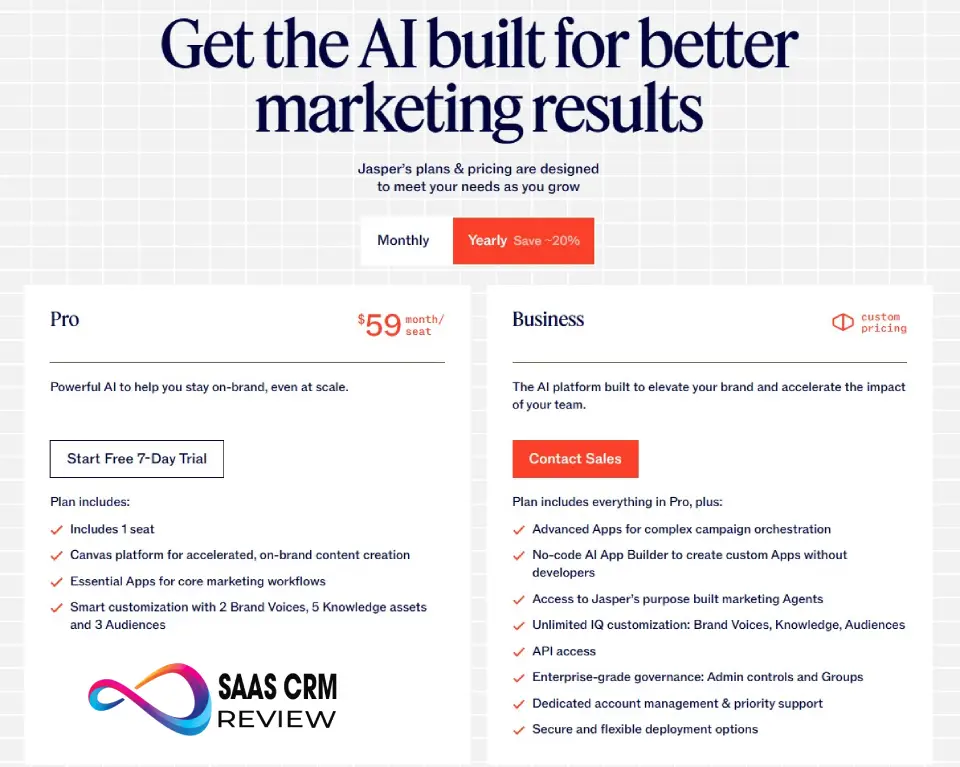
Jasper uses tiered pricing that scales with team size and feature access. Here’s the value logic behind pricing levels as of late 2025, though specific prices change—verify current pricing on Jasper’s website.
Pricing Tier Logic
Solo/Creator Tier:
- Single user access
- Brand voice training (limited capacity)
- Core templates and workflows
- Basic integrations
- Generation limits based on word count or credits
Value equation: Competes directly with ChatGPT Plus ($20/month range). Makes sense only if brand voice consistency or specific integrations matter enough to justify 2-3x the cost.
Team/Business Tier:
- 3-5 users typically
- Full brand voice capabilities
- Collaboration features (shared workspaces, review workflows)
- Enhanced integrations (Surfer SEO, CMS tools)
- Higher generation limits
- Usage analytics
Value equation: Cost per user drops significantly. Justifiable when team coordination overhead and brand consistency create measurable problems. Roughly equivalent to hiring 0.25 FTE content creator when used effectively.
Enterprise Tier:
- Unlimited users
- SSO and advanced permissions
- Custom contracts and data handling
- Dedicated support
- API access
- Custom integrations
Value equation: Custom pricing based on organization size. Makes sense for large marketing orgs (50+ people touching content) or agencies managing many brands. Requires calculating against “cost of inconsistent brand content” and “content team efficiency gains.”
Decision Guide: When Jasper Pays Off
If you publish 5-10 pieces/month:
- Solo creator with ChatGPT Plus likely costs less and provides similar capability
- Jasper adds value only if brand voice training saves 30+ minutes per piece
- Verdict: Probably not worth it unless you’re bad at prompting and need training wheels
If you publish 20-40 pieces/month:
- Time savings become significant (assume 1-2 hours saved per piece = 20-80 hours monthly)
- Brand consistency across pieces creates measurable quality improvement
- Team collaboration features prevent version chaos and duplicate work
- Verdict: Likely worth it if you’re a team; marginal for solo creators
If you publish 50+ pieces/month:
- Content production is core business function
- Small percentage improvements in efficiency = major cost savings
- Quality consistency directly impacts brand perception and SEO performance
- Team coordination overhead is killing you without structured workflows
- Verdict: Strong candidate, but compare against hiring content manager + giving team ChatGPT
Cost Drivers & Hidden Costs
| Cost Component | Description | Impact |
|---|---|---|
| Base subscription | Per-user monthly or annual fee | Predictable, primary cost |
| Generation limits | Some tiers cap monthly word count or credits | Can require tier upgrade if you hit limits |
| Learning curve | Time investment for team training, brand voice setup | 10-20 hours front-loaded |
| Integration subscriptions | Surfer SEO, Grammarly, etc. still require separate accounts | Can add $100-300/month |
| Human editing time | AI doesn’t eliminate editing—budget 30-50% of writing time | Ongoing labor cost |
| Quality control process | Fact-checking, review workflows, approval cycles | Process overhead |
Time Savings Assumptions (Reality Check)
Optimistic scenario: Jasper reduces writing time from 3 hours to 1 hour per blog post.
- Assumption: You’re slow at drafting but fast at editing
- Reality: You still spend 1.5 hours editing AI output to quality standard
- Actual savings: 1.5 hours per post
Realistic scenario: Jasper reduces total content time from 4 hours to 2.5 hours.
- Assumption: You’re reasonably fast already, Jasper accelerates first draft
- Reality: 45 min briefing Jasper + 30 min reviewing output + 1.5 hours editing
- Actual savings: 1.5 hours per post, but you spent time learning to use Jasper effectively
Pessimistic scenario: Jasper barely saves time or might add time.
- Assumption: You’re a fast writer with strong voice, Jasper output requires heavy rewriting
- Reality: Easier to write from scratch than fix AI output that’s off-brand
- Actual savings: 0-30 minutes per post, not worth the cost
Key insight: Value calculation depends entirely on your baseline. If you’re already fast and effective at content creation, Jasper’s marginal benefit is small. If content is a bottleneck or quality is inconsistent, Jasper’s value multiplies.
Watch-Outs:
Don’t calculate ROI based on “replacing a writer.” AI tools augment good writers, not replace them. Calculate based on “making current team 25-50% more efficient” or “improving brand consistency to reduce rework.” Also factor in the opportunity cost—time saved on content can be redirected to strategy, distribution, or analysis where humans add more value.

Jasper Pros and Cons (Balanced, Specific)
Pros
1. Brand Voice Training Actually Works (With Good Input)
Unlike generic prompt instructions in ChatGPT, Jasper’s brand voice profiles persist across all team members and content types. When trained with strong examples, it maintains recognizable tone and vocabulary preferences consistently.
2. Team Collaboration Prevents Chaos
Shared workspaces, asset libraries, and version history solve real problems in content teams. No more “who has the latest draft” or “which brand guidelines document are we using?”
3. Template Workflows Lower Barrier to Entry
Non-writers on your team (product managers, founders, customer success) can create decent first drafts using structured templates, reducing bottlenecks waiting for “the writer.”
4. Surfer SEO Integration Is Genuinely Useful
Seeing optimization scores while drafting helps balance creativity with SEO requirements without requiring separate tools and context switching.
5. Multi-Asset Campaign Generation Saves Setup Time
Creating a blog post, social variants, email, and landing page from one brief—even if each needs editing—is faster than starting each asset from scratch.
6. Chrome Extension Enables Ad Hoc Content
Generate social posts, email responses, or product descriptions directly in forms without switching to a separate tool.
7. Output Consistency Across Team Members
Less variance between what different team members produce. Newer writers produce output closer to senior team quality.
8. Scales Better Than “Everyone Use ChatGPT”
When you have 10 team members using ChatGPT with their own prompts and styles, chaos emerges. Jasper creates structured process.
9. Enterprise Features Exist (For Organizations That Need Them)
SSO, permissions, audit trails, and contract terms matter for larger organizations or regulated industries.
10. Regular Feature Updates
Platform actively improves, adds new integrations, updates underlying AI models without user action.
Cons
1. Expensive Compared to DIY ChatGPT
3-5x the cost of ChatGPT Plus for capabilities that skilled prompters can replicate with more effort.
2. Still Generates Generic Marketing Language
Default output includes clichés, vague claims, and “marketing speak” that requires active editing to remove.
3. No Better at Factual Accuracy Than Base LLMs
Will confidently fabricate statistics, case studies, and credentials. Requires same verification workflow as any AI tool.
4. Templates Create Formulaic Content Risk
Over-reliance on templates produces content that feels samey and predictable, both to your audience and search engines.
5. Learning Curve Despite “Easy to Use” Marketing
Effective use requires understanding prompt engineering, brand voice training best practices, and workflow integration—not just “click button, get content.”
6. Integration Depth Is Limited
Connections to other tools often handle basics but not complex workflows. Still requires manual steps and exports.
7. Generation Limits Can Be Restrictive
Word count caps or credit systems on lower tiers can become bottlenecks for high-volume teams.
8. Pricing Scales Quickly With Team Size
Adding users gets expensive fast. May require justifying ROI to finance team.
9. Requires Active Quality Control Process
Can’t just “generate and publish.” Need review workflows, fact-checking, and brand alignment checking—which take time to establish.
10. Lock-In Risk
Moving away after building workflows, training brand voices, and storing assets in Jasper becomes painful. Migration cost is real.
Jasper vs Alternatives (Decision Table)
Below is a practical comparison based on typical use cases, not marketing claims.
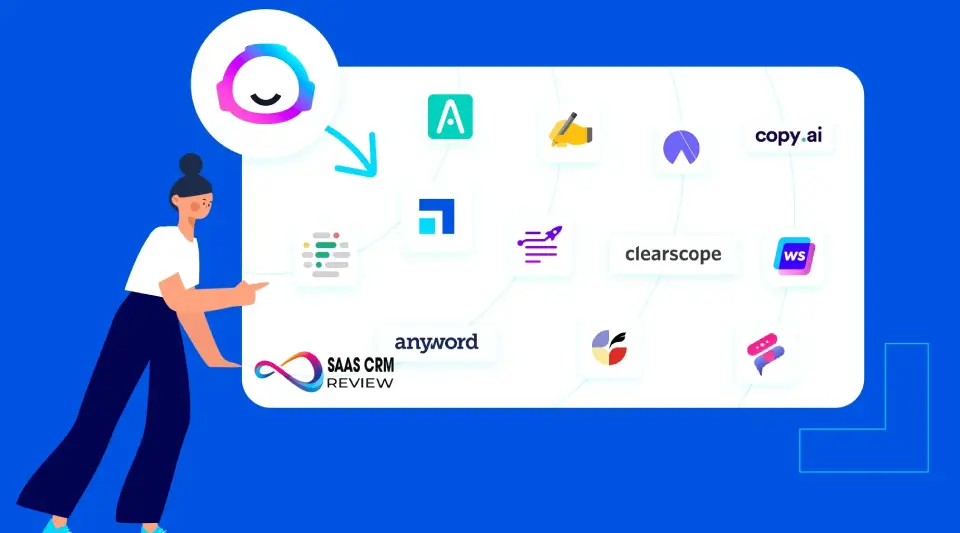
| Tool | Best for | Strengths | Weaknesses | When to choose |
|---|---|---|---|---|
| Jasper | Marketing teams scaling on-brand content | Brand consistency, workflows, team readiness | Cost/complexity for casual use | You need repeatable production + governance |
| ChatGPT (Plus/Team) | Flexible ideation and drafting | Powerful general writing and reasoning | Weak native brand governance | You have strong editors + a defined process |
| Copy.ai | GTM and workflow automation | Process-driven generation, ops style | May feel sales-ops oriented | Your team runs structured GTM plays |
| Writesonic | AI search oriented platform positioning | Focus on AI search workflows and content | Not always strongest on brand governance | You want AI visibility and content support |
Simple decision matrix (score 1–5)
| Requirement | Jasper | ChatGPT | Copy.ai | Writesonic |
|---|---|---|---|---|
| On-brand consistency | 5 | 3 | 3 | 3 |
| Team workflow support | 4 | 2–3 | 4 | 3 |
| Fast general ideation | 4 | 5 | 3 | 3 |
| SEO drafting support | 4 | 4 | 3 | 4 |
| Ease for solo users | 3 | 5 | 3 | 3 |
Who Should Use Jasper (and Who Shouldn’t)
SEO content team
Use Jasper if: you publish frequently and need consistent voice across contributors.
Skip if: you already have tight briefs, strong editors, and low volume.
Performance marketing team
Use Jasper if: you need many copy variations across ads, landing pages, and email.
Skip if: you only produce occasional campaigns.
Founder / solopreneur
Use Jasper if: you’re scaling output and want a system that enforces consistency.
Skip if: you’re cost-sensitive and can manage voice with a simple style guide.
Agency
Use Jasper if: you manage multiple client voices and need faster draft cycles with fewer revisions.
Skip if: your clients don’t value strict voice consistency or your work is mostly bespoke long-form.
Enterprise comms
Use Jasper if: governance, permissions, and controlled outputs matter.
Skip if: policy blocks AI usage or approvals are too complex to operationalize.
Risks, Ethics, and Trust
Hallucinations and factuality risk
All generative AI can produce plausible-sounding inaccuracies. This is especially dangerous for:
- statistics
- medical/legal/financial claims
- competitor comparisons
- “best tool” assertions
Best practice: require verifiable sources for claims and treat AI output as a draft.
Brand and legal risk
Risk increases when teams publish:
- superlatives (“best,” “#1”)
- compliance-sensitive claims
- regulated-industry content
Best practice: build a “claims policy” and a review gate.
Privacy and data considerations
Treat AI tools as external systems unless your plan and internal policy explicitly allow sensitive data use.
Best practice: avoid confidential info; use sanitized examples; follow internal policies.
Practical Setup: Getting Value in Week 1
Day 1: Build the foundation
- Collect 10–20 examples of final approved writing (web pages, emails, top posts)
- Write a one-page brand voice guide:
- tone traits
- do/don’t list
- forbidden claims
- preferred vocabulary
- Create a standard content brief template
Day 3: Run the mini-tests
Run the five tests from Section 3. Track:
- draft usefulness (how much you keep)
- editing time required
- brand consistency
- factuality behavior
Day 7: Pilot a full campaign
Pick one real campaign and generate:
- one landing page draft
- one blog draft
- one email draft
- five social posts
- ad variations
Then measure:
- time to first draft
- number of revisions
- consistency across assets
Prompt template you can reuse
“Create [asset type] for [audience] with [goal]. Use our brand voice. Include [proof points]. Avoid [forbidden claims]. Output as [structure].”
Lightweight QA checklist
- Does it match search intent and audience pain?
- Does it include a unique POV or evidence?
- Are claims verifiable?
- Is it on-brand and compliant?
- Is it scannable and easy to read?
FAQs
Is Jasper better than ChatGPT?
It can be better for teams that need consistent brand voice and workflow structure. For flexible, general writing and ideation, ChatGPT is often simpler and more cost-effective.
Does Jasper help SEO?
It helps with drafting, structure, and content operations. It doesn’t replace SEO strategy, originality, or authority-building.
Is Jasper worth it for beginners?
Usually not. Beginners often benefit more from learning fundamentals and using a general AI tool with a strong editorial checklist.
Can Jasper match brand voice?
It can get closer to consistent tone if you provide high-quality approved examples and enforce a review process.
What are the main drawbacks?
Cost for low-volume use, setup effort for brand voice, and the ongoing need for fact checking and editorial QA.
Is Jasper good for agencies?
Often yes—especially agencies managing multiple clients, voices, and approval cycles.
Does Jasper replace writers?
No. It speeds up drafting and variation. Writers and editors remain essential for positioning, originality, accuracy, and brand judgment.
How do I get value quickly?
Run a one-week pilot on a real campaign with a structured brief and a strict QA checklist.
Final Recommendation
Buy now if…
You operate a real content engine: frequent publishing, multi-asset campaigns, multiple contributors, and a need for brand consistency and governance. Jasper’s best ROI typically shows up as less rework, faster production cycles, and fewer tone-related revisions.
Try then decide if…
You’re unsure whether you’ll use the workflow and brand voice structure. A 7-day campaign pilot will tell you quickly.
Skip and use an alternative if…
You’re low-volume, budget-sensitive, or you already have strong editorial discipline. In that case, ChatGPT plus a style guide and editorial checklist is often the smarter, simpler option.
The honest trade-off: Jasper rewards teams that have (or are willing to build) process discipline. If your workflow is unstructured, you may end up paying for capabilities you don’t actually use.
External sources to verify
- Jasper official pricing page Jasper
- Jasper integrations overview Jasper
- Google Workspace Marketplace: Jasper add-on Google Workspace
- Jasper blog: Canvas + Agents announcement Jasper
- Copy.ai official pricing/workflows overview Copy.ai
- Writesonic official pricing/platform positioning Writesonic
About the author

I’m Macedona, an independent reviewer covering SaaS platforms, CRM systems, and AI tools. My work focuses on hands-on testing, structured feature analysis, pricing evaluation, and real-world business use cases.
All reviews are created using transparent comparison criteria and are updated regularly to reflect changes in features, pricing, and performance.